

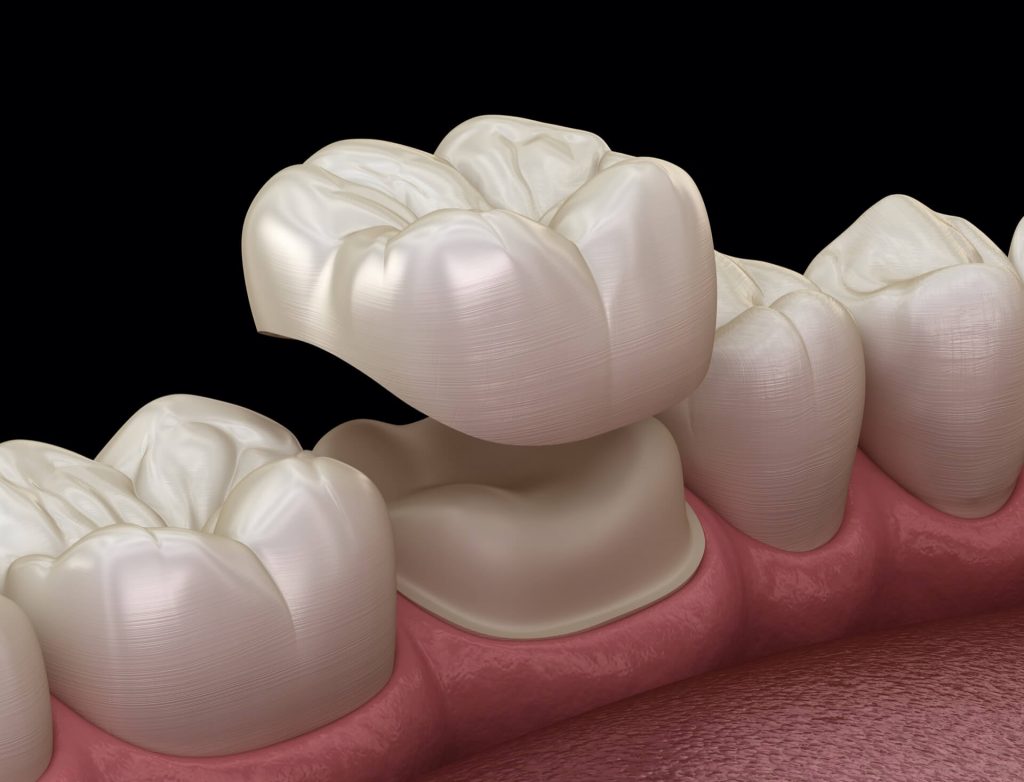
Why do I need a dental crown?
- To protect a weak tooth
- To restore an already broken tooth
- To cover and support a tooth with a large filling
- To hold a dental bridge in place
- To cover misshaped or severely discolored teeth
- To cover a dental implant
Permanent crowns can be made from stainless steel, all metal (such as gold or another alloy), porcelain-fused-to-metal, all resin, or all ceramic.
Temporary crowns are usually made in your dentist’s office from an acrylic-based material.
Permanent crowns are typically made in a dental laboratory.
The average lifespan for a well-maintained dental crown is typically around 15 years. However, when taken care of properly, it is common to see them last upwards of 25-30 years.
At Pinnacle Dentistry, your trusted dentist for dental crowns in Colorado Springs, we bring years of experience and a proven track record in successfully placing crowns to restore teeth. Our dedicated team is committed to enhancing our patients’ smiles and oral health.
A dental crown, also referred to as a cap, is a tooth-shaped covering that a dentist places over a damaged or decayed tooth. It fully covers the visible part of the tooth, providing a protective layer.
Dental crowns restore and protect teeth that cannot be repaired with fillings alone. They strengthen teeth, enhance their appearance by concealing flaws, and can even support fixed dental bridges.
Crowns are typically fabricated from durable materials like stainless steel, metal such as gold, porcelain-fused-to-metal, all resin, or all ceramic to withstand years of chewing and tooth grinding.
You may need a crown placed on one or more teeth for several reasons. Large existing fillings that have weakened teeth over time, teeth that have undergone a root canal procedure, and cracked or severely damaged teeth from injury are common situations where crowns become necessary.
Crowns protect teeth that have undergone root canal treatments from being susceptible to further cracking or breaking down. We also commonly use crowns for cosmetic reasons to enhance teeth size, color, shape, or alignment. In some cases, crowns are part of the solution for restoring teeth that will serve as anchors in dental bridges or are being used in conjunction with dental implants.
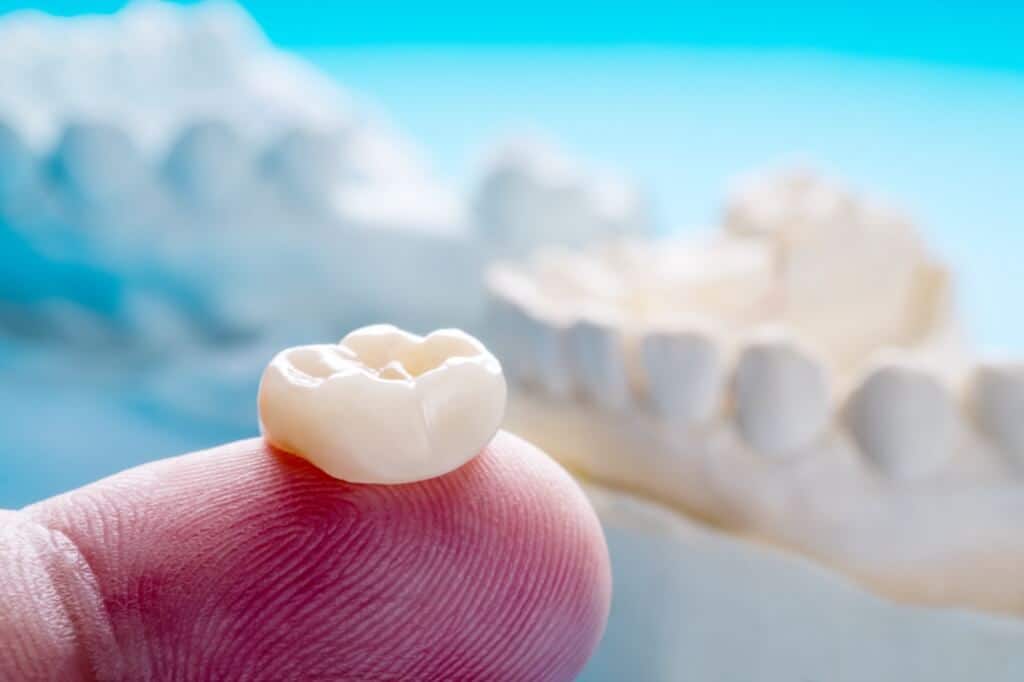

The Process for Fitting Dental Crowns
Once we determine during an oral exam that a crown is the best treatment approach for a tooth, the process then takes a few visits. First, we’ll need to prepare the natural tooth by gently reshaping it and smoothing out any imperfections.
Next, we take an impression of the prepared tooth and your bite to create a model for the crown fabrication. After that, a temporary crown is bonded on to protect the tooth until the permanent crown returns from our professional dental lab, which typically takes less than two weeks.
At your crown cementation appointment, we carefully check the fit of the new crown before permanently cementing it into place. If needed, our lab can make any minor adjustments.
Once fully seated, the crown fuses to the tooth and cannot come off, immediately improving strength, function, and aesthetics. We also ensure your bite feels comfortable and all contact points look proper. Some polishing may occur afterward before you are free to enjoy your newly crowned tooth.
The cost of dental crowns varies based on the type of material selected and your insurance coverage. Zirconia dental crowns tend to be more expensive than stainless steel or metal alloy crowns. Rest assured, after examination, we are happy to provide you with a detailed estimate tailored to your treatment plan and coverage.
If you would like to explore financing options, please speak to our helpful team. We want to make this restorative treatment as affordable as possible.
Restoring healthy, confident smiles is our top priority. Our team is highly trained in the latest technologies to create natural-looking crowns with life-like aesthetics and durability. We take great care in choosing the right shade to blend with your existing teeth for an excellent result.
Dental Crown FAQ
We take every precaution to minimize discomfort during the crown preparation and cementation. We use a local anesthetic to numb the tooth and area, take our time, and communicate throughout the process. Most patients feel little to no discomfort.
With proper oral hygiene and regular dental visits, a crown can last 10-15 years or even longer before possibly needing replacement. Certain factors like grinding habits can impact lifespan.
Once cemented, your natural tooth remains intact underneath the crown. The goal is to strengthen and protect the tooth, so it is not affected.
Our temporary dental crowns are bonded securely but can occasionally come off if excessive force is applied. If this happens, just call us right away, and we will re-apply them as soon as possible.
With lifelike materials and attention to detail, dental crowns match neighboring teeth in color, shape, and texture. After a short adjustment period, most patients cannot distinguish their crown from their natural teeth, and the gum tissues stay soft and supple.
Immediately after cementation, expect some temporary mild sensitivity as your teeth adapt. Stick to soft foods, avoid excessively hot foods or beverages, and allow a few weeks for complete acclimation. Make sure to eat slowly and close your mouth while chewing for additional comfort until any sensitivity subsides.
Crowns do not require any cleaning different from natural teeth. Be sure to brush and floss the crown area daily just as you would your other teeth. Avoid excessive pressure around the crown while flossing. Routine cleaning will help to keep crowns healthy in the long term.
Schedule a Dental Crown Consultation Today
Please schedule a consultation to discuss dental crowns and preserving your oral health. Together, we can examine your teeth, review any X-rays, and determine whether dental crowns are the right solution for you.
Call 719-590-7100 to discuss your options for dental crowns in Colorado Springs.