

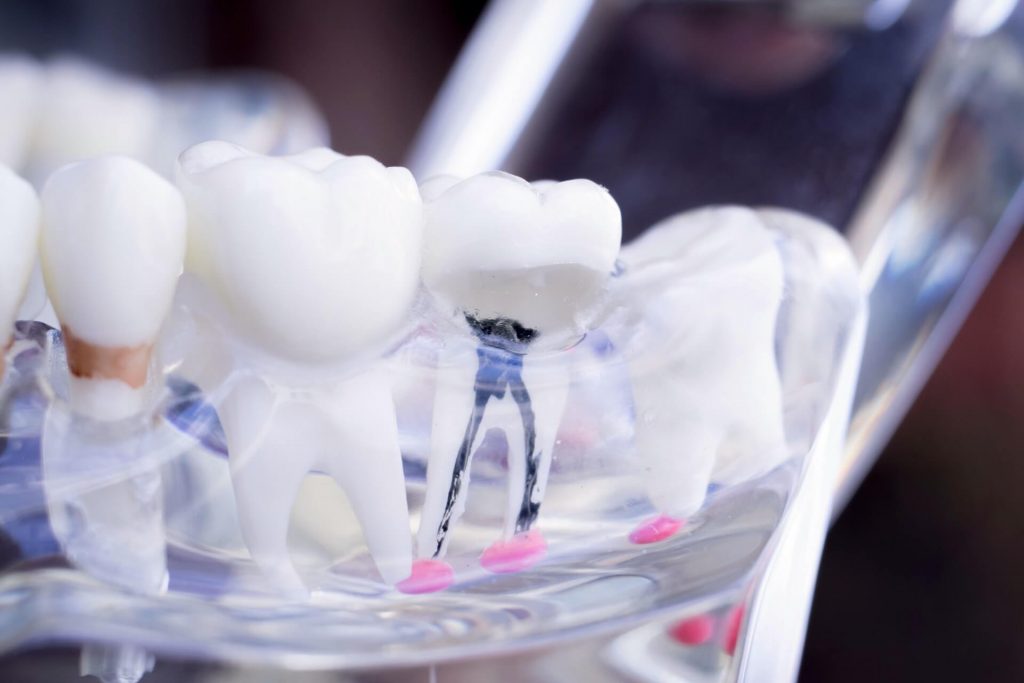
A root canal can relieve your tooth pain and save your smile. Root canal treatment is designed to eliminate bacteria from the infected root canal, prevent reinfection of the tooth and save the natural tooth. When you undergo a root canal, the inflamed or infected pulp is removed and the inside of the tooth is carefully cleaned and disinfected, then filled and sealed.
A root canal is performed by an Endodontists, who are dentists who specialize in saving your teeth. Endodontics refers to the ‘pulp’ and tissues inside the root of the tooth. Dental ‘pulp’ is the soft inner tissue of your teeth. The most common practice within endodontics is a root canal. A root canal is performed to save a tooth that is severely broken, decayed, or infected. If the damaged tooth is not treated, it could significantly negatively impact the gums and surrounding teeth.
What are symptoms that I may need of a root canal?
- Severe pain while chewing or biting
- Pimples on the gums
- A chipped or cracked tooth
- Lingering sensitivity to hot or cold, even after the sensation has been removed
- Swollen or tender gums
- Deep decay or darkening of the gums
Dr. Jennings and Dr. Perrett will be able to decide if a root canal is needed based on an X-ray.
When performing a root canal, the nerve and ‘pulp’ will be removed by the Endodontist in Colorado Springs and the inside of the tooth will be cleaned and sealed. Root canals have a great success rate and are a very common procedure. A modern root canal treatment is nothing like those old tales! It is very similar to a routine filling and can usually be completed in one or two appointments, depending on the condition of your tooth and your personal circumstances. Getting a root canal is relatively painless and extremely effective. You’ll be back to smiling, biting and chewing with ease in no time.
To determine if a root canal is the right solution for you, call 719.590.7100 to schedule an appointment with our endodontic specialist.
FAQs: Root Canal in Colorado Springs
A root canal is a dental procedure used to treat infection or inflammation inside the tooth’s pulp, which contains nerves and blood vessels. It is needed when the pulp becomes infected due to deep decay, cracks, or trauma. The procedure removes the infected tissue, disinfects the canal, and seals it to prevent further infection.
Modern root canal treatments are generally not painful, thanks to local anesthesia and advanced dental techniques. Most patients experience minimal discomfort during the procedure, comparable to having a cavity filled. Any post-treatment soreness can typically be managed with over-the-counter pain relief.
A root canal usually takes one to two visits to complete, depending on the complexity of the tooth and the extent of the infection. Each session typically lasts between 60 to 90 minutes. Additional appointments may be required if the infection is severe or involves multiple canals.
Common signs include severe toothache, prolonged sensitivity to hot or cold, swelling or tenderness in the gums, darkening of the tooth, or the presence of a pimple-like bump on the gum. A dentist can confirm the need for a root canal through an examination and X-rays.
After a root canal, patients should maintain good oral hygiene by brushing and flossing regularly, avoiding hard foods until the permanent Dental crown is placed, and attending follow-up visits. It’s important to have the tooth restored with a crown to protect it from fractures and ensure long-term success.