Taking an online interactive assessment can be an excellent first step when you are trying to figure out if a mild ache is just minor irritation or a spreading infection. These self-screening tools allow you to evaluate your specific symptoms in real time, helping you figure out whether you need routine dental care or urgent treatment. You can try a quick, 3-minute interactive toothache quiz tool to categorize what you are feeling before you speak with a dentist.
Key Diagnostic Prompts in a Do I Have a Tooth Infection Quiz
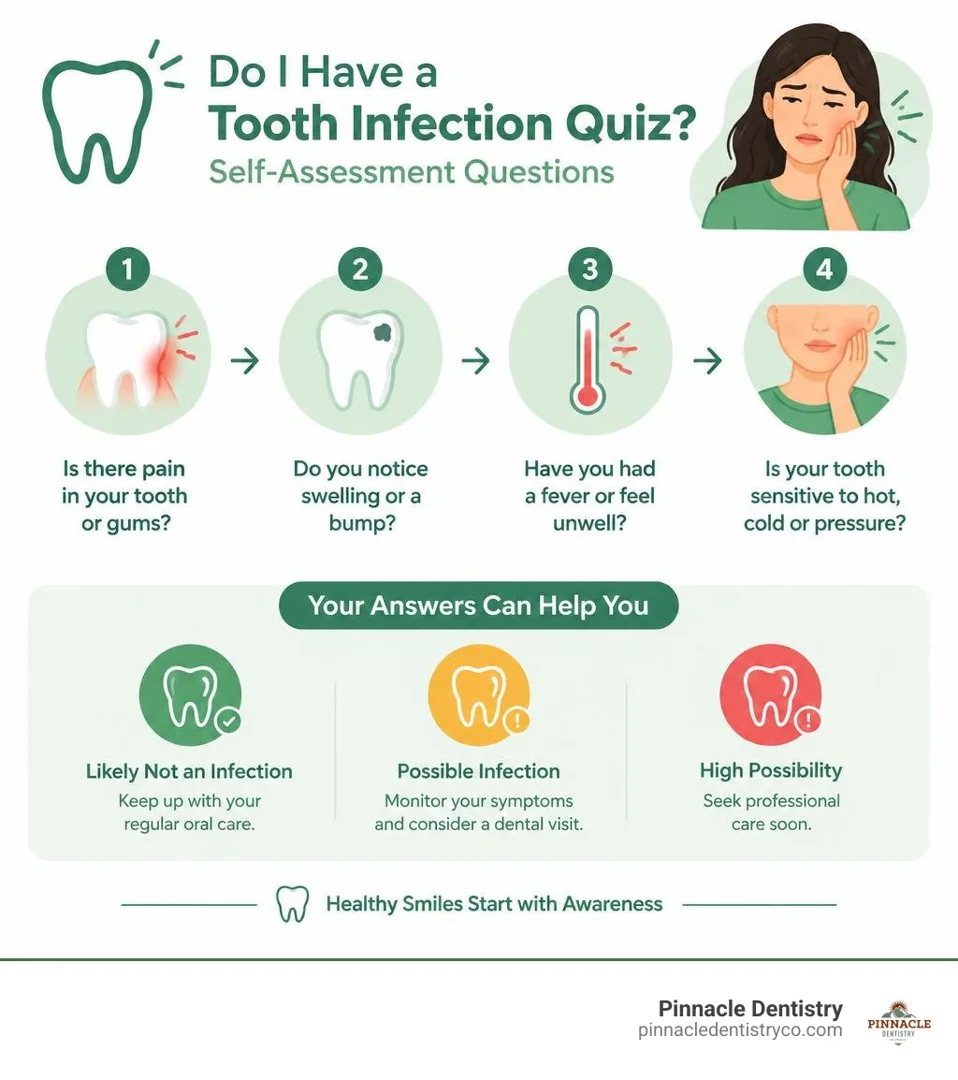
When you work through a do i have a tooth infection quiz, the algorithm relies on specific clinical prompts to analyze your pain. The primary diagnostic questions usually center on these key areas:
- Pain Characteristics: Is the discomfort a persistent, intense throbbing that worsens when you lie down flat? Spontaneous, throbbing pain that wakes you up at night is a hallmark sign that the internal nerves inside your tooth pulp are under severe pressure.
- Thermal Sensitivity: Does drinking hot coffee or cold water trigger a sharp shock that lingers for 30 seconds or longer after you take a sip? Long-lasting thermal sensitivity points to damaged or infected pulp tissue rather than simple surface enamel loss.
- Biting Pressure: Does tapping on the tooth or chewing food cause a sudden, severe pain? Discomfort from pressure usually means the infection has traveled out through the end of the root tip and into the surrounding periodontal ligament and jawbone.
- Gum and Facial Changes: Have you noticed localized swelling, redness, or a small bump on your gums near the painful tooth? A tender bump often acts as a drain for trapped bacterial pus.
Interpreting Results from Your Do I Have a Tooth Infection Quiz
Understanding your quiz results requires keeping their purpose in perspective. Most digital checkers categorize your risk level into tiered results:
- Low Risk: Discomfort is usually brief, sharp, and tied directly to cold air or sweet foods, without swelling or persistent throbbing. This often points to minor cavity decay or enamel wear.
- Moderate Risk: Pain is persistent and throbbing, lasting more than 48 hours, accompanied by noticeable sensitivity to temperature and mild gum tenderness.
- High Risk: Pain is intense and continuous, paired with facial swelling, fever, swollen neck glands, or visible pus drainage.
If you want to cross-reference your symptoms with documented dental patterns, digital screening tools can help highlight whether your symptoms match periapical or periodontal bacterial infections.
Common Symptoms: Toothache, Cavity, or Dental Abscess?
It is very common to confuse a simple toothache with a deep cavity or a severe abscess. However, these three conditions represent completely different stages of tooth damage.
A basic toothache is a broad term for any pain originating in or around a tooth. It can be caused by food caught between teeth, sinus pressure, or teeth grinding. A cavity occurs when oral bacteria produce lactic acid that softens and eats away hard enamel, creating a physical hole. A Dental Abscess, on the other hand, is an advanced bacterial infection where a pocket of pus collects at the base of the tooth root or in the surrounding gum tissue, resulting in an Abscessed Tooth.
Key Differences Between Cavities and Abscesses
Understanding how a cavity transforms into an abscess helps explain why your symptoms change over time.
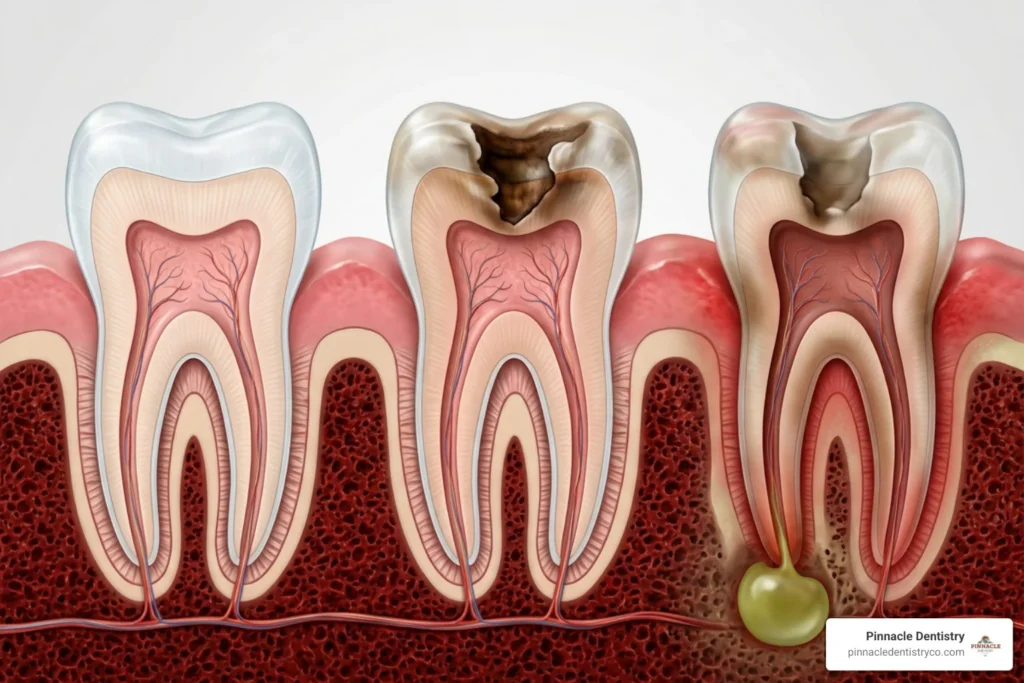
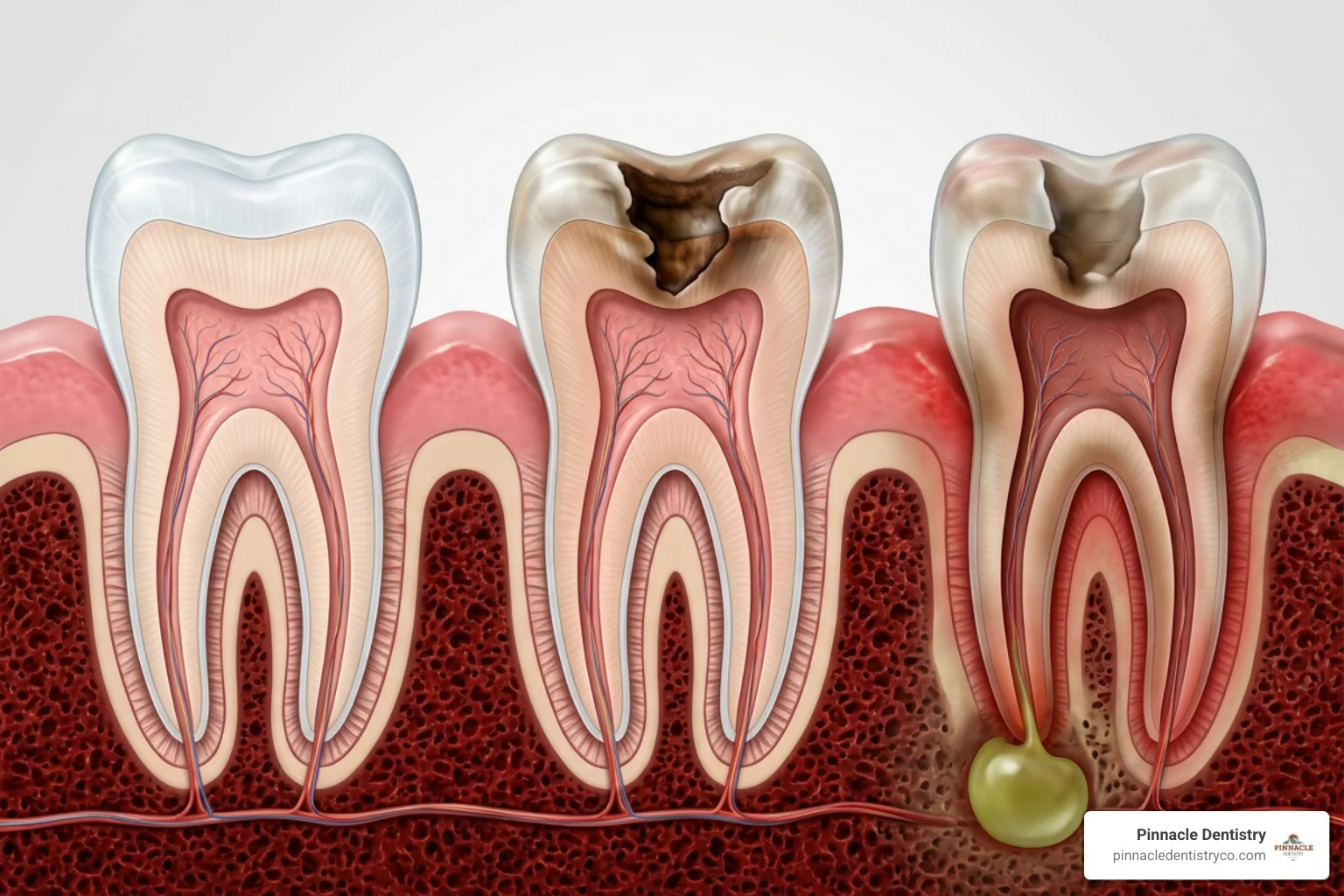
- Bacterial Invasion: Tooth decay begins on the surface when Streptococcus mutans bacteria feed on dietary sugars and secrete lactic acid. This acid dissolves the protective enamel surface.
- Pulpitis Development: If the cavity is not filled, bacteria travel deeper into the softer dentin layer until they reach the inner pulp chamber, which houses live blood vessels and nerves. This triggers severe inflammation called pulpitis.
- Pulp Necrosis and Abscess: As pressure inside the rigid pulp chamber builds up, blood flow shuts down, causing pulp tissue death (necrosis). Bacteria then multiply inside the dead space, forming pus that collects at the root apex.
While minor decay can cause brief zings of discomfort, learn more about tooth sensitivity causes treatment and prevention to see how early surface care prevents deeper bacterial access.
Warning Signs Your Infection Is Spreading
An untreated dental abscess will not remain locked inside your tooth forever. As bacteria multiply, they actively seek an escape path through soft tissues. Watch for these progressive warning signs:
- A systemic fever rising over 100.4°F (38°C), indicating your immune system is actively fighting a spreading infection.
- Tender, visibly swollen lymph nodes under your lower jaw or down the side of your neck.
- A sudden burst of foul-tasting, salty fluid in your mouth, which occurs when a gum fistula pops and drains pus.
- Facial redness and swelling that creeps into your cheek, lower eye area, or upper neck.
Ignoring these advancing signs increases the risk that simple restorative care will no longer work, leaving you to review the 7 urgent signs you need emergency tooth removal now to protect your health.
When Tooth Pain Becomes a Medical Emergency
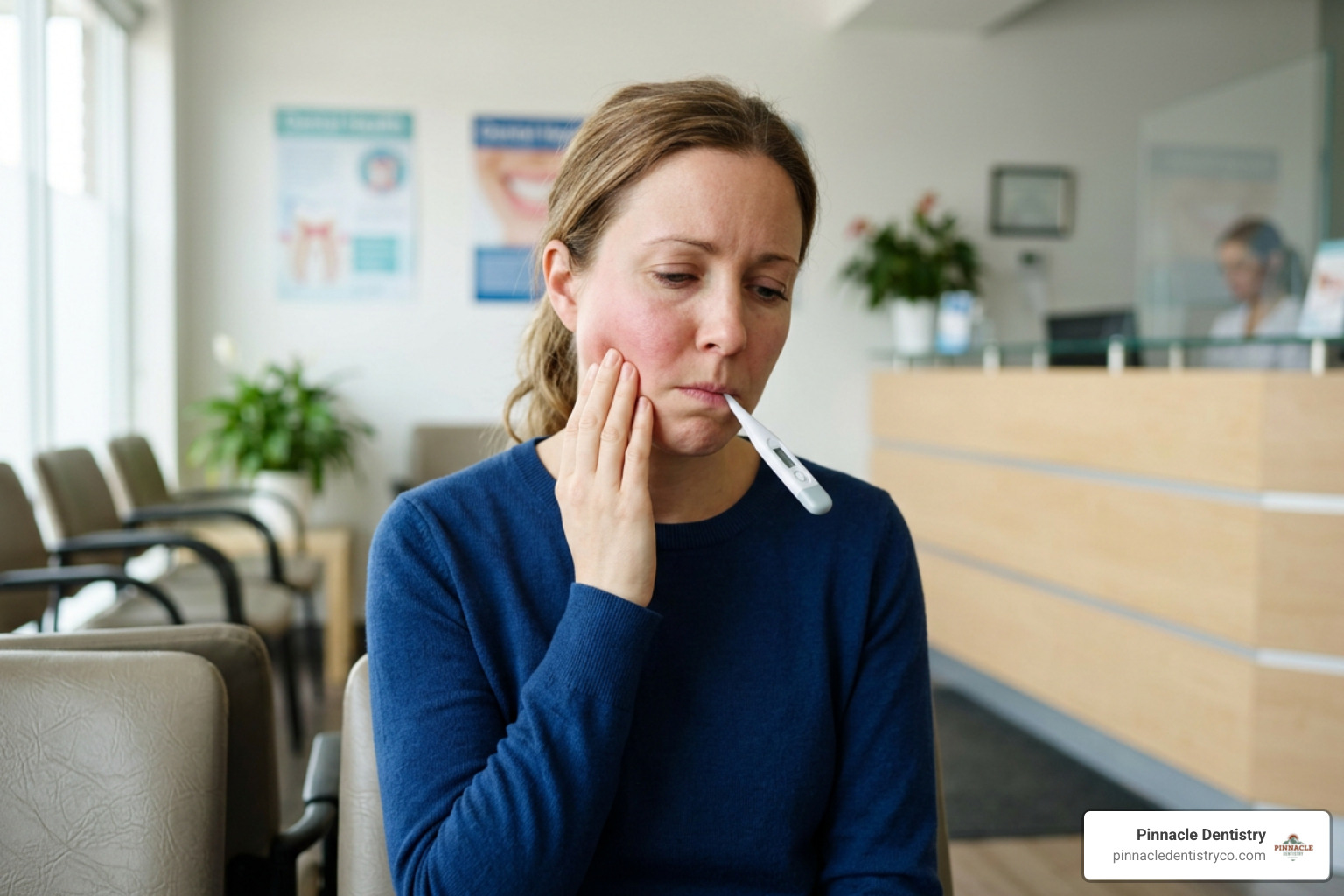
While most dental issues can wait for a standard appointment during business hours, a spreading tooth infection can quickly escalate into a serious medical emergency.
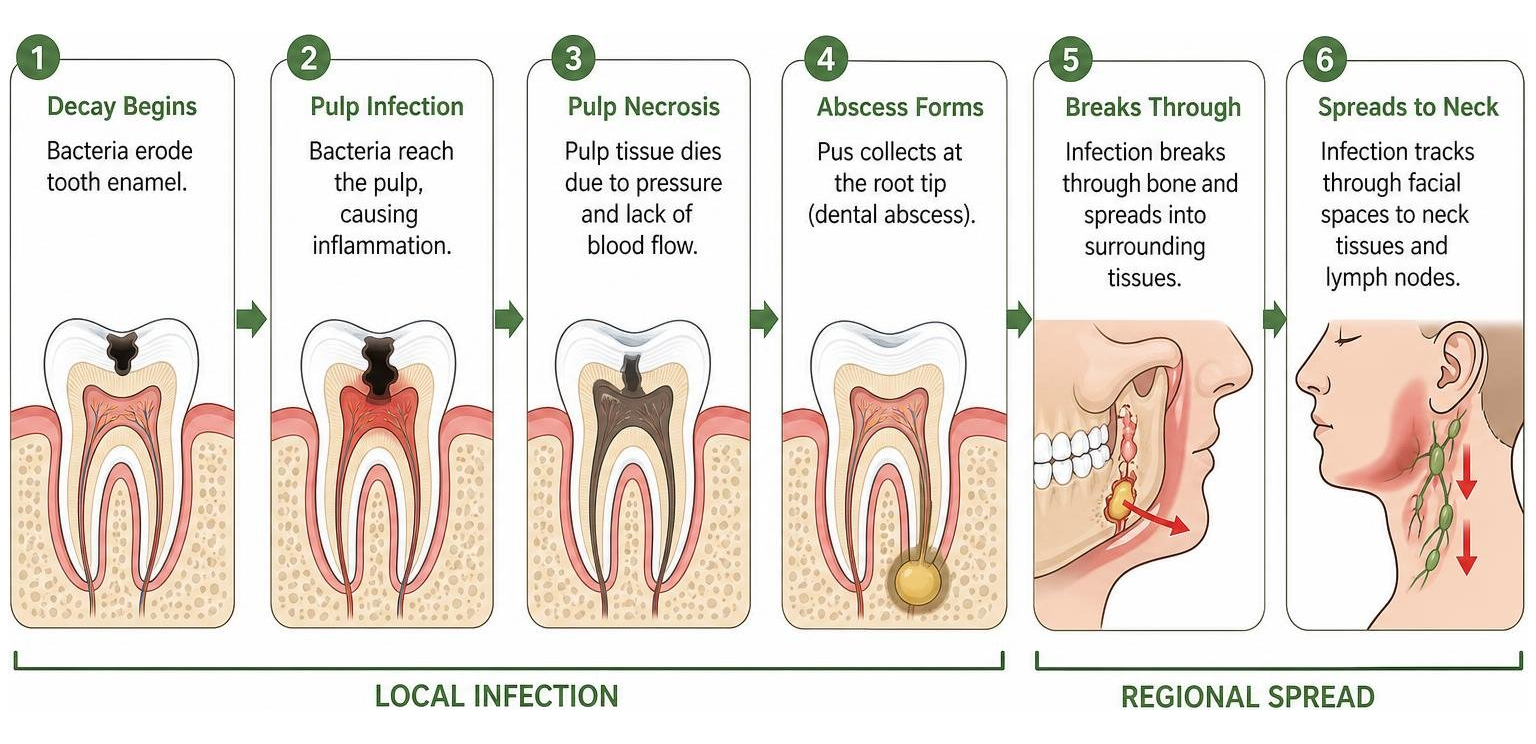
Knowing What constitutes a dental emergency allows you to make fast, safe decisions when symptoms take a sudden turn for the worse.
Emergency Red Flags Requiring Immediate Care
If you notice any of the following critical red flags, seek immediate emergency dental or medical assistance:
- Trismus: Inability to open your mouth fully due to severe jaw muscle inflammation.
- Dysphagia or Airway Compromise: Difficulty swallowing, breathing, or speaking clearly. This happens when infection spreads into deep neck spaces (a condition known as Ludwig’s Angina), which can push against your airway.
- Rapidly Spreading Facial Cellulitis: Visible swelling that spreads rapidly across your jawline, cheek, or around your eyes within just a few hours.
- High Systemic Fever: A high fever paired with chills, lightheadedness, nausea, or confusion, which can signal that bacteria are entering your bloodstream.
If you live in El Paso County, CO or Briargate, CO, knowing the Common signs that you need to see an emergency dentist in Colorado Springs can save crucial hours when organizing urgent care.
Quiz Accuracy vs. Professional Diagnosis and Treatment Options
Digital health checkers use sophisticated algorithms to evaluate symptoms. In fact, research shows that top-tier AI symptom assessment tools can achieve a top-10 diagnostic accuracy rate of around 71.6%, outperforming traditional online symptom checkers that average about 60%.
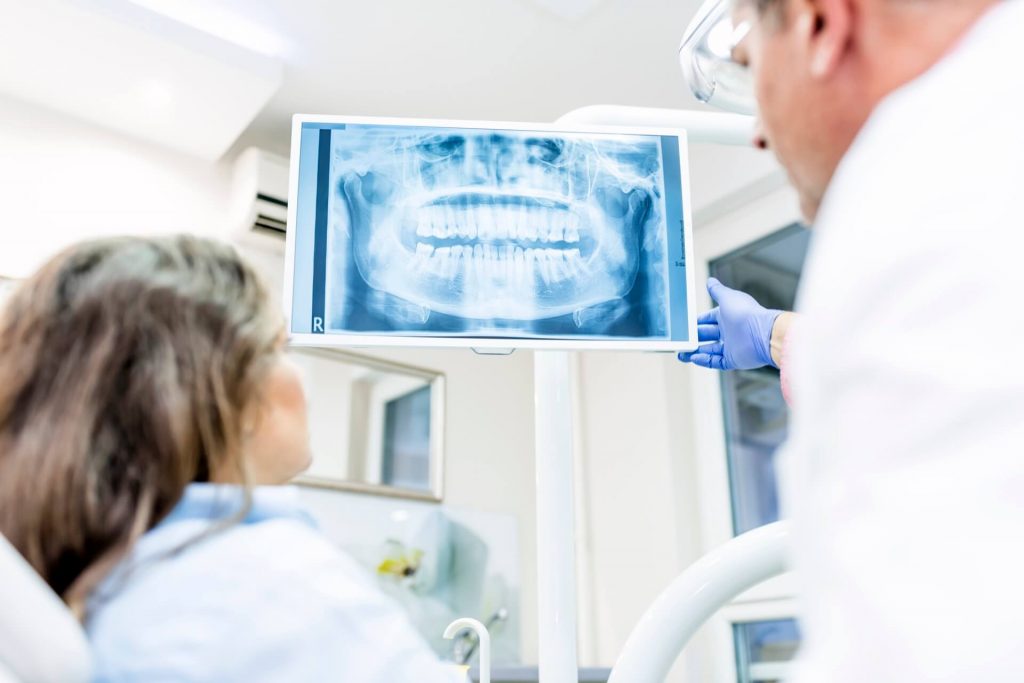
However, no digital test can replace an in-person clinical examination. You can read how online diagnostic screening algorithms operate by exploring digital symptom assessment frameworks. Dentists use tactile probing, thermal testing, electric pulp tests, and 3D digital X-rays to pinpoint the exact source of an infection, things an online quiz simply cannot do.
Why Tooth Infections Never Go Away On Their Own
A common myth is that if a severe toothache suddenly stops hurting, the infection has cured itself. In reality, when a painful toothache goes quiet without treatment, it usually means the nerves inside the pulp chamber have completely died.
Even though the pain receptors are destroyed, the living bacteria remain inside the tooth root, feeding on dead tissue. Without treatment, those bacteria continue to multiply, quietly destroying surrounding jawbone tissue and setting up a larger abscess down the road.
Reviewing How to get rid of a tooth abscess pain relief and solutions clarifies why professional care is the only reliable way to clear out the bacterial source completely.
Modern Dental Treatments for Tooth Infections
When a dental infection takes hold, dentists use proven clinical procedures to clean out the bacteria and restore your oral health:
- Root Canal Therapy: This tooth-saving treatment removes infected and dead pulp tissue from inside the root canals. The inner chamber is disinfected, sealed with a biocompatible material, and topped with a custom crown. If you suspect you need one, learn How do you know if you need a root canal to spot the symptoms early.
- Abscess Drainage: A dentist makes a small incision in swollen gum tissue to drain trapped pus, immediately reducing local tissue pressure and pain.
- Tooth Extraction: If decay or fracture damage is too severe to support a stable crown, removing the tooth may be necessary to halt the infection.
- Prescription Antibiotics: Medications like amoxicillin, penicillin, or clindamycin help stop bacteria from spreading further into body tissues. However, antibiotics alone cannot cure an infection because they cannot enter the dead pulp tissue inside the tooth. Physical dental treatment is always required.
Patients often feel anxious about endodontic care, but exploring What are root canals and how do they work can help clear up common misconceptions. Modern techniques make the process smooth and comfortable, and Understanding root canal pain before during and after helps ease concerns about recovery.
Safe Home Remedies and Prevention Guidelines
While you wait for your dental appointment, safe home care can help manage uncomfortable symptoms. Home care offers temporary pain relief only, it does not cure the infection.
- Warm Saltwater Rinses: Stir 1 teaspoon of salt into 1 cup of warm water and rinse gently for 30 seconds, 4 to 5 times daily. Saltwater cleanses the mouth and draws out excess fluid from swollen gums.
- Cold Compress Therapy: Place an ice pack wrapped in a thin towel against your outer cheek for 15 minutes on and 15 minutes off. Always use ice rather than heat, as heat can increase localized swelling and promote bacterial growth.
- Topical Clove Oil: Clove oil contains eugenol, a natural chemical with mild anesthetic properties. Apply 1 to 2 drops diluted in a carrier oil to a clean cotton swab and touch it gently to the affected gum area.
- Over-the-Counter Pain Relief: Anti-inflammatory medications like ibuprofen can help reduce swelling and discomfort when used according to package directions.
- Head Elevation: Sleep with your head propped up on two pillows. Staying elevated helps keep extra blood from pooling in your head, easing painful nighttime throbbing.
Preventing Future Tooth Infections
Stopping dental infections starts with solid daily habits that keep cavity-causing bacteria at bay:
- Brush thoroughly twice a day using fluoridated toothpaste to rebuild vulnerable enamel.
- Floss carefully every day to clear out plaque and food particles trapped between your teeth where toothbrush bristles cannot reach.
- Limit sweet snacks and acidic sodas to cut off the sugar supply that fuels acid production by Streptococcus mutans.
- Stay on top of professional preventive checkups every 6 months to catch surface decay before it can reach your tooth pulp.
- Take care of your gums by reading about Gum disease treatment options that protect the supporting structures around your teeth.
Frequently Asked Questions About Tooth Infection Quizzes
Can a tooth infection quiz provide an official dental diagnosis?
No, an online quiz is purely a self-screening tool meant for educational guidance. A definitive dental diagnosis requires a physical exam, tactile probing, and digital X-rays performed by a licensed dentist.
Can a tooth infection clear up with antibiotics alone?
No. Antibiotics help stop bacteria from spreading through surrounding tissues, but they cannot reach the infected, dead pulp inside the tooth. Physical intervention like a root canal or extraction is necessary to eliminate the source of the infection.
What should I do if my tooth infection quiz indicates high risk?
Contact a dental practice immediately to schedule an urgent evaluation. If you have severe symptoms like difficulty breathing, swallowing, or facial swelling, go to an emergency room right away.
Why does tooth infection pain feel worse when lying down?
When you lie down flat, blood pressure shifts toward your head. This extra fluid pressure inside the sensitive, inflamed tooth pulp makes throbbing pain feel significantly worse.
Can an infected tooth cause pain in the jaw, ear, or neck?
Yes. The trigeminal nerve carries sensation to your teeth, jaw, face, and ears. Severe infection pain often travels along these interconnected nerve pathways, radiating across the entire side of your face.
How fast can a tooth infection turn into a dangerous abscess?
The timeline varies. A surface cavity can take months or years to reach the inner pulp. However, once bacteria reach the pulp chamber, a painful abscess can develop within a few days or weeks.
Are home remedies like clove oil enough to cure an infected tooth?
No. Clove oil offers temporary pain relief because it contains eugenol, but it does not kill bacteria deep inside the root canals or cure an infection.
Can a cracked or chipped tooth cause a dental abscess?
Yes. Physical trauma that chips or cracks a tooth creates a direct pathway for mouth bacteria to reach the inner pulp chamber, which can lead to an infection even without prior tooth decay.
What is the difference between a periapical and a periodontal abscess?
A periapical abscess forms at the tip of the tooth root due to deep pulp decay. A periodontal abscess develops in the gum tissue and bone pocket alongside the tooth, usually caused by advanced gum disease.
How can I get fast root canal treatment for an infected tooth?
Call an emergency dental provider promptly and describe your symptoms clear and directly, including pain levels and swelling. Most practices reserve emergency time slots specifically for treating acute dental pain and infections.
Conclusion
Taking a digital do i have a tooth infection quiz is a great way to evaluate your symptoms and figure out what to do next. However, online screening tools are only the first step. Because oral infections cannot heal on their own, getting a professional evaluation is the surest way to protect your health, relieve discomfort, and save your smile.
At Pinnacle Dentistry in Colorado Springs, CO, our team provides personalized, high-quality care to keep your smile healthy and pain-free. If you are dealing with persistent tooth pain or swelling, do not wait for symptoms to worsen. Reach out to us today to request a dental appointment and get the compassionate expert care you deserve.