

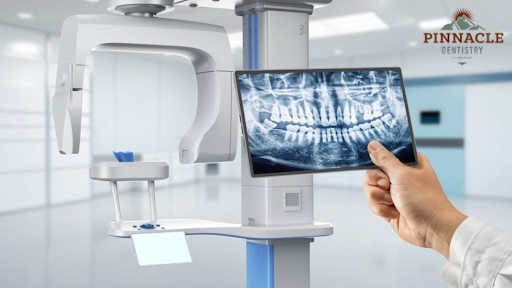
Most people don’t give X-rays much thought until they are seated in the dentist’s chair. By that point, all you want is for the dentist to diagnose the issue and make the necessary corrections. And honestly, the technology dentists use to do that has come a long way, further than most patients realize.
In practice, digital dental X-rays have changed how dental care is delivered in Colorado Springs, and this matters. Whether someone walks in for a standard checkup or is dealing with a tooth emergency and needs care right away, digital X-rays are often involved at some point. They show things no exam ever could on its own.
Let’s keep reading to learn how these digital X-rays work and the benefits for your dental checkup.
What Are Digital Dental X-Rays?
The old way of examination involved film. You’d bite down on a cardboard packet, wait while it got developed in chemicals, and eventually the dentist would hold it up to a light to read it. The whole process took time and wasn’t exactly comfortable.
Digital X-rays cut all of that out. Instead of a film, there’s a small electronic sensor. It captures an image and sends it to a computer, usually within a few seconds. The dentist sees it almost immediately. The image is sharper than anything ever produced on film, and the whole experience is noticeably faster.
Clinics offering dental care in Colorado Springs have largely switched over because the advantages aren’t minor. Better images, less radiation, faster turnaround. It’s a meaningful upgrade, not just a cosmetic one.
What Are the Benefits of Digital Dental X-Rays?
There’s more to it than speed and convenience. Here’s what actually changes when the dental oral surgeons use digital imaging:
-
High Accuracy for Early Detection
Many dental problems start small. A tiny cavity between two teeth. A barely visible crack. Early bone loss that hasn’t yet caused symptoms. None of those show up reliably on a visual exam, but they are clearly visible on a digital X-ray. That matters because a small problem caught early is almost always cheaper and easier to treat than the same problem caught six months later when it’s become a real issue.
-
Reduced Radiation Exposure
Digital systems use significantly less radiation than traditional film, up to 90% less, depending on the system. That’s a big gap. It makes a difference for kids, especially, and for anyone who needs imaging done regularly. The lower exposure doesn’t compromise the image either.
-
Faster Results for Immediate Treatment
When someone comes in with sudden tooth pain or an injury, time matters. Film X-rays delayed the diagnosis. Digital images are ready almost the moment they’re taken. That speed directly benefits emergency dental care services; the dentist can assess the problem, explain it, and start treatment without making the patient wait longer than necessary.
-
Enhanced Communication with Patients
Something shifts when a patient can actually see what’s happening. A dentist pointing to a spot on a screen and saying, “Here’s the cavity, here’s where it’s headed if we leave it,” lands differently than just being told about it. Patients ask more questions. They understand why a particular treatment is being recommended. That kind of clarity builds trust in a way that a verbal explanation alone rarely does.
-
Better Treatment Planning
Some procedures genuinely depend on precise imaging. Dental implants, root canals, orthodontic work, these aren’t things that are close enough to what a comprehensive dental exam actually includes. Digital X-rays let dentists zoom in, adjust the image, and share it directly with any specialists involved. Everyone’s looking at the same information, which makes coordination cleaner and outcomes more predictable.
-
Easier Storage and Sharing
Physical films had to be stored somewhere and tracked down when needed. That system worked, but it wasn’t efficient. Digital files are stored electronically and can be pulled up or forwarded in minutes. If a patient moves, changes providers, or needs a second opinion, sharing the imaging history is a non-issue.
-
Non-Invasive Experience
Old film packets were stiff and uncomfortable, particularly for patients with smaller mouths or a gag reflex. Digital sensors are smaller, and the process is faster. Neither of those is a dramatic improvement on its own, but together they make the experience noticeably less unpleasant, which matters for patients who already find dental visits stressful.
-
Environmentally Friendly
No film development means no chemical processing and no hazardous disposal. It’s a straightforward environmental win. Dental clinics that have made the switch have eliminated a waste stream that wasn’t trivial. Patients occasionally ask about this, and it’s worth knowing that digital imaging is the cleaner option.
-
Supports Preventive Care
This one gets overlooked. When a dentist has years of digital X-rays on file for a patient, they can actually track changes over time. A spot that looks slightly different from the way it did two years ago. A gradual shift in bone density. Those patterns don’t show up in a single scan; they emerge when you’re comparing images across visits. That’s how dentists catch things before they escalate, and it’s a big part of affordable dental care in Colorado Springs in the long term. Preventing a problem is almost always cheaper than treating one.
-
Peace of Mind in Emergencies
Emergency dental services are stressful. Something hurts badly, and you don’t know if it’s a simple fix or something serious. Digital X-rays give the dentist fast, clear information in exactly those situations, whether an infection has spread, whether a tooth is salvageable, and what’s actually happening under the gum line. That information quickly cuts through the uncertainty. For anyone dealing with emergency dental care in Colorado Springs, that clarity is genuinely reassuring.
Conclusion
Digital dental X-rays aren’t flashy. They’re not the kind of thing most patients think about when they’re booking an appointment. But they quietly affect how quickly problems get caught, how accurately they’re diagnosed, and how confidently a treatment plan is built. The reduction in radiation exposure matters. The speed matters. The ability to actually show a patient what’s going on in their mouth matters.
For anyone seeking dental care in Colorado Springs, Pinnacle Dentistry is a solid option. We use modern imaging alongside patient-focused care to ensure visits deliver clear answers and real results, not vague reassurances.
Contact us for reliable dental services in Colorado Springs, and boom, your next visit with us today, and make your dental health a priority.
