
What Full Dentures Actually Cost Without Insurance (And What to Expect)
Understanding the cost of full dentures without insurance is the first step toward making a confident, informed decision about your smile. For many individuals, facing the prospect of losing all natural teeth is both an emotional and physical challenge. Beyond the obvious aesthetic concerns, missing teeth can severely impact your ability to chew nutritious foods, speak clearly, and maintain the structural integrity of your face. Fortunately, modern restorative dentistry offers highly sophisticated solutions that can rebuild your smile from the ground up. Here is a quick snapshot of what most people pay out of pocket in the U.S.:
| Denture Type | Average Cost Per Arch | Typical Range |
|---|---|---|
| Basic complete dentures | $1,500 | $600 – $2,500 |
| Mid-range complete dentures | $2,000 | $1,500 – $3,000 |
| Premium complete dentures | $3,500 | $3,000 – $5,000 |
| Immediate dentures | $1,900 | $1,000 – $3,000 |
| Implant-supported dentures | $12,000 | $4,000 – $30,000 |
Note: These figures are per arch (upper or lower). A full set covering both arches will roughly double the base cost before factoring in preparatory procedures.
More than 36 million Americans have lost all of their natural teeth, and roughly 90% of them rely on dentures to eat, speak, and smile with confidence. Yet for the millions of adults without dental coverage, the path to a complete smile can feel uncertain, mostly because it is hard to know what you will actually owe before you walk into a dental office. The financial aspect of restorative care should never be a barrier to living a healthy, fulfilling life, which is why having a clear breakdown of potential expenses is so valuable.
The truth is, denture pricing is rarely straightforward. Your total out-of-pocket cost depends on the type of denture you need, the materials used, where you live, and what preparatory work, like extractions or X-rays, your mouth requires before a denture can even be made. Basic dentures with exams and extractions can land somewhere between $1,000 and $3,500, while premium options with follow-up care can push past $5,000. By exploring these variables in detail, you can make an empowered decision that aligns with both your clinical needs and your financial comfort.
I am Dr. Thomas Jennings, DDS, MAGD, founder of Pinnacle Dentistry in Colorado Springs, CO, with over 35 years of experience helping patients navigate restorative options, including the cost of full dentures without insurance. In the sections ahead, I will break down exactly what drives denture pricing, what hidden costs to watch for, and how to make this treatment genuinely affordable.
What Is the Average Cost of Full Dentures Without Insurance?
When you begin researching the cost of full dentures without insurance, you will quickly notice a wide spectrum of pricing. Nationally, the average out-of-pocket cost for a single-arch denture hovers around $2,000, meaning a full set (both upper and lower arches) averages about $4,000. However, depending on the path you choose, traditional complete dentures can range anywhere from $600 to over $10,000 in the United States. This vast range exists because dentures are highly customized prosthetics, and the level of artistry, material quality, and clinical expertise involved varies significantly from one practice to another.
Over the last several years, dental care costs have experienced steady inflation. From 2022 to May 2026, average denture prices rose by approximately 17.7%. This makes understanding your options more critical than ever. In our local region of Colorado Springs, CO, patients typically see average costs of about $2,160 per arch for conventional full dentures. This regional variation is normal, as local overhead, laboratory costs, and the availability of specialized dental ceramists all play a role in final pricing. When dental offices must pay higher rent, competitive wages for skilled staff, and premium fees to local dental laboratories, these operational costs are naturally reflected in the treatment fees.
To help you visualize where your budget might sit, we can look at the national denture pricing statistics compiled across different dental practices. While some national corporate clinics advertise rock-bottom starter rates, those entry-level options often lack the personalization and high-grade materials required for long-term comfort. A cheap denture that causes chronic pain, slips constantly, or breaks within the first year is ultimately a poor investment. Knowing the difference between the different types of dentures will help you determine which tier matches both your financial boundaries and your lifestyle goals.
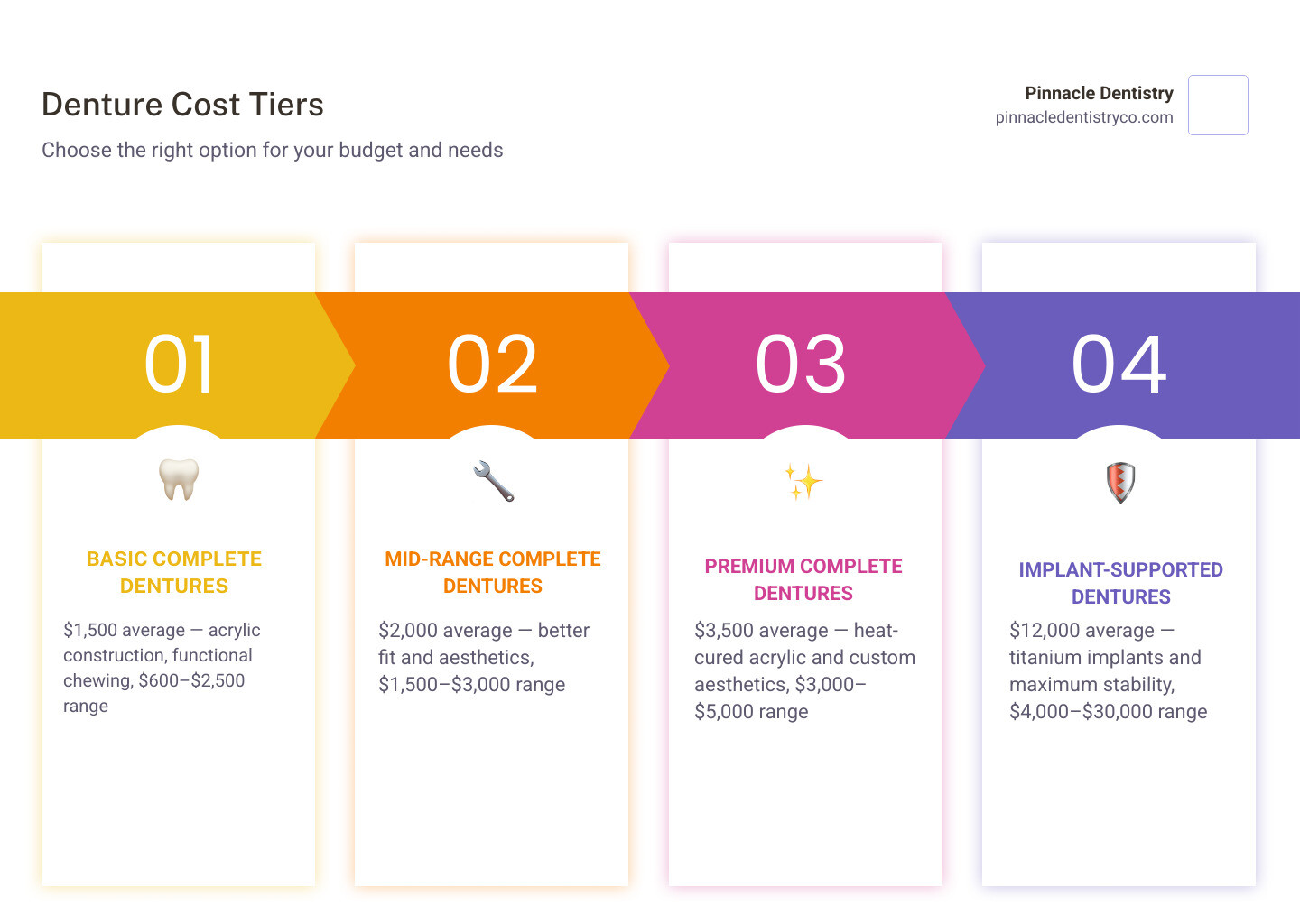
Breaking Down the Cost of Full Dentures Without Insurance by Type
The overall price of your new smile is heavily dictated by the tier of prosthetic you select. Dentures are not a one-size-fits-all product. They are custom-crafted medical devices that vary in durability, realism, and structural support. Choosing the right tier involves balancing your immediate budget with your long-term expectations for comfort, speech, and chewing efficiency.
Basic and Mid-Range Complete Dentures
Basic complete dentures represent the most budget-friendly entry point, typically ranging from $600 to $1,500 per arch. These prosthetics are generally constructed using cold-cure acrylics and pre-fabricated standard teeth. Because cold-cure acrylics undergo more shrinkage during the curing process, the final fit may not be as precise as higher-tier options. While they successfully restore basic chewing function, they are often less customizable, meaning they may look slightly more uniform and feel bulkier in the mouth. Many patients use basic dentures as temporary transition devices while their gums heal, or as an emergency backup set.
Mid-range dentures, which typically cost between $1,500 and $3,000 per arch, offer a substantial step up in both comfort and appearance. These utilize heat-cured acrylic bases that shrink less during manufacturing, resulting in a much more precise fit against your gums. The teeth used in mid-range options are also more resistant to stains and wear, often featuring multiple layers of acrylic to mimic the natural translucency of real teeth. For patients seeking reliable everyday performance, these traditional full denture options offer an excellent balance of cost and daily utility.
Premium and Implant-Supported Options
For patients who prioritize maximum realism and longevity, premium dentures range from $3,000 to $5,000 per arch. Premium prosthetics feature highly customized, hand-characterized acrylic bases that mimic the natural shading, contours, and tiny blood vessels of real gum tissue. The teeth are constructed from high-density polymers or premium porcelain, which reflect light just like natural enamel and are highly resistant to wear over time. These dentures are designed to look completely natural, ensuring that no one can tell you are wearing a prosthetic.
At the top of the spectrum are implant-supported dentures, which can cost anywhere from $4,000 to $30,000 per arch. This price range is broad because it includes both the surgical placement of dental implants and the custom prosthetic itself. Rather than resting loosely on the gums, these implant-supported overdentures snap securely onto titanium posts embedded in the jawbone. This eliminates the need for messy adhesives, prevents the embarrassing slipping of the lower denture, and preserves your jawbone density over time by stimulating the bone just like natural tooth roots.
Key Factors That Influence Your Total Out-of-Pocket Expenses
The final number on your dental estimate is shaped by several distinct variables. Understanding these factors will help you compare quotes objectively and avoid choosing a provider based solely on a deceptively low advertised price. A comprehensive treatment plan should account for every step of the process, from the initial consultation to the final adjustments.
The first factor is the dentist’s level of training and experience. A general dentist may charge less, but working with a highly trained professional ensures your bite alignment is precisely calibrated. Dr. Jennings and Dr. Kazemi at Pinnacle Dentistry hold Mastership status with the Academy of General Dentistry (MAGD), a distinction held by less than 2% of dentists nationwide. This advanced training directly translates to fewer adjustment appointments, a more comfortable fit, and a significantly lower risk of long-term jaw joint issues like TMJ disorder.
Secondly, local laboratory fees play a massive role. High-quality dental laboratories charge more to custom-craft prosthetics because they employ master technicians who spend hours detailing your appliance. Lastly, geography affects overhead. According to regional dental cost variations, dental care in metropolitan areas or regions with higher costs of living naturally reflects those local business expenses.
Preparatory Procedures and Hidden Fees
When budgeting for the cost of full dentures without insurance, many patients overlook the treatments required before the denture can actually be worn. If you have failing teeth that need to be removed, professional extractions are necessary. A routine extraction typically costs between $150 and $400 per tooth, which can add up quickly if multiple teeth remain. In some cases, a surgical extraction or alveoloplasty (the surgical smoothing and reshaping of the jawbone) is required to create a comfortable, even foundation for the denture.
Additionally, diagnostic work is essential. You can expect to pay around $100 for a comprehensive oral examination and approximately $130 for a diagnostic panoramic X-ray to evaluate your underlying bone structure. If you choose to have an immediate denture placed on the same day your teeth are extracted, this temporary healing prosthetic will add to your initial expenses. These preparatory steps are vital to ensure your mouth heals safely and provides a stable foundation for your permanent teeth.
Long-Term Maintenance and the Cost of Full Dentures Without Insurance
Your financial plan should also account for the ongoing maintenance of your new smile. Your jawbone naturally changes shape over time once natural teeth are gone, a biological process called bone resorption. Without tooth roots to stimulate the bone, the body naturally reabsorbs the minerals, causing the jawbone to shrink and weaken. As the bone shrinks, your denture will gradually lose its tight seal and begin to wiggle, slip, or cause painful sore spots.
To correct this, you will need a professional denture relining every one to two years. A professional hard reline performed by a dental laboratory averages around $500 per arch, while temporary soft liners can cost slightly less. Accidental drops can also lead to cracked acrylic or chipped teeth. Having access to reliable denture repair services is crucial for keeping your daily routine uninterrupted. With proper care, a high-quality denture typically lasts between 5 and 10 years before requiring a complete replacement.
Smart Ways to Manage the Cost of Full Dentures Without Insurance
If you do not have traditional dental insurance, you do not have to put off restoring your smile. There are several highly effective strategies to make high-quality care fit comfortably into your monthly budget. Taking a proactive approach to your dental health can prevent minor issues from turning into costly emergencies.

One option is seeking care at dental schools, where supervised students perform treatments at a discount of 50% to 70% compared to private practices. However, these appointments often take significantly longer and require multiple visits, which may not be feasible for working adults. Another route is utilizing dental discount plans, which function like warehouse club memberships where you pay an annual fee to access pre-negotiated member rates at participating clinics.
At Pinnacle Dentistry, we believe high-quality dental care should be accessible to everyone in our Colorado Springs, CO community. That is why we offer our own in-house dental membership plans designed specifically for self-pay patients. Members pay a straightforward annual fee that covers preventive care and provides a guaranteed 15% discount on all restorative treatments, including custom dentures. This plan eliminates the hassle of waiting periods, annual maximums, and pre-authorizations associated with traditional insurance.
Navigating Care When You Do Not Have Dental Benefits
For larger restorative projects, paying the entire balance upfront can feel overwhelming. To solve this, we partner with reputable third-party healthcare lenders to offer flexible dental financing options. These programs allow you to break your total treatment cost down into manageable monthly payments, often with low-interest or interest-free promotional periods. By utilizing these payment structures, you can begin your treatment immediately and pay for your new smile comfortably over time, ensuring your oral health remains a top priority.
Frequently Asked Questions About Denture Costs
1. What is the average cost of full dentures without insurance in the U.S.?
The national average cost for a traditional complete denture is approximately $1,800 to $2,000 per arch, meaning a full set for both upper and lower jaws typically starts around $3,600 to $4,000. Depending on the materials used and the complexity of your case, the total price can range from $1,200 for basic economy sets to over $10,000 for premium custom-crafted options.
2. How much do immediate dentures cost compared to conventional ones?
Immediate dentures, which are placed in your mouth on the exact same day your remaining teeth are extracted, average around $1,900 per arch. They are slightly more expensive than conventional dentures because they require additional planning, modifications, and temporary liners as your gums shrink and heal during the four to six month post-extraction period.
3. Are there hidden fees associated with getting new dentures?
Yes, the base price of the denture itself rarely covers the full scope of treatment. Additional preparatory costs can include comprehensive oral exams, diagnostic X-rays, tooth extractions, and tissue conditioning. It is important to request a detailed, written treatment plan from your provider that outlines all of these associated fees upfront.
4. How long do full dentures typically last before needing replacement?
A high-quality set of full dentures typically lasts between 5 and 10 years. Over time, the materials naturally experience wear, and the underlying jawbone will gradually change shape. To maintain a secure, comfortable fit and prevent joint pain, you will need periodic professional relines and eventually a new set of prosthetics.
5. What is the difference in cost between partial and full dentures?
Traditional partial dentures, which replace only a few missing teeth while utilizing your remaining natural teeth for support, generally cost between $700 and $2,500 depending on the framework material. Full dentures replace an entire arch of teeth and average $1,500 to $3,500 per arch due to the larger volume of materials and laboratory time required.
6. Why does the cost of full dentures without insurance vary by state?
Denture pricing is heavily influenced by regional economic factors. Dentists in areas with higher overhead, such as urban West Coast markets, must charge more to cover lease costs, staff wages, and local laboratory fees. For example, a denture that costs $1,400 in a rural state might cost over $2,100 in a metropolitan area.
7. Do dental schools offer cheaper options for complete dentures?
Yes, dental schools are an excellent way to access discounted care. Because dental students perform the procedures under the direct supervision of licensed, experienced faculty dentists, treatments are typically offered at 50% to 70% less than standard private practice fees. The trade-off is that appointments generally take much longer.
8. How much does a professional denture reline cost out of pocket?
A professional hard laboratory reline typically costs between $300 and $800 per arch, with a national average of around $500. This procedure involves resurfacing the tissue side of your denture with new acrylic to match the updated contours of your gums and jawbone, restoring a tight, secure fit.
9. Are implant-supported dentures worth the extra investment?
For many patients, yes. While implant-supported options are significantly more expensive, ranging from $4,000 to over $30,000 per arch, they offer unmatched stability and function. They prevent the bone loss associated with missing teeth, eliminate the need for adhesives, and allow you to eat your favorite foods without fear of your teeth slipping.
10. Can I get a payment plan for dentures if I don’t have insurance?
Absolutely. Most modern dental practices partner with third-party financing companies to offer flexible payment plans. These programs allow you to divide the total cost of your treatment into affordable monthly payments, often with interest-free options for qualified applicants, making high-quality care highly accessible.
Conclusion
Losing your natural teeth can feel overwhelming, but restoring your smile does not have to be a financial mystery. By understanding the factors that shape the cost of full dentures without insurance, you can make smart decisions that protect both your oral health and your budget. From basic conventional options to life-changing implant-supported prosthetics, there is a restorative solution that fits your unique goals.
At Pinnacle Dentistry, our highly trained team is dedicated to providing personalized, compassionate care to families throughout Colorado Springs, CO. We pride ourselves on transparent pricing and offer flexible payment solutions, including our in-house membership plan and third-party financing, to ensure your care remains entirely within reach.
Whether you need a comprehensive oral evaluation, custom-crafted prosthetics, or ongoing maintenance, our experienced team is ready to help. To take the first step toward a healthy, complete, and confident smile, schedule a full denture consultation with our compassionate dental professionals today.