


What Are Root Canals? A Quick, Clear Answer
What are root canals is one of the most common dental questions people search for, and it makes sense, because few phrases cause more anxiety at the dentist’s office. Here is a straight answer before we go any deeper:
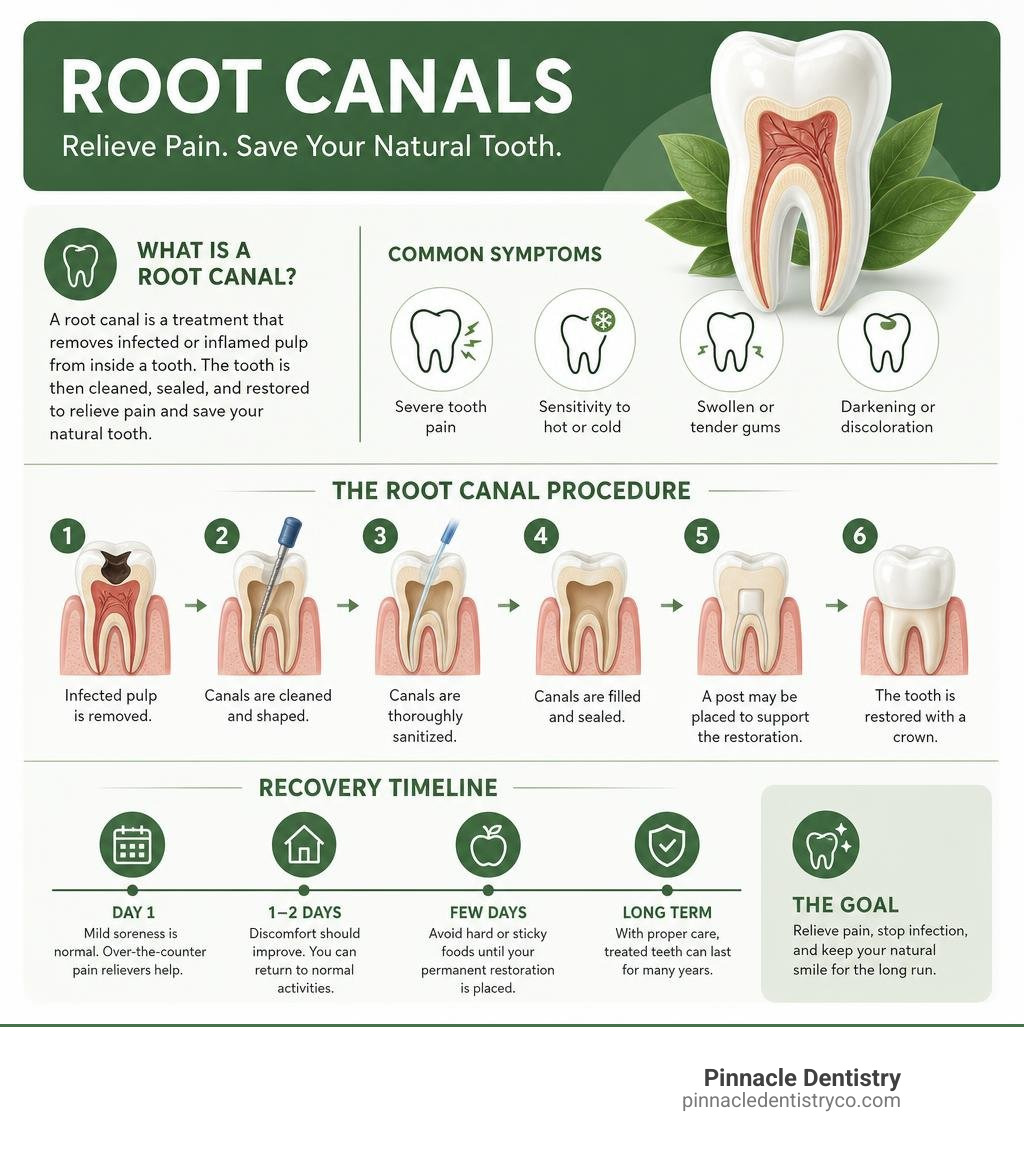
Root canal treatment is a dental procedure that removes infected or inflamed tissue (called pulp) from inside a tooth. Once the pulp is removed, the tooth is cleaned, sealed, and restored, usually with a crown. The goal is simple: save the natural tooth and stop the infection.
Quick overview:
- What it is: A procedure to remove infected pulp from inside a tooth
- Why it’s done: To stop infection, relieve pain, and save the tooth from extraction
- Who performs it: A general dentist or a specialist called an endodontist
- Does it hurt: Modern anesthesia makes it similar in discomfort to getting a filling
- How long it takes: Usually 1 to 2 appointments of 60 to 90 minutes each
- Recovery: Most people return to normal activities the same day
- Success rate: A large-scale study of over 1.6 million patients found 97% retained their teeth 8 years after treatment
Millions of root canal treatments are performed in the United States every year. Yet the procedure still carries a reputation for being painful and scary. Most of that fear comes from outdated information. Modern root canals are far more comfortable than living with an infected tooth.
I’m Dr. Thomas Jennings, DDS, MAGD, founder of Pinnacle Dentistry in Colorado Springs, CO, and with over 35 years of experience in general and restorative dentistry, I’ve helped countless patients understand what are root canals and guided them through the procedure with confidence and comfort. In this guide, I’ll walk you through everything you need to know, from symptoms and causes to the procedure itself and long-term care.
What Are Root Canals and How Do They Work?
To understand how a root canal works, it helps to take a quick look at the anatomy of your teeth. Your teeth are not solid bone; they are complex structures made of several layers.
The outermost layer is the enamel, which is the hardest substance in the human body. Beneath the enamel lies the dentin, a hard but porous layer that supports the structure of the tooth. Deep inside the dentin, in the very center of the tooth, is a hollow space called the pulp chamber. This chamber extends down into the roots of your teeth through narrow pathways called root canals.
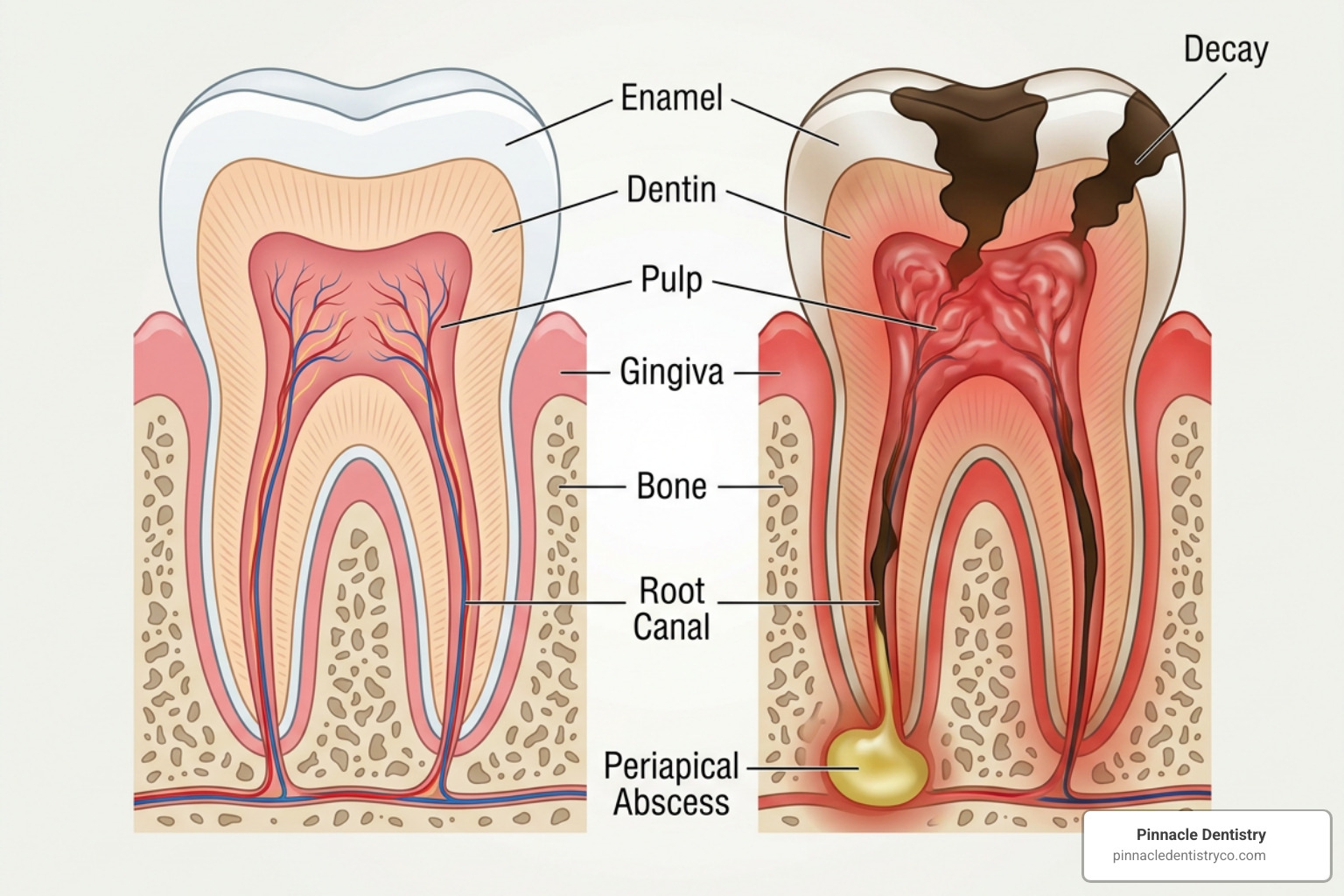
The pulp chamber contains the dental pulp, which is a soft tissue made up of nerves, blood vessels, and connective tissue. During your childhood, the pulp plays a vital role in helping the tooth grow and develop. However, once a tooth is fully matured, it can easily survive without the pulp. This is because the tooth continues to receive its primary nourishment from the surrounding tissues and gums.
When the pulp becomes damaged, inflamed, or deeply infected, a root canal is the only way to save the tooth. If you are interested in a deep dive into the mechanics of this treatment, you can read our detailed guide on what are root canals and how do they work? to learn more.
Understanding What Are Root Canals
When dentists talk about root canals, they are actually referring to two different things: the anatomical canals inside your tooth roots, and the clinical procedure used to treat them. The formal medical term for this procedure is endodontic therapy.
The primary goal of endodontic therapy is complete infection elimination. When bacteria breach the enamel and dentin, they invade the pulp chamber. This triggers an inflammatory response. Because the pulp is encased in a rigid structure, there is nowhere for the swelling tissue to go. This builds up pressure, which is what causes the intense pain associated with a tooth infection.
During therapy, we carefully access the interior of the tooth, clean out the damaged pulp, and disinfect the canals. This stops the localized infection and prevents bacteria from spreading into the surrounding bone and bloodstream. For a comprehensive overview of how this process works, the root-canals-explained – American Association of Endodontists resource offers excellent educational tools.
The Benefits of Saving Your Natural Tooth
When faced with a severely infected tooth, you generally have two choices: save the tooth with a root canal or go through a tooth extraction. While pulling the tooth might seem like a quick fix, saving your natural tooth is almost always the superior choice for your oral health, your wallet, and your long-term quality of life.
Here are the main reasons why preserving your natural tooth is so beneficial:
- Maintains Natural Chewing Function: Your natural teeth are perfectly designed for chewing. Even the best dental implants or dental bridges cannot fully replicate the natural sensation and bite force of your own tooth.
- Prevents Teeth Shifting: When a tooth is extracted, a gap is left behind. Over time, the neighboring teeth will naturally drift into this open space. This shifting can ruin your alignment, alter your bite, and lead to jaw joint pain (TMJ issues).
- Protects the Jawbone: Your natural tooth roots stimulate your jawbone when you chew. When a tooth is removed, the bone in that area begins to deteriorate and resorb, which can eventually change your facial structure.
- Cost-Effective in the Long Run: Many people worry about the initial cost of a root canal. However, when you factor in the cost of a tooth extraction plus the necessary replacement, like an implant or bridge, saving the tooth is actually much more affordable.
- High Long-Term Success Rates: As noted in the MouthHealthy guide from the ADA, a properly treated and restored tooth can last a lifetime with standard oral hygiene.
Signs, Symptoms, and Causes: When Is a Root Canal Necessary?
A root canal becomes necessary when the internal pulp of the tooth is damaged beyond repair. This damage is usually caused by bacteria entering the pulp chamber, which can happen for several reasons:
- Deep Decay: If a cavity is left untreated, it will eventually eat through the enamel and dentin, giving bacteria a direct pathway into the pulp.
- A Cracked or Chipped Tooth: Physical injuries or genetics can cause cracks in the tooth structure. These cracks allow bacteria to seep into the center of the tooth.
- Dental Trauma: A hard blow to the face or mouth can damage the delicate blood vessels and nerves at the root tip, causing the pulp to die even if there are no visible cracks.
- Repeated Dental Procedures: Sometimes, a tooth that has undergone multiple deep fillings or extensive restorations can experience chronic irritation, eventually leading to irreversible pulpitis.
To understand the timing and urgency of these situations, you can read about when is an emergency root canal necessary, signs, procedure, recovery to help you evaluate your current symptoms.

How to Identify What Are Root Canals and Their Warning Signs
Our bodies are highly efficient at letting us know when something is wrong. An infected tooth will usually send out clear distress signals. If you are experiencing any of the following symptoms, you should schedule a dental evaluation immediately:
- Severe, Persistent Toothache: This is often a deep, throbbing pain that can worsen when you lie down or bite down.
- Extreme Temperature Sensitivity: Lingering pain or sensitivity to hot or cold foods and drinks, even after the hot or cold item is gone, is a classic sign of pulp damage.
- Swollen or Tender Gums: The gums near the painful tooth may look red, swollen, or feel tender to the touch.
- Pimples on the Gums: A small, pimple-like bump, known as a gum boil or fistula, may form on your gums. This is an abscess draining pus, which often leaves an unpleasant taste in your mouth.
- Tooth Discoloration: An infected or dead tooth may take on a dark grey, black, or yellowish hue as the internal pulp tissue breaks down.
- Referred Pain: Sometimes, the infection can cause pain that radiates to your jaw, ear, or temple, making it hard to tell exactly which tooth is hurting.
If you notice any of these warning signs, it is important to consult a professional. We recommend checking out these 7 signs you need to see an endodontist in Colorado Springs, CO to help you identify when specialized care is required.
What Happens If You Delay Treatment?
Ignoring a toothache or hoping an infection will go away on its own is a dangerous gamble. Unlike a cold, a dental infection will not resolve without professional intervention.
If you delay treatment, the infection will continue to destroy the pulp tissue. Once the pulp dies completely, the pain might temporarily subside. However, this is a false sense of security. The bacteria are still active and will begin to migrate out of the root tip and into the surrounding bone.
This progression can lead to several serious complications:
- Abscess Formation: A painful, pus-filled pocket will develop at the root tip, leading to severe swelling in your face, jaw, or neck.
- Bone Loss: The localized infection will gradually erode the jawbone supporting the tooth, eventually leading to loose teeth and tooth loss.
- Systemic Health Risks: In severe cases, the infection can enter your bloodstream or deep facial tissues. This can lead to life-threatening systemic conditions, such as sepsis or infections that can affect your cardiovascular system.
If you suspect you have an infection, seeking emergency dental care as soon as possible is crucial to protecting both your smile and your overall health.
The Procedure and Recovery: What to Expect
Many patients feel anxious before their first root canal because they do not know what to expect. At Pinnacle Dentistry, we believe that education is the best antidote to anxiety. Knowing the steps of the procedure can help you feel calm and in control.
Modern root canal therapy is highly streamlined, comfortable, and typically completed in just one or two visits. It is designed to be as quiet and routine as getting a standard deep filling.
Step-by-Step Guide to the Treatment
Here is what actually happens when you sit in the dental chair for a root canal:
- X-rays and Examination: We begin by taking detailed digital dental X-rays of the affected tooth. This allows us to see the shape of the root canals and check for signs of infection in the surrounding bone.
- Local Anesthesia: We administer a local anesthetic to completely numb the tooth and the surrounding gums. Our goal is to ensure you do not feel any pain during the treatment.
- Dental Dam Placement: We place a thin, protective rubber sheet called a dental dam over the area. This isolates the infected tooth, keeping it completely dry and free of saliva, which contains bacteria, during the procedure.
- Creating the Access Cavity: We make a very small opening in the crown, the top, of the tooth to access the inner pulp chamber.
- Pulp Removal: Using specialized, highly precise instruments, we gently remove all of the diseased, inflamed, and dead pulp tissue from the chamber and the root canals.
- Cleaning and Shaping: We thoroughly clean, disinfect, and shape the interior of the root canals. We use gentle irrigating solutions to flush out any remaining bacteria and debris.
- Sealing the Canals: Once the canals are clean and dry, we fill them with a biocompatible, rubber-like material called gutta-percha. This material is placed with an adhesive cement to seal the canals and prevent future bacterial invasion.
- Temporary Filling: We seal the access opening with a temporary filling to protect the tooth until your permanent restoration is placed.
- Permanent Restoration: Because a tooth loses its internal blood supply after a root canal, it can become brittle over time. To protect the structural integrity of the tooth and restore full chewing power, we will place a permanent dental crown or a strong permanent filling at a follow-up appointment.
For a more detailed look at what to expect during this process, read our guide on what to expect during and after an emergency root canal.
Managing Pain and Post-Procedure Recovery
Once the local anesthesia wears off, it is completely normal to experience some mild soreness, tenderness, or a feeling of pressure around the treated tooth. This is not caused by the root canal itself, but rather by the natural healing process of the surrounding tissues that were inflamed before the procedure.
Most patients find that this minor discomfort is easily managed with over-the-counter pain relief medications, such as ibuprofen or acetaminophen. We recommend reading our guide on understanding root canal pain: before, during, and after to help you manage your comfort during the healing phase.
To ensure a smooth and speedy recovery, keep these key aftercare tips in mind:
- Avoid Chewing on the Treated Tooth: Until your permanent crown is placed, the tooth is vulnerable to fracturing. Try to chew on the opposite side of your mouth.
- Stick to Soft Foods: For the first few days, enjoy soft, nutritious foods like yogurt, eggs, smoothies, mashed potatoes, and pasta. Avoid hard, crunchy, or sticky foods.
- Maintain Good Oral Hygiene: Continue to brush and floss your teeth normally. Just be exceptionally gentle when flossing around the tooth with the temporary filling.
- Avoid Smoking: Smoking delays your body’s natural healing process and can increase your risk of complications.
For a complete breakdown of what you should and shouldn’t do during your recovery, check out our resource on root canal aftercare: the dos and don’ts after your procedure.
Frequently Asked Questions About Root Canals
Is a root canal painful?
Thanks to modern local anesthesia and advanced dental techniques, a root canal is no more painful than getting a standard cavity filled. The procedure is actually designed to relieve the severe pain caused by a tooth infection, not cause it. Most patients experience immediate relief once the infected pulp is removed. Some mild soreness or tenderness is common for a few days after the procedure, but this is easily managed with standard over-the-counter pain medications.
How long does a root canal procedure take?
A standard root canal procedure typically takes between 60 and 90 minutes per tooth. The exact duration depends on the complexity of the tooth being treated. For example, anterior teeth (front teeth) usually have only one root canal and are faster to treat, whereas molars (back teeth) can have three, four, or more canals, which requires more time to clean and seal. Most treatments are completed in a single visit, though complex cases may require two appointments.
What is the recovery time after a root canal?
Most patients are able to return to their normal daily activities, including school or work, the very same day. The localized numbness from the anesthesia will wear off within two to four hours, and we recommend waiting to eat until the numbness is completely gone to avoid accidentally biting your tongue or cheek. Any residual soreness or sensitivity in the area typically resolves within a few days to a week.
Can a root canal fail?
While root canals have an outstanding success rate of around 97%, they can occasionally fail. This usually happens if a tiny, hidden canal was missed during the initial cleaning, if the restoration was delayed allowing bacteria to recontaminate the tooth, or if a new fracture develops. If a root canal does fail, the tooth can often be saved through a non-surgical retreatment, where we reopen the tooth, clean it again, and place a new seal.
What are the alternatives to a root canal?
The only real alternative to a root canal is extracting the infected tooth. While extraction solves the immediate infection, it leaves a gap that must be filled to prevent your other teeth from shifting. Replacing a missing tooth requires more invasive and expensive treatments, such as dental implants or dental bridges. Saving your natural tooth with a root canal is always the healthiest, most functional, and most cost-effective option.
How much does a root canal cost?
The cost of a root canal can vary depending on several factors, including which tooth needs treatment and the overall complexity of the procedure. Molars are generally more expensive to treat than front teeth because they have more root canals that require extensive cleaning and sealing. While we keep our care highly accessible, we always recommend contacting your dental office directly for a personalized estimate based on your specific clinical needs.
Is a root canal covered by dental insurance?
Yes, most dental insurance plans cover a significant portion of root canal therapy, as it is considered a major restorative and medically necessary procedure. The exact amount of coverage will depend on your specific insurance provider and plan benefits. Our administrative team is always happy to help you navigate your insurance benefits, submit pre-authorizations, and coordinate your coverage to minimize your out-of-pocket expenses.
Can an infected tooth heal on its own without a root canal?
No, an infected tooth pulp cannot heal on its own. While the body’s immune system can fight off infections in other tissues, the pulp is trapped inside a rigid chamber with a very limited blood supply. Once bacteria invade this space, the pulp will eventually die. Even if your pain temporarily disappears because the nerve has died, the active infection remains and will continue to spread into your jawbone if it is not professionally treated.
Do I need a crown after a root canal?
In the vast majority of cases, yes. A tooth that has undergone a root canal loses its internal blood supply, which makes the remaining tooth structure dry and brittle over time. Additionally, back teeth (molars and premolars) are subjected to heavy biting forces. Placing a custom dental crown protects the tooth from cracking, restores its natural chewing function, and seals it against future bacterial leaks.
How can I prevent needing a root canal in the future?
The best way to prevent needing a root canal is to practice excellent preventative dentistry. This includes brushing your teeth twice a day with fluoride toothpaste, flossing daily to remove plaque between teeth, and visiting your dentist at least twice a year for routine exams and cleanings. If you play contact sports, always wear a protective mouthguard, and if you grind your teeth at night, ask your dentist about a custom nightguard to prevent fractures.
Conclusion: Partnering for Your Oral Health
Understanding what are root canals can help strip away the fear and anxiety that often surrounds this highly routine, tooth-saving procedure. Far from being something to dread, a root canal is a modern dental marvel that relieves pain, stops dangerous infections, and allows you to keep your natural smile for a lifetime.
At Pinnacle Dentistry, we are proud to offer personalized, compassionate care in a warm and welcoming environment. Our practice is led by certified Master of the Academy of General Dentistry (MAGD) dentists, which is a rare distinction achieved by less than 2% of dentists nationwide. This means you will receive the highest level of clinical expertise and advanced care right here in Colorado Springs, CO.
Whether you reside in Briargate, CO, El Paso County, CO, or the surrounding Colorado Springs, CO area, we are here to support your oral health journey. If you are experiencing tooth pain, sensitivity, or just need to catch up on your routine dental care, don’t wait for a small issue to turn into a major infection.
Explore our specialized dental services: endodontics (root canals) page to learn more about how we can protect your smile, or contact our friendly team today to schedule your personalized consultation at Pinnacle Dentistry on Research Parkway. Let us help you maintain a healthy, pain-free smile!
