

Why Ultrasonic Dental Hygiene Cleaning Is the Smartest Step for Your Smile
Ultrasonic dental hygiene cleaning is a professional teeth cleaning method that uses high-frequency vibrations and a water spray to break up and flush away plaque, tartar, and bacteria, including below the gumline, in less time and with less discomfort than traditional hand scaling.
Here’s what you need to know at a glance:
- What it is: A professional cleaning using a vibrating scaler tip and water to remove buildup from teeth and gum pockets
- Who it’s for: Most adults, especially those with heavy tartar, deep gum pockets, or gum disease
- How long it takes: About one-third less time than manual scaling
- Is it painful? Most patients feel little to no discomfort
- When to book: Every six months, or more often if your dentist recommends it
Even if you brush and floss every day, plaque can harden into calculus within just 48 hours, and no toothbrush can remove it once that happens. In fact, only 58% of people see their dentist each year, even though 85% say oral health is important to them. That gap between intention and action often leads to buildup that quietly damages gums and teeth over time.
Professional cleanings close that gap, and ultrasonic technology makes those cleanings faster, more comfortable, and more thorough than ever before.
I’m Dr. Thomas Jennings, DDS, MAGD, founder of Pinnacle Dentistry in Colorado Springs, CO, and I have spent over 35 years helping families protect their smiles with evidence-based care, including ultrasonic dental hygiene cleaning as a core part of our preventive approach. In the sections below, I’ll walk you through exactly how this technology works, who it helps most, and what to expect at your appointment.
What is an Ultrasonic Dental Hygiene Cleaning?
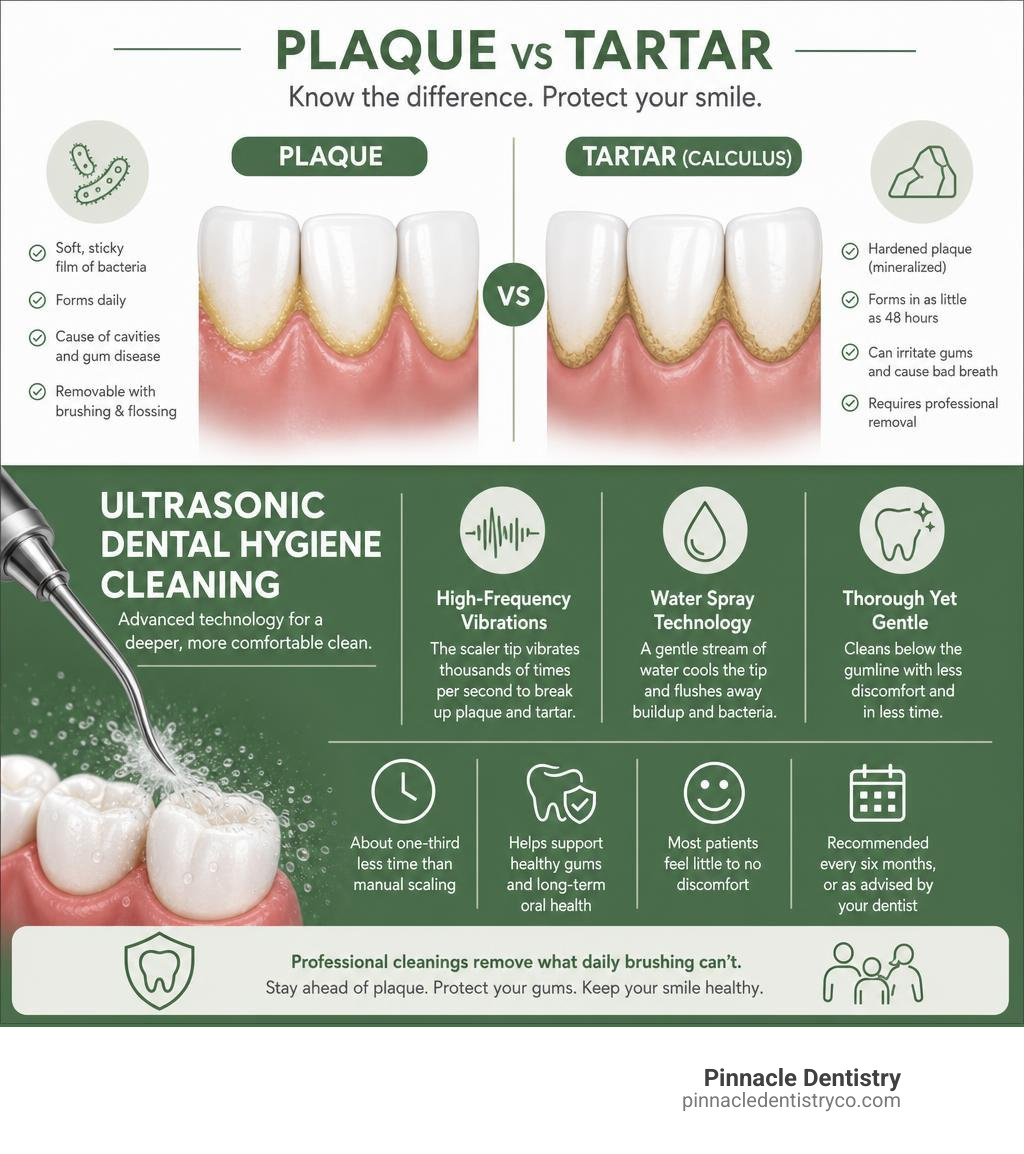
To understand how an ultrasonic dental hygiene cleaning works, it helps to imagine a tiny, high-powered pressure washer designed specifically for your teeth. Instead of relying solely on manual scraping, this advanced technology uses electromagnetic forces to vibrate a specialized metal tip at incredible speeds, typically around 30,000 cycles per second.
These rapid, high-frequency vibrations do the heavy lifting. When the vibrating tip gently touches the hardened calculus (tartar) on your teeth, the physical vibration instantly shatters the rigid bonds holding the buildup to your enamel.
However, the vibrations are only half of the equation. The scaler also releases a continuous stream of water, known as water lavage. This water spray serves several critical clinical purposes:
- Cooling the Tip: The rapid friction generates heat; the water keeps the instrument cool and safe for your teeth.
- Cavitation: As the water meets the vibrating tip, it creates millions of microscopic bubbles. These microbubbles rapidly collapse, releasing tiny burst of energy that help break down bacterial cell walls.
- Acoustic Turbulence: The movement of the water creates a swirling current that physically flushes out food debris, plaque, and free-floating bacteria from hard-to-reach areas.
This multi-action process is incredibly effective at sanitizing your mouth. If you want to dive deeper into how this process fits into modern preventive care, you can read more about how ultrasonic cleaning works in our detailed glossary.
Ultrasonic Scaling vs. Traditional Manual Scaling
For decades, traditional hand scaling was the gold standard. A dental hygienist would use a variety of hand-held steel instruments to manually scrape away plaque and tartar. While highly effective, manual scaling depends entirely on the physical force and tactile feedback of the hygienist.
Manual scaling requires the clinician to feel the tooth’s surface to locate rough patches of tartar and scrape them off. While this tactile feedback is highly valuable for fine-tuning, applying manual scraping force can sometimes feel uncomfortable or produce a scraping sound that makes patients anxious. Additionally, if manual tools are used with excessive force, there is a minor risk of removing microscopic layers of enamel, especially on vulnerable root surfaces.
Ultrasonic scaling, by contrast, relies on rapid vibrations to lift away deposits. This reduces the physical pressure needed to clean the tooth. Furthermore, because the machine does the hard work of breaking up large chunks of tartar, the entire procedure is significantly faster. On average, an ultrasonic cleaning takes about one-third less time than manual scaling alone.
To help visualize how these two methods compare, we have broken down their key differences below:
| Feature | Ultrasonic Scaling | Traditional Manual Scaling |
|---|---|---|
| Mechanism of Action | High-frequency sound waves, microbubbles, and water spray | Manual physical scraping |
| Treatment Speed | Fast (takes about 1/3 less time) | Slower, requiring tooth-by-tooth manual scraping |
| Tactile Feedback | Reduced (relies on visual checks and water flow) | High (hygienist can feel tiny deposits on the tooth) |
| Enamel Preservation | Extremely gentle; lower risk of scraping away enamel | Safe in skilled hands, but carries a higher risk of abrasion if heavy force is applied |
| Debris Removal | Flushes away bacteria and debris using water lavage | Scrapes debris off, requiring manual rinsing |
| Patient Comfort | High; minimal scraping sensation, though some feel vibration | Moderate; can feel like scraping or tugging on teeth |
While both techniques have their place, modern dental offices use a balanced combination of both. Hygienists often use traditional scaling instruments to perform fine-tuning after the ultrasonic device has cleared the bulk of the buildup.
The Key Benefits of Advanced Scaling Technology
Embracing advanced technology in the dental chair is all about elevating the patient experience. The benefits of incorporating an ultrasonic dental hygiene cleaning into your routine go far beyond just saving time.
First and foremost, it is exceptionally powerful at removing stubborn stains from coffee, tea, tobacco, and red wine that manual brushing cannot budge. Because the water lavage washes away the debris as it is loosened, your teeth are left feeling incredibly clean and smooth. This smooth surface is not just cosmetic; plaque has a much harder time sticking to a polished, smooth surface, which helps prevent future calculus from forming.
Furthermore, because the process is so efficient, patients spend less time with their mouths open, making the dental visit much more manageable for those with jaw fatigue or dental anxiety. This is why regular professional dental cleanings are so vital to keeping your smile bright and healthy over the long term.
Why Choose Ultrasonic Dental Hygiene Cleaning for Deep Pockets?
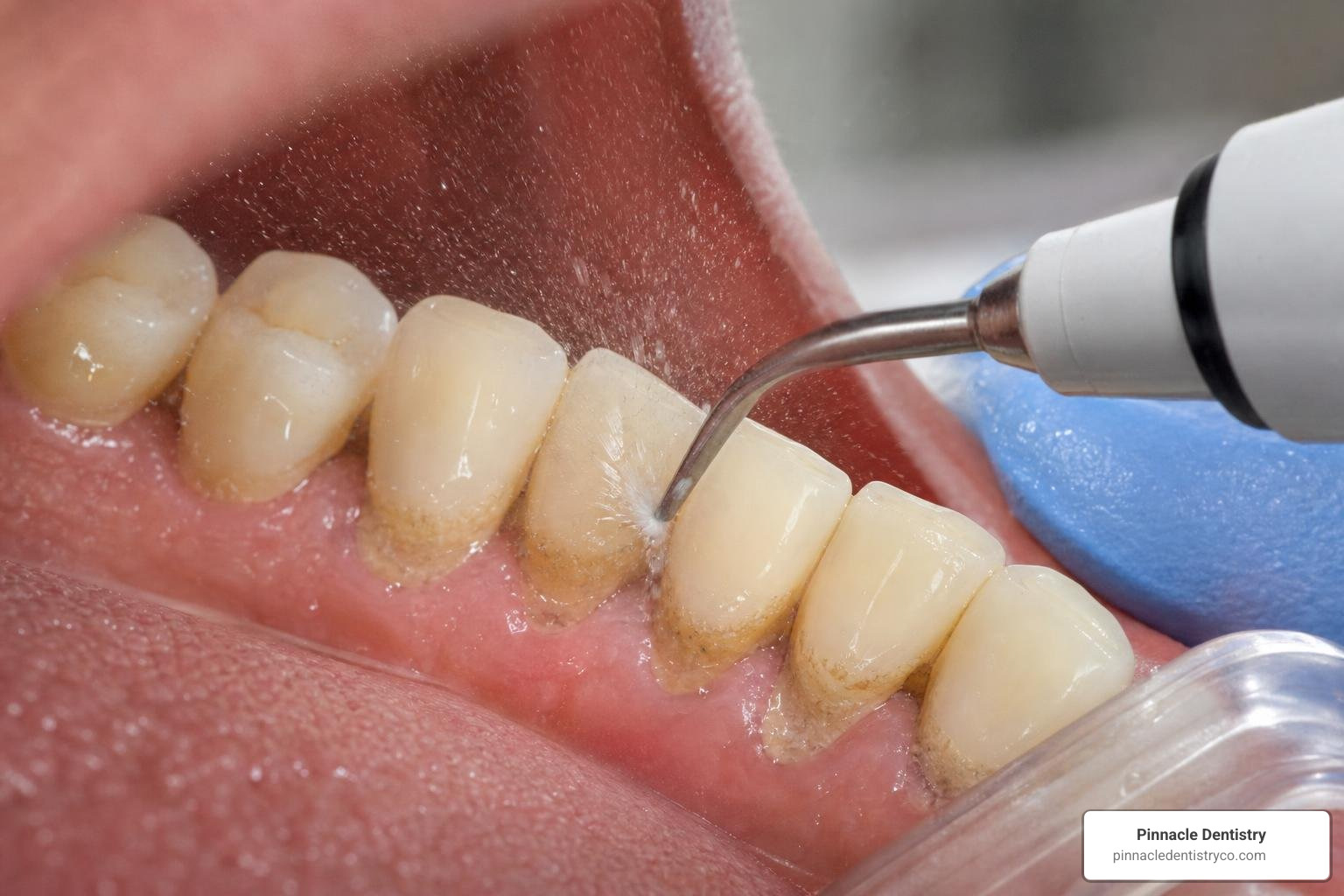
When plaque and tartar escape regular brushing, they begin to migrate below the gumline. This causes the gums to pull away from the teeth, forming deep spaces known as periodontal pockets. Pockets that measure greater than 4 mm are nearly impossible to clean at home with floss or a toothbrush.
For patients dealing with early or advanced gum disease, ultrasonic scaling is a massive advantage. The slim, specialized tips of modern ultrasonic scalers can easily slip into deep periodontal pockets. Once inside, the high-frequency vibrations disrupt the sticky bacterial biofilm, while the water lavage flushes the pocket clean. This double-action approach sanitizes the area and promotes rapid gum healing, which is a cornerstone of professional periodontal care services.
Gentle Care for Sensitive Teeth and Enamel
A common concern among patients is whether the vibrations will worsen tooth sensitivity. Fortunately, modern ultrasonic units are highly adjustable. Dentists and hygienists can easily fine-tune the power, frequency, and water flow settings to accommodate sensitive teeth.
When paired with ultra-thin scaler tips, the device can clean around sensitive gumlines with minimal pressure. Because the vibrating tip does not need to be pressed hard against the tooth, it is highly effective yet remarkably gentle. This makes it an ideal option for older adults, patients with sensitive roots, or those looking to learn how to remove tartar safely without harming their enamel.
Potential Downsides and Clinical Contraindications
While ultrasonic technology is incredibly beneficial, it is not a universal cure-all. There are a few clinical downsides and situations where manual scaling is preferred.
One major consideration is aerosol production. Because the scaler uses a high-speed water mist, it generates a fine aerosol spray in the treatment room. Dental teams must wear comprehensive personal protective equipment (PPE) and use high-volume suction systems to manage these aerosols safely. Additionally, some patients simply dislike the high-pitched humming sound or the mild, tickling vibration of the device.

Understanding the pros and cons of ultrasonic dental cleaning helps us customize the treatment to fit your comfort levels and health profile. For patients with implanted cardiac devices, we also follow current safety recommendations and review the specific device history before treatment. The American Dental Association provides helpful background on dental electronic instruments and pacemakers, and your dentist may coordinate with your physician or cardiologist when extra caution is appropriate.
Who Should Avoid Ultrasonic Dental Hygiene Cleaning?
Certain medical conditions and dental situations make manual scaling the safer option. We carefully review each patient’s medical history before selecting our tools.
Individuals who should generally avoid ultrasonic scaling include:
- Patients with Older Cardiac Pacemakers: While modern pacemakers are shielded against electromagnetic interference, older models can occasionally be disrupted by the signals from older ultrasonic scalers. In these cases, manual scaling is the safest route, or we may seek medical clearance from your primary physician or specialist first.
- Individuals with Severe Respiratory Issues: Patients with severe asthma, COPD, or chronic breathing difficulties may find the water mist and aerosols uncomfortable or difficult to breathe through.
- Patients with Swallowing Difficulties: Conditions like dysphagia or Parkinson’s disease can make it hard to manage the steady flow of water in the mouth.
- Children with Newly Erupted Teeth: Young, developing teeth have large pulp chambers and highly sensitive nerves that can be sensitive to the heat and vibrations of ultrasonic tools.
- Porcelain Crowns and Composite Restorations: Standard metal ultrasonic tips can scratch or chip porcelain and composite bonding. In these areas, we either use specialized plastic-sheathed tips or switch to manual scaling.
How Modern Hygienists Combine Ultrasonic and Manual Methods
The best dental cleanings do not rely on just one tool. Instead, modern dental hygienists use a hybrid approach that combines the speed and power of ultrasonic scaling with the pinpoint precision of manual tools.
During a typical appointment, the hygienist will start with the ultrasonic scaler to perform “gross debridement.” This means quickly breaking up large, stubborn sheets of tartar and flushing away loose plaque and bacteria. This step does the heavy lifting, saving you from lengthy manual scraping.
Once the bulk of the calculus is cleared, the hygienist will transition to manual hand instruments. Using these hand scalers, they can feel the tooth surface for any remaining microscopic rough spots, especially along the root surfaces or between tightly spaced teeth. This combination ensures a highly thorough, customized treatment plan that protects your gums and keeps your smile healthy, as highlighted in our guide on preventing gum disease with regular checkups.
What to Expect During and After Your Appointment
If you have never experienced an ultrasonic dental hygiene cleaning, there is absolutely nothing to fear. Knowing what to expect can help you feel completely relaxed during your visit.
When the cleaning begins, you will hear a high-pitched hum or buzz, and you will feel a mild, cool water spray in your mouth. The hygienist will guide the smooth, rounded metal tip gently across your teeth. You will feel a light vibration, but you should not feel any sharp scraping or pain. A dental assistant or a suction straw will continuously remove the water so you can breathe and swallow comfortably.
After the cleaning, your teeth may feel incredibly smooth, and your gums might feel slightly stimulated. Some mild, temporary post-treatment sensitivity to cold or hot drinks is completely normal, especially if a significant amount of tartar was removed from around the roots. This usually fades within a day or two.
To maintain these results at home, we recommend keeping up with a solid home care routine. That includes brushing twice daily, cleaning between the teeth, and asking your dental team which home care tools are safest for your gums, enamel, restorations, and periodontal needs. Some patients also benefit from a quality electric toothbrush to help reduce plaque buildup between professional visits.
Frequently Asked Questions About Professional Teeth Cleaning
Is ultrasonic dental cleaning painful?
For the vast majority of patients, ultrasonic cleaning is completely pain-free. Most people describe the sensation as a mild, tickling vibration accompanied by a cool water mist. If you have highly sensitive teeth, exposed roots, or inflamed gums, you might feel minor discomfort. However, the power settings are fully adjustable, and we can easily apply a local numbing gel to ensure you remain completely comfortable.
How often should I get an ultrasonic teeth cleaning?
Most patients with healthy teeth and gums should schedule a professional cleaning every six months. However, if you have a history of gum disease or rapid tartar buildup, we may recommend a customized hygiene schedule with cleanings every three to four months to keep your periodontal health on track.
Can ultrasonic scaling damage my tooth enamel?
No, when performed by a trained dental professional, ultrasonic scaling is incredibly safe and will not damage your enamel. In fact, because the vibrating tip glides gently over the tooth surface, it actually applies less scraping force than traditional manual tools, making it highly protective of your natural tooth structure.
How long does an ultrasonic dental cleaning take?
An ultrasonic cleaning is highly efficient and typically takes about one-third less time than traditional hand scaling. A standard appointment that combines both ultrasonic scaling and manual fine-tuning usually takes between 45 to 60 minutes, saving you valuable time in the dental chair.
Does ultrasonic cleaning help with bad breath?
Yes. Chronic bad breath (halitosis) is often caused by sulfur-producing bacteria hiding deep within plaque, tartar, and periodontal pockets. By thoroughly disrupting the subgingival biofilm and flushing out these hidden pockets, ultrasonic cleaning removes the root cause of bad breath far better than basic brushing or mouthwash.
Can I get ultrasonic cleaning if I have dental implants or crowns?
Yes, but with modifications. Standard metal tips can scratch titanium implants or porcelain crowns. When cleaning around restorations, your hygienist will switch to specialized, soft plastic or carbon-composite tips designed specifically to clean dental implants and crowns safely without scratching them.
What is the difference between sonic and ultrasonic dental tools?
The primary difference is the speed of vibration. Sonic toothbrushes and tools vibrate at a lower frequency, usually up to 62,000 movements per minute, relying on mechanical movement. Ultrasonic tools vibrate at much higher frequencies, often up to 30,000 cycles per second (millions of movements per minute), creating cavitation bubbles and acoustic waves that destroy bacteria without needing physical scrubbing.
Is ultrasonic scaling safe during pregnancy?
Yes, professional cleanings are highly recommended during pregnancy. Hormonal shifts can make pregnant women more susceptible to “pregnancy gingivitis.” Keeping your teeth clean with ultrasonic scaling is safe, especially during the second trimester, and helps protect both maternal and systemic health.
Can brushing at home replace professional ultrasonic cleaning?
No. While daily brushing and flossing are essential to remove soft plaque, only a dental professional using specialized tools can remove hardened calculus (tartar). Once plaque mineralizes into calculus, it is chemically bonded to your teeth and must be professionally scaled away.
How does ultrasonic cleaning prevent gum disease?
Ultrasonic cleaning stops gum disease by removing the irritating tartar and bacterial biofilm that cause gum inflammation (gingivitis). By flushing out the bacteria from deep beneath the gumline, it allows your gum tissue to heal, reattach tightly to your teeth, and shrink periodontal pockets back to healthy depths.
Conclusion
Investing in your oral health is one of the best things you can do for your overall well-being. Modern technology like ultrasonic dental hygiene cleaning has made maintaining a healthy, bright smile easier, faster, and more comfortable than ever before.
At Pinnacle Dentistry in Colorado Springs, CO, our certified MAGD dentists, an honor achieved by less than 2% of general dentists nationwide, are committed to providing personalized, high-quality care. Whether you are due for a routine checkup or need focused periodontal care, we are here to help you achieve a beautiful, healthy smile.
If you are ready to experience a gentler, more advanced approach to oral health, schedule your preventive dentistry appointment with us today. Pricing can vary depending on several factors, including your specific oral health needs, but our friendly team is always here to help guide you.
Ready for a healthier smile in Colorado Springs, CO? Pinnacle Dentistry makes it simple to contact our team to book your ultrasonic dental cleaning today.
