
Understanding Dental Bridges and Available Types
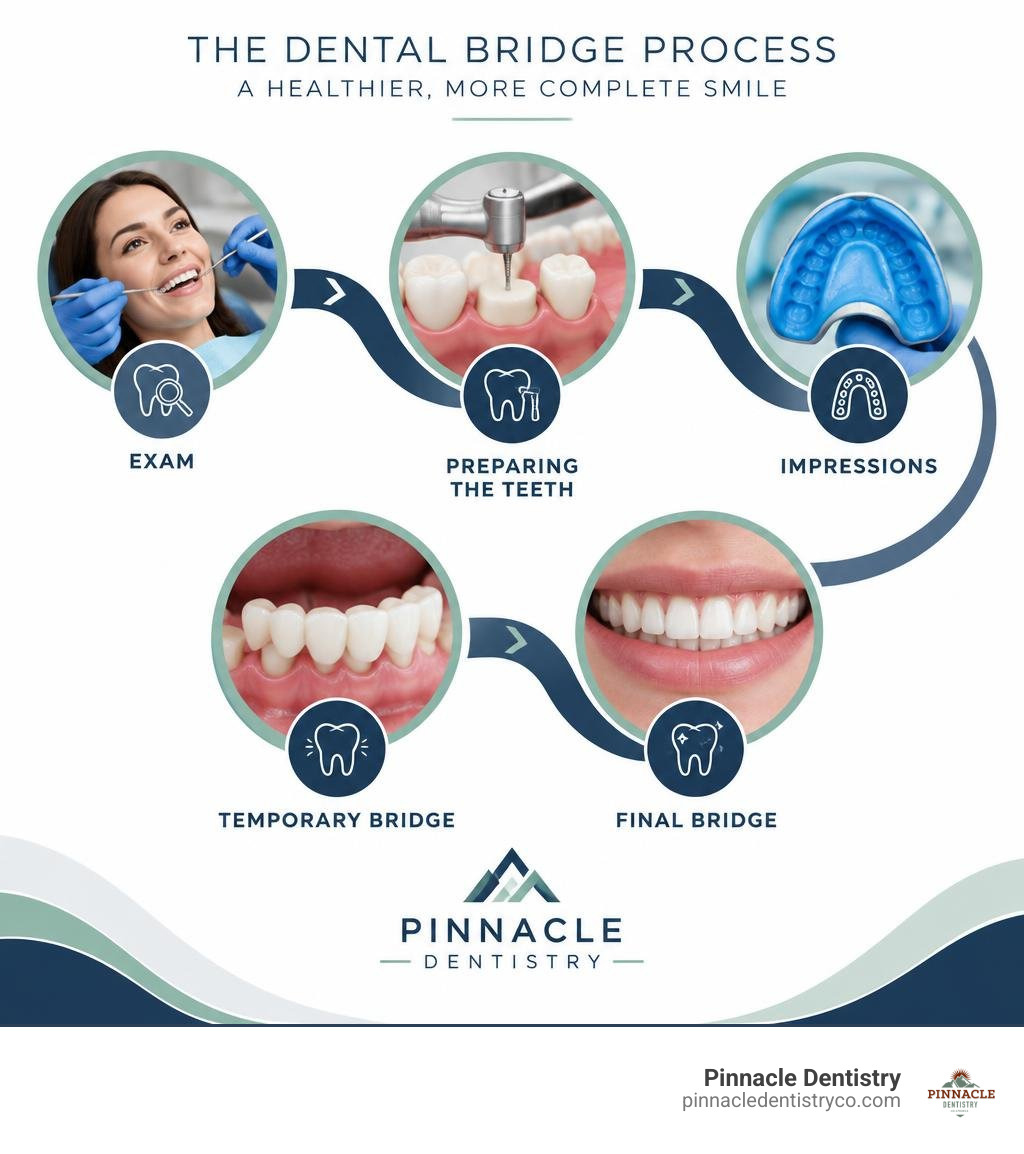
The dental bridge procedure step by step usually involves at least two visits, although the exact process depends on the type of bridge. For a traditional bridge, your dentist examines your oral health, numbs the area with local anesthesia, and reshapes the neighboring teeth so they can support crowns; Maryland and implant-supported bridges follow different steps. Next, digital scans or impressions are taken so a dental laboratory can make your restoration, and a temporary bridge may be placed to protect the prepared teeth. When the permanent bridge is ready, your dentist removes the temporary, checks the fit and your bite, and bonds the bridge in place.
I am Dr. Thomas Jennings, DDS, MAGD, a Colorado Springs, CO dentist with over 35 years of experience. This guide explains what patients can expect before, during, and after a bridge appointment. It also reviews the available bridge designs, daily care, and the questions to discuss with your dentist.
A dental bridge replaces one or more missing teeth by spanning an empty space in the smile. It includes artificial replacement teeth, called pontics, and supporting structures, called abutments. The CDC, in its about oral health guidance, notes that cavities, also called tooth decay, and periodontal, or gum, disease are the leading causes of tooth loss. When a tooth is missing, your dentist can explain how the gap may affect nearby teeth and your bite. Prompt evaluation and restorative dentistry can help patients understand the appropriate options for restoring function and appearance.
Whether a bridge is appropriate depends on the condition of the nearby teeth, gums, and supporting bone. A dentist evaluates the area and discusses alternatives based on each patient’s oral health and goals. Patients can also review considering a bridge before scheduling a consultation.
Traditional and Cantilever Bridges
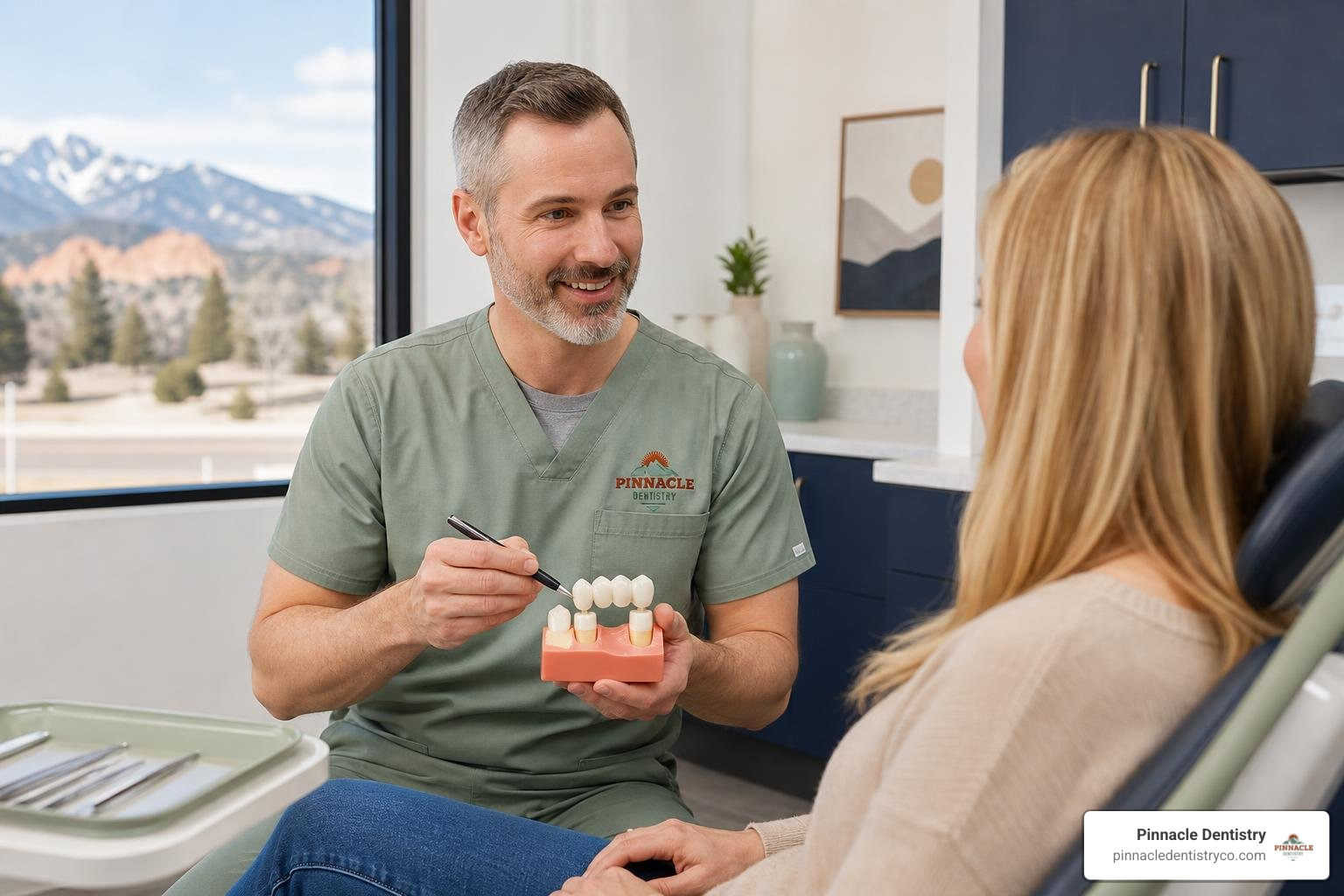
A traditional fixed bridge uses crowns on teeth beside a gap to support a replacement tooth between them. This design is often considered when the supporting teeth are healthy enough to hold the restoration. Your dentist will evaluate bite forces, tooth structure, and gum health before recommending this approach.
A cantilever bridge is supported from one side of the gap rather than both sides. Because this design places different forces on the supporting tooth, it may be considered only in carefully selected situations. Your dentist can explain whether this option fits the location of the missing tooth and the condition of nearby teeth.
Maryland Bonded and Implant-Supported Bridges
A Maryland bonded bridge can be a conservative option for a missing front tooth. It uses a replacement tooth with thin wings attached to the back of neighboring teeth, so less tooth structure may need to be reshaped. Suitability depends on the bite and the condition of the adjacent teeth.
When several adjacent teeth are missing, natural teeth may not provide enough support for a conventional bridge. In those situations, dental implants may provide support without placing crowns on otherwise healthy neighboring teeth. A dentist can review the available options and explain which approach best matches your oral health needs.
The Dental Bridge Procedure Step by Step: From Preparation to Placement
A dental bridge procedure step by step usually involves a planned sequence of examinations, preparation, records, and final placement. Each appointment gives the dentist an opportunity to confirm fit, comfort, and bite alignment before moving forward. The exact process can vary based on the type of bridge and the condition of the supporting teeth.
Phase 1: Consultation and Tooth Preparation
The process begins with an examination and diagnostic images so the dentist can assess the teeth, gums, and bone around the gap. This appointment helps identify concerns that may need attention before a bridge is placed. If you have pain, swelling, or another symptom, see your dentist for an evaluation rather than trying to manage the problem at home.
For a traditional bridge, the supporting teeth are carefully prepared to create room for crowns. The dentist removes a controlled amount of tooth structure so the completed bridge can fit comfortably with the surrounding teeth. Local anesthesia is commonly used so the area can be treated comfortably during the appointment.
If a supporting tooth has extensive decay or has lost structure, it may need additional restoration before it can support a bridge. The dentist will explain whether a buildup or another treatment is appropriate based on the tooth’s condition. This planning step helps determine whether a bridge is the right choice or whether another replacement option should be considered.
Before recommending a bridge, the dentist checks whether the supporting teeth have enough healthy structure, whether the gums are stable, and whether the bite can support the restoration comfortably. Patients can ask how the proposed bridge would affect nearby teeth, what type of bridge is being considered, and what daily cleaning will involve. Sharing concerns about past dental treatment, clenching or grinding, sensitivity, and personal goals helps the dental team tailor the discussion to the patient’s needs.
It can also be helpful to ask what follow-up care the office recommends and which changes should prompt a call. If the bridge later feels high when biting, loose, or uncomfortable, contact the office so the dentist can evaluate the fit and the supporting teeth. Avoid trying to adjust the restoration at home, because an examination is needed to determine the appropriate next step.
Phase 2: Impressions and Protecting the Prepared Teeth
After the supporting teeth are prepared, the dental team records the shape of your teeth and bite using a digital scan or traditional impression. Those records guide the dental laboratory in creating a bridge that matches the surrounding teeth as closely as possible. Shade information and bite details are also reviewed so the restoration can look natural and function comfortably.
A temporary bridge may be placed while the permanent restoration is being made. It protects the prepared teeth and helps maintain spacing between visits. Follow your dentist’s instructions for eating and cleaning around the temporary bridge, and contact the office if it feels loose, damaged, or uncomfortable.
Phase 3: Final Fitting and Cementation
At the placement visit, the dentist removes the temporary bridge and cleans the prepared teeth. The permanent bridge is tried in so the dentist can evaluate its margins, contacts, appearance, and bite. Small refinements may be made before the bridge is cemented into place.
Once the fit and bite are confirmed, the bridge is secured with dental cement or adhesive selected for the restoration. Your dentist will review how to care for the bridge and what changes should prompt a call to the office. Urgent swelling, fever, or trauma should be addressed by calling the office or going to the ER.
Recovery, Aftercare, and Long-Term Bridge Maintenance
After a bridge is placed, it can take time to become accustomed to the way it feels when you speak and chew. Follow your dentist’s instructions for meals, cleaning, and any follow-up visits. If something feels wrong, see your dentist so the bridge and the supporting teeth can be evaluated.
Start with softer foods as your dentist advises, then return to other foods based on your comfort and the guidance you receive. Avoid habits that can place unnecessary force on the bridge, such as chewing ice or hard objects. If the bridge feels loose, damaged, or unusually uncomfortable, contact the office rather than attempting to adjust it yourself.
As the mouth adjusts to the restoration, pay attention to how the bridge feels during normal speaking and chewing. A bridge that feels high, loose, or uncomfortable should be reported to the office, especially if the bite no longer feels even. The dentist can check the bridge, surrounding gums, and supporting teeth to determine whether an adjustment or another form of care is appropriate.
Patients can also ask the dental team which cleaning tools are best for the shape and location of their bridge and how often follow-up visits are recommended. Bringing up changes such as new sensitivity, food catching around the bridge, or difficulty cleaning beneath it gives the office useful information during an evaluation. Consistent communication and daily care help the dental team monitor the restoration and the tissues that support it.
Cleaning around and under a bridge is important because plaque can collect near the gumline and beneath the replacement tooth. The NIDCR’s periodontal gum disease guidance explains that plaque not removed every day can harden into tartar, which requires professional cleaning to remove. NIDCR also recommends brushing twice a day with fluoride toothpaste and cleaning between teeth with floss or a device such as an interdental brush or water flosser.
A floss threader, interdental brush, or water flosser can help clean under the pontic when used as your dental team recommends. Regular checkups allow your dentist to assess the bridge, gums, and supporting teeth. With consistent daily care and professional maintenance, a bridge can serve patients well for many years.
Comparing Dental Bridges to Alternative Tooth Replacement Options
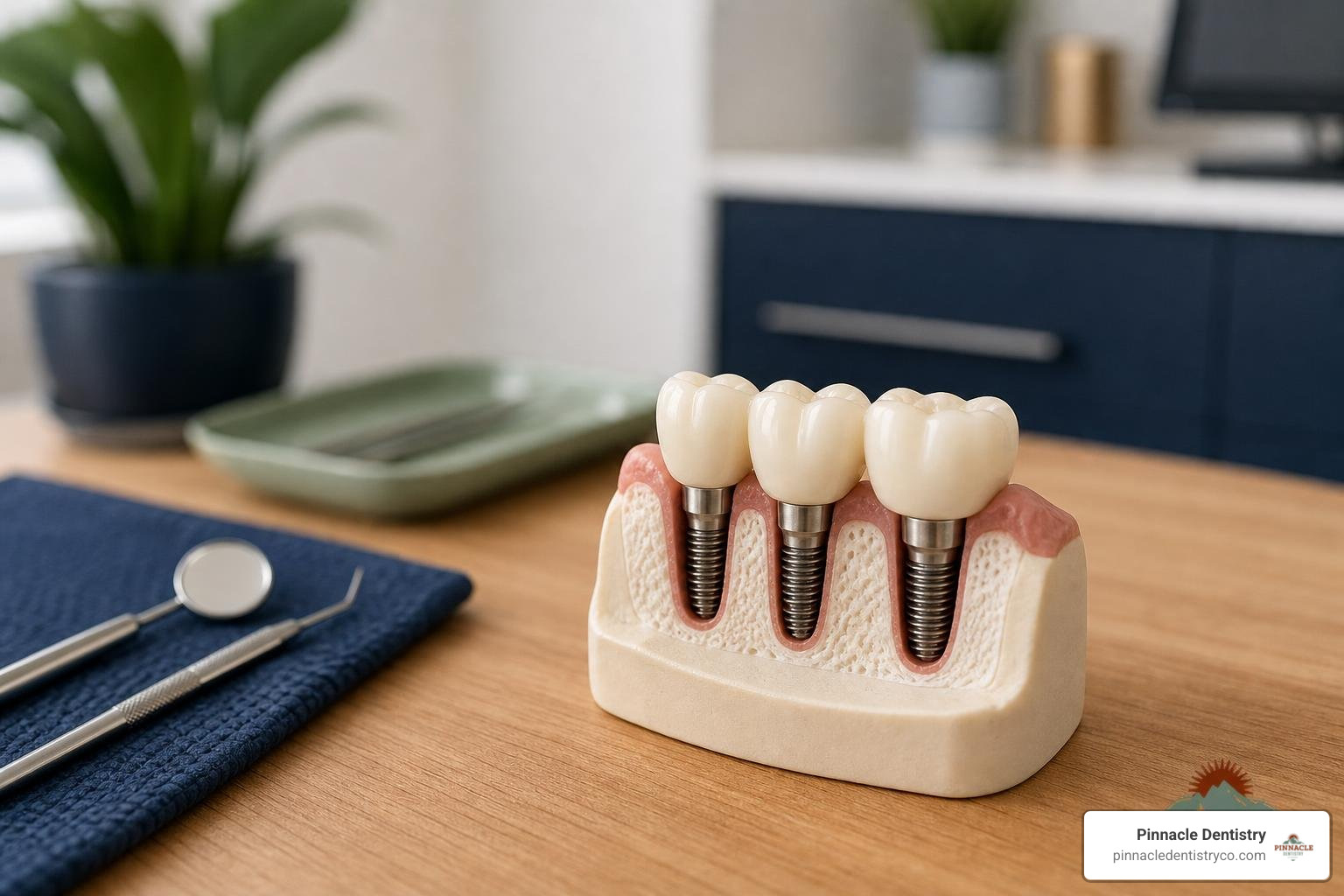
Choosing a tooth replacement option depends on the location of the missing tooth, the condition of nearby teeth, and your long-term oral health goals. A dentist can explain how each option affects the bite, daily care, and treatment planning. Reviewing choosing a long-term fix can help you prepare for that conversation.
Fixed Dental Bridges
A fixed dental bridge replaces a missing tooth by connecting a replacement tooth to neighboring supporting teeth or implants. It can be an appropriate option when the supporting structures are healthy and the treatment plan suits the patient’s needs. Your dentist will explain how the bridge may affect the surrounding teeth and what daily cleaning will involve.
Single Dental Implants
A single dental implant is designed to replace a missing tooth root and support a crown. It may help avoid altering adjacent natural teeth, but candidacy depends on bone, gum health, and the overall treatment plan. A dentist can explain whether an implant, a bridge, or another option is appropriate for your situation.
Removable Partial Dentures
partial dentures are removable appliances that replace one or more missing teeth. They may be considered when a fixed bridge or implant is not the preferred approach. Your dentist can discuss how a partial denture fits, how it should be cared for, and whether it matches your needs.
The right choice begins with a conversation about your oral health, preferences, and the condition of your remaining teeth. Each option has different maintenance needs and planning considerations. A dentist can help you compare the options and choose a path that supports comfortable daily function.
Frequently Asked Questions About Dental Bridges
Is getting a dental bridge painful?
Bridge preparation and placement are commonly completed with local anesthesia so the treatment area is numb. Some patients notice temporary sensitivity or gum tenderness afterward, and any concerning symptoms should be evaluated by a dentist.
How long does the entire dental bridge procedure take from start to finish?
The process usually takes more than one visit because the bridge must be planned, made, and checked for fit. Your dentist can explain the expected appointment sequence for your individual treatment plan.
How long does a dental bridge last?
A bridge can last many years with careful daily cleaning and regular dental checkups. Its longevity depends on the supporting teeth, bite forces, oral hygiene, and professional maintenance.
Can you eat normally after getting a dental bridge?
Your dentist will tell you when and how to return to your usual foods after placement. Starting with softer foods as advised can help you become accustomed to the restoration, and you should contact the office if chewing feels uncomfortable.
What is the difference between a dental bridge and a dental crown?
A dental crown covers and restores an individual tooth. A bridge replaces a missing tooth or teeth by connecting a replacement tooth to supporting teeth or implants.
How do you clean underneath a dental bridge?
Cleaning beneath the replacement tooth helps limit plaque buildup near the gums and supporting teeth. Your dentist may recommend a floss threader, interdental brush, or water flosser as part of your daily routine.
Can a loose dental bridge be recemented?
A loose bridge should be examined by a dentist as soon as possible. Whether it can be recemented depends on the condition of the bridge and the supporting teeth.
What are the potential risks or complications of a dental bridge?
A bridge may require attention if the supporting teeth develop decay, the gums become inflamed, the restoration chips, or the bite changes. Regular exams and daily cleaning help your dentist identify concerns early.
What factors determine candidacy for a dental bridge?
Candidacy depends on the health and stability of the supporting teeth, gums, and bone. If a bridge is not appropriate, your dentist can explain other tooth replacement options.
Will a dental bridge look natural?
A bridge is designed to match the shade, shape, and size of nearby teeth as closely as possible. Your dentist and dental laboratory use records of your smile and bite to guide the appearance of the final restoration.
Restoring Your Smile with Expert Restorative Dentistry
Replacing a missing tooth can help restore comfortable chewing, clear speech, and confidence in your smile. At Pinnacle Dentistry, patients receive individualized restorative care based on their oral health, goals, and treatment needs. A thoughtful evaluation of the bite and surrounding teeth helps guide the discussion about the most appropriate option.
Dr. Thomas Jennings is a Master of the Academy of General Dentistry (MAGD). Pinnacle Dentistry has been serving patients in Colorado Springs, CO since 1989. To discuss a custom bridge or another replacement option, contact our office to schedule a visit.
Pinnacle Dentistry, 2430 Research Pkwy Suite 200, Colorado Springs, CO 80920, (719) 590-7100