
Why Front Teeth Crowns Before and After Results Matter for Your Smile
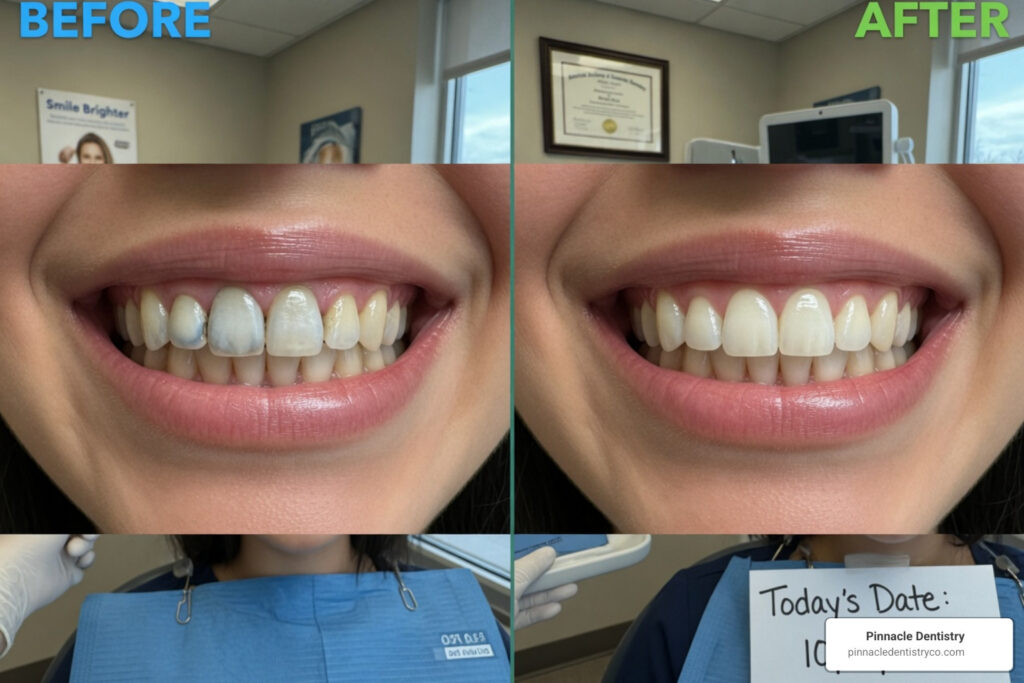
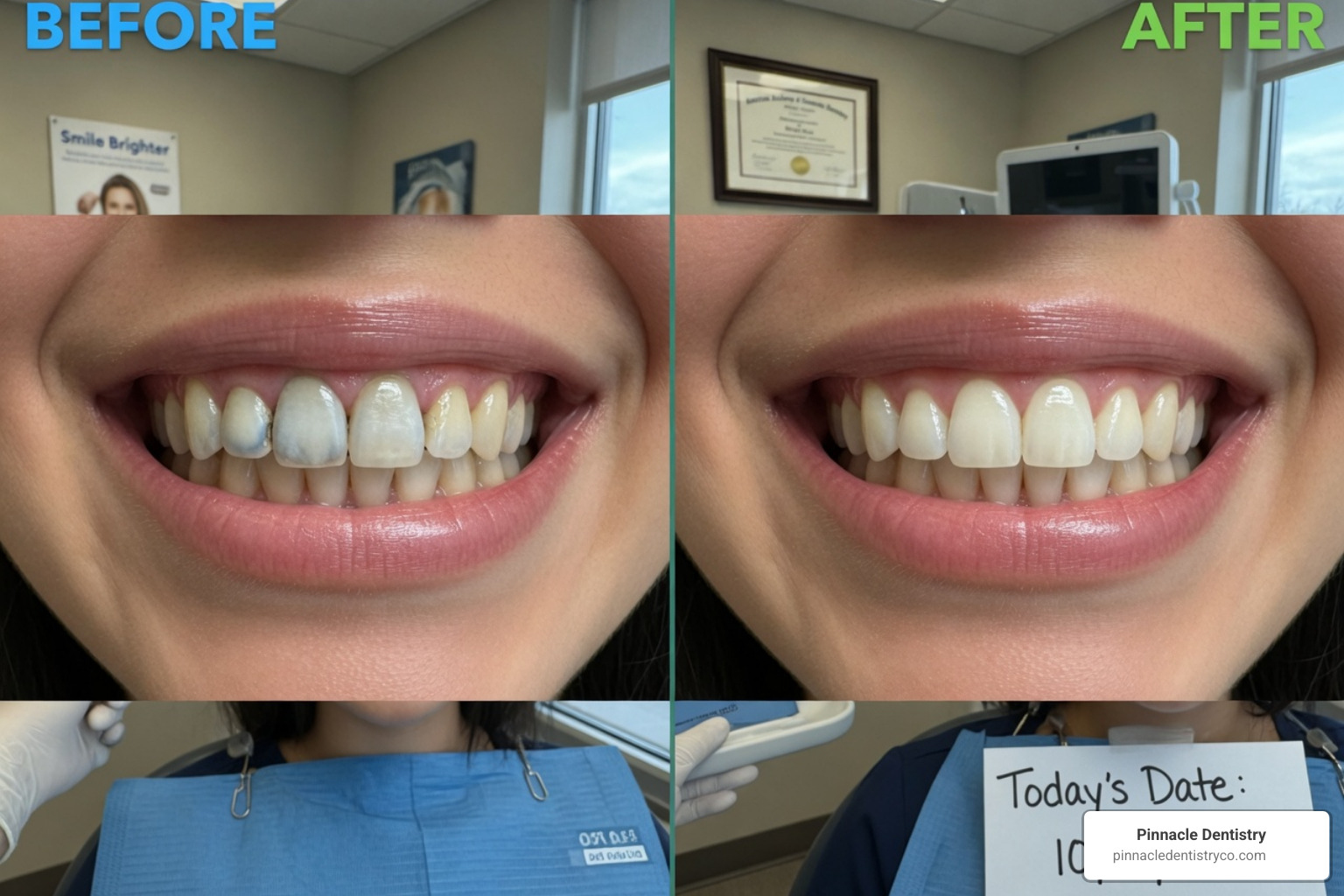
Front teeth crowns before and after transformations are one of the most striking examples of what modern restorative dentistry can achieve. If you want a quick look at what’s possible, here’s what patients typically experience:
What changes with front teeth crowns:
- Color: Discolored, darkened, or stained teeth are replaced with a bright, natural-looking shade
- Shape: Chipped, uneven, or worn edges are rebuilt to a balanced, symmetrical appearance
- Alignment: Slightly crooked or mismatched teeth appear more uniform
- Confidence: Patients consistently report smiling more freely after treatment
Common reasons people get front teeth crowns:
- Tooth darkened after a root canal
- Chipped or fractured tooth from an accident
- Old crown that no longer matches surrounding teeth
- Severe discoloration that whitening cannot correct
- Tooth worn down or structurally compromised by decay
These are real, documented outcomes backed by clinical practice. The results depend on the materials used, the skill of your dentist, and how well the crown is matched to your natural teeth.
A front tooth crown is not a small cosmetic touch-up. It is a full restoration that covers the entire visible surface of the tooth. When done well, the result is a tooth that reflects light, shows natural color variation, and blends seamlessly with the teeth around it. When done poorly, the difference is immediately obvious, since the human eye is highly sensitive to symmetry differences in the smile.
That’s why the before and after matters so much. Seeing real results helps you set realistic expectations and choose the right provider.
I’m Dr. Thomas Jennings, DDS, MAGD, founder of Pinnacle Dentistry in Colorado Springs, CO, with over 35 years of experience restoring front teeth crowns before and after cases ranging from single tooth replacements to full smile makeovers. In this guide, I’ll walk you through everything you need to know to make a confident, informed decision about your smile.
Understanding Front Teeth Crowns Before and After Transformations
When we talk about restoring teeth in the front of the mouth, we are working in what dentists call the aesthetic zone. This zone includes any teeth that are visible when you talk, smile, laugh, or even grimace. Unlike the back teeth, which are primarily built to withstand massive crushing forces, the front teeth require a delicate balance of strength and absolute visual perfection.
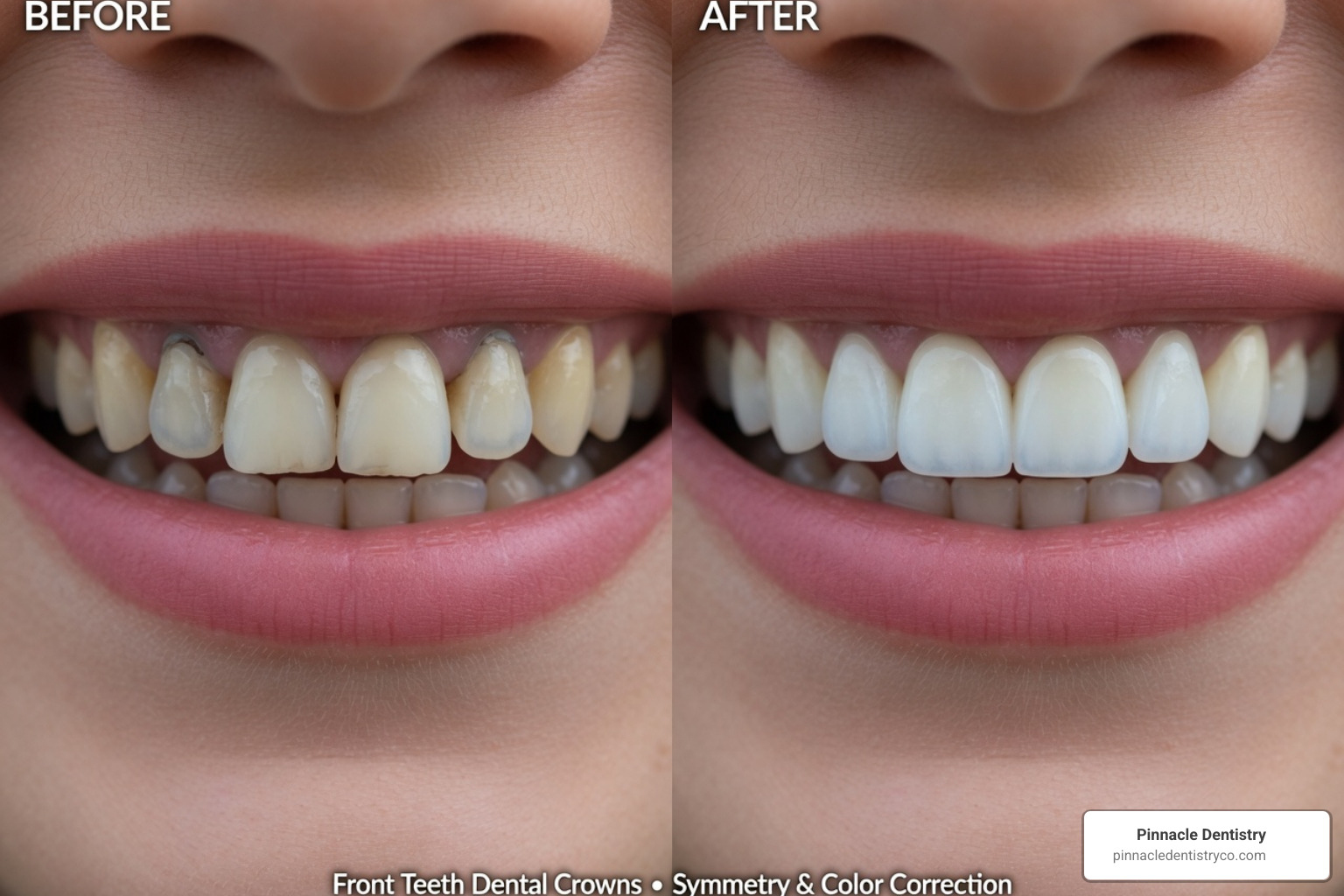
Achieving a natural look in the aesthetic zone requires a deep understanding of smile symmetry, tooth shape, and complex color matching. Human teeth are not a solid, uniform white. They have gradients of color, translucent edges that let light pass through, and subtle surface textures that reflect light in different directions. When we design a crown for a front tooth, we must replicate all of these natural properties so that the restoration is entirely indistinguishable from your neighboring teeth.
If a front tooth is cracked, decayed, or structurally weakened, a simple filling or a thin veneer may not provide enough support. In these cases, restoring damaged front teeth with a high quality custom crown is the gold standard. By wrapping around the entire visible tooth structure, a crown protects what remains of your natural tooth while completely renewing its external appearance. If you are exploring ways to upgrade your smile, analyzing your restorative dentistry options is the first step toward reclaiming your oral health. For additional general information about how a dental crown functions in restorative care, it can also help to review a neutral educational overview.
Aesthetic Concerns Addressed by Front Teeth Crowns Before and After
Our patients in Colorado Springs, CO, seek out front teeth crowns to solve a wide variety of aesthetic frustrations. Over time, teeth can undergo significant wear and tear, leading to a smile that looks aged, damaged, or unhealthy.
Some of the most common cosmetic issues we resolve with front teeth crowns include:
- Severe Discoloration: Teeth can become deeply stained from medications, fluorosis, or root canal treatments. When professional teeth whitening cannot lift these internal stains, a custom porcelain crown can completely mask the darkness and bring back a bright, youthful shade.
- Chipped and Broken Teeth: Whether from a sports injury, an unexpected fall, or biting into something too hard, a fractured front tooth can ruin the harmony of your smile. We offer durable treatment options for a chipped tooth to restore both the structural integrity and the natural shape of the tooth.
- Black Triangles: As we age, or after undergoing periodontal treatment, the gum tissue between our teeth can recede, leaving dark, triangular gaps near the gumline. Carefully shaped crowns can close these gaps, creating a clean, uniform smile line and preventing food from getting trapped.
- Uneven or Misshapen Teeth: Some people are born with teeth that are naturally smaller, peg-shaped, or slightly misaligned. Crowns can quickly correct these developmental variations to create balanced proportions across your entire smile.
Functional Improvements in Front Teeth Crowns Before and After Cases
While the visual transformation of a front teeth crowns before and after case is always exciting, the functional benefits are just as vital to your overall well-being. Your front teeth play a major role in how you speak, how you chew, and how your jaw functions as a whole.
When front teeth are severely worn down, chipped, or missing, your bite alignment can shift. This misalignment can place extra stress on your jaw joints, potentially leading to painful temporomandibular joint disorders. By restoring your teeth to their original height and shape, crowns help distribute bite forces evenly, protecting your remaining teeth from premature wear.
Furthermore, your front teeth are essential for proper speech enunciation. If you have large gaps, fractured edges, or missing structure in the front of your mouth, you may struggle to pronounce certain sounds, sometimes developing a slight lisp. Restoring these teeth helps you speak clearly and confidently. Understanding how dental crowns improve oral health will help you see that this treatment is an investment in your long-term physical comfort, not just your appearance.
Materials Used for Front Teeth Restorations
Choosing the right material for a front tooth crown is a collaborative process between you, your dentist, and the master laboratory ceramicist. Because front teeth are highly visible, we prioritize materials that offer the best combination of lifelike light reflection, biocompatibility, and long-term durability.
In the past, dentists often used porcelain-fused-to-metal crowns. While strong, these crowns frequently developed a dark, metallic line at the gumline over time as the gums naturally receded. Today, we utilize advanced metal-free ceramics that eliminate this issue entirely.
| Crown Material | Aesthetic Quality | Durability & Strength | Best Used For |
|---|---|---|---|
| All-Porcelain / Feldspathic | Exceptional; unmatched translucency and natural light reflection | Moderate; more prone to chipping under heavy biting forces | Single front teeth where cosmetic perfection is the absolute priority |
| Lithium Disilicate (e.max) | Excellent; beautiful shade matching and natural warmth | High; very strong and highly resistant to fracturing | Front teeth, premolars, and cases requiring a balance of beauty and strength |
| Zirconia (Solid or Layered) | Good to Great; modern translucent zirconia looks highly natural | Extremely High; virtually indestructible under normal biting conditions | Patients who grind their teeth, or those with highly discolored underlying tooth structure |
Each of these materials has unique optical properties. For example, lithium disilicate mimics the natural enamel’s ability to let light pass deep into the tooth before reflecting back out. Zirconia, on the other hand, is incredibly strong and can block out dark, post-root-canal discoloration underneath the crown. When you are choosing the right long-term fix for your smile, we will carefully evaluate your bite, your cosmetic goals, and your habits to select the ideal material for your unique mouth.
The Step-by-Step Front Tooth Crown Procedure
Getting a dental crown on a front tooth is a precise, multi-step journey designed to ensure your comfort, protect your oral health, and deliver a stunning final result. We want you to feel fully prepared for what to expect during your visits to our office in Colorado Springs, CO.

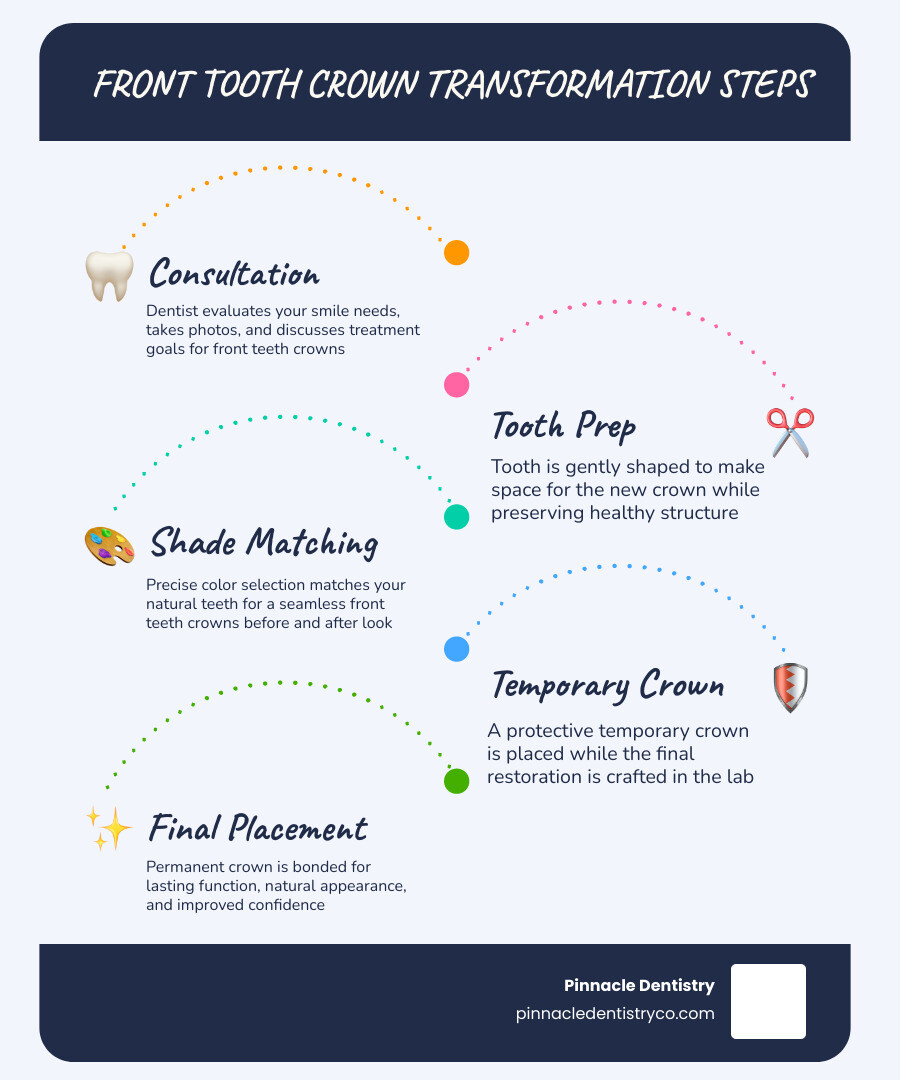
The process typically unfolds across a few key stages:
- Initial Consultation and Comprehensive Planning: We begin by examining your tooth, taking digital X-rays, and discussing your ultimate smile goals. We also take high-definition digital photographs from multiple angles. For complex cases, we may create a diagnostic wax-up, which is a physical or 3D digital model that allows you to preview your proposed smile before we ever touch your tooth.
- Tooth Preparation: Once the plan is finalized, we numb the area thoroughly using local anesthesia to ensure you do not feel any discomfort. We then gently shape the tooth, removing any old, failing fillings, decay, or damaged structure. We typically reduce the tooth by about 2mm all around to make room for the high-strength crown material.
- Digital Scanning and Shade Matching: Instead of messy, uncomfortable putty impressions, we use an advanced intraoral scanner to capture a highly accurate 3D digital model of your prepared tooth. We then perform a detailed shade-matching process, taking photographs with specialized color tabs to communicate the exact color gradients, white spots, and translucent areas of your adjacent teeth to our laboratory.
- Temporary Crown Fabrication: We hand-craft a beautiful, temporary acrylic crown and secure it with temporary cement. This temporary crown serves to protect your prepared tooth, maintain proper spacing, and keep your smile looking natural while the laboratory custom-makes your permanent restoration.
- Final Placement: Once your custom crown arrives from the laboratory, you will return to our office. We will remove the temporary crown, gently clean the tooth, and place the new crown to check its fit, shape, and color match. We will only permanently bond the crown into place once you are completely thrilled with how it looks and feels.
If you are dealing with a sudden dental emergency, such as a fractured tooth, understanding the timeline of restorative dentistry after tooth damage can help ease your anxiety. In some cases, we can even utilize advanced technology to design, mill, and place same day crowns in a single visit, saving you time and eliminating the need for a temporary restoration.
Longevity, Maintenance, and Caring for Your New Smile
Once your new front teeth crowns are in place, you will want to protect your investment so that your beautiful smile lasts for many years to come. On average, high-quality dental crowns can last anywhere from 10 to 15 years, and often much longer with excellent home care and regular professional maintenance.
Caring for a crowned tooth is remarkably similar to caring for your natural teeth. You must brush at least twice a day with a soft-bristled toothbrush and non-abrasive fluoride toothpaste, and floss daily. While the porcelain crown itself cannot decay, the natural tooth structure underneath it at the gumline is still vulnerable to plaque buildup and cavities.
To protect your crowns from damage, we recommend avoiding habits like biting your fingernails, chewing on ice, or using your teeth as tools to open plastic packaging. If you struggle with nocturnal teeth grinding or clenching, we will highly recommend fitting you for a custom-made nightguard. This comfortable appliance cushions your teeth while you sleep, preventing the extreme forces of grinding from chipping or fracturing your beautiful new restorations.
For more detailed advice on protecting your investment, you can read our guide on how long dental crowns last and explore our insights on whether do dental crowns last forever to keep your smile healthy and radiant for a lifetime.
Frequently Asked Questions About Front Teeth Crowns
How much do front teeth crowns cost on average in Colorado Springs, CO?
The cost of a front tooth crown can vary depending on several factors, including the material used, the complexity of the case, and the level of custom laboratory characterization required to match your adjacent teeth. Generally, high-quality ceramic or zirconia crowns can range in price, and patients should request a professional estimate for accurate pricing tailored to their specific needs.
Do front teeth crowns look natural?
Yes, modern all-ceramic and porcelain-layered crowns look incredibly natural. By using advanced materials that mimic the light translucency and color depth of real enamel, we can craft crowns that are virtually indistinguishable from your natural teeth.
How long does the front tooth crown procedure take?
A traditional crown procedure typically takes two appointments scheduled about two weeks apart. The first appointment is for preparing the tooth and taking impressions, while the second is for fitting and bonding the final custom crown.
Is the process of getting a front tooth crown painful?
No, the procedure is not painful. We use local anesthesia to completely numb the tooth and surrounding gum tissue during the preparation phase. You may experience mild sensitivity for a few days after the temporary or final crown is placed, which can easily be managed with over-the-counter pain relievers.
What is the difference between a dental crown and a veneer?
A veneer is a thin porcelain shell bonded only to the front surface of a tooth, requiring minimal tooth preparation. A crown covers the entire 360-degree structure of the tooth, providing much greater structural support and protection for teeth that are severely cracked, decayed, or weakened.
Can a crown fix a dark or discolored front tooth?
Yes, crowns are highly effective at masking severe discoloration. If a tooth has darkened significantly after a root canal, we can use a crown with an opaque core material, like zirconia, to block out the underlying darkness while building a beautiful, naturally bright exterior.
How do I care for my temporary front crown?
Because temporary crowns are held in place with temporary cement, you should avoid eating sticky, chewy, or extremely hard foods with your front teeth. When flossing, slide the floss out sideways rather than pulling it straight up, which could accidentally dislodge the temporary crown.
What should I do if my front tooth crown chips or cracks?
If your crown chips or cracks, you should contact our office for a dental evaluation. While a minor chip can sometimes be smoothed down, a significant crack will require replacing the crown to protect the underlying tooth from decay and restore your smile’s appearance.
Will dental insurance cover the cost of front teeth crowns?
If a crown is deemed medically necessary to restore a decayed, fractured, or structurally compromised tooth, most dental insurance plans will cover a portion of the cost. If the crown is being placed purely for cosmetic enhancement, it may not be covered, but our team can help you navigate your benefits and explore convenient payment options.
How do I choose the right cosmetic dentist for front teeth crowns?
Look for a dentist with experience in cosmetic and restorative dentistry, advanced clinical credentials, and a strong portfolio of real patient before-and-after cases. Choosing a practice with highly trained, certified MAGD dentists ensures you receive the highest standard of personalized, artistic care.
Conclusion
At Pinnacle Dentistry, we believe that a healthy, beautiful smile has the power to completely transform your self-confidence and your quality of life. Our team of highly trained, certified MAGD dentists is proud to offer personalized, top-tier restorative care using the latest digital technology and the most advanced ceramic materials available. Whether you are looking to replace an old, dark crown or need to repair a newly damaged tooth, we are here to guide you through a comfortable, stress-free experience. If you are ready to explore your options and see what is possible for your smile, we invite you to schedule an appointment to learn more about our custom dental crown services in Colorado Springs, CO.