


A Chipped Tooth Is More Common Than You Think and Yes, It Is Fixable
Can a dentist repair a chipped tooth? Yes, absolutely. In most cases, a dentist can fix a chipped tooth quickly, comfortably, and with results that look completely natural. Here is a fast overview:
| Chip Severity | Likely Treatment | Visits Needed |
|---|---|---|
| Tiny chip (enamel only) | Polishing or smoothing | 1 |
| Small to moderate chip | Dental bonding | 1 |
| Large chip (dentin exposed) | Crown or veneer | 1-2 |
| Chip exposing nerve | Root canal + crown | 2+ |
| Fracture below gumline | Extraction + implant | Multiple |
One moment you are biting into your favorite snack, and the next you feel something hard in your mouth that definitely should not be there. That sick feeling is familiar to a lot of people. Chipped teeth are among the most common dental problems dentists see, and they happen to people of all ages, often without any warning.
The good news is that modern dentistry has highly effective solutions for nearly every type of chip, from a tiny cosmetic nick on a front tooth to a more serious break that reaches the nerve. You do not need to panic, and you certainly do not need to live with the discomfort or cosmetic insecurity.
Tooth enamel is the hardest substance in the human body, yet it still has its limits. A hard piece of candy, an unexpected sports collision, years of grinding during stressful nights, or even an old filling that weakens the surrounding tooth structure can all lead to a sudden chip. Once your enamel breaks, it does not grow back on its own. That is why understanding your professional repair options is so important for your long-term oral health.
I am Dr. Thomas Jennings, DDS, MAGD, founder of Pinnacle Dentistry and a general dentist with over 35 years of experience in Colorado Springs, CO. Throughout my career, I have helped countless patients who wondered whether a dentist can repair a chipped tooth successfully. The answer is almost always yes, and we can often complete the repair in a single, comfortable visit. In the sections below, I will walk you through every treatment option so you know exactly what to expect when you visit our office.
What Causes a Chipped Tooth and Who Is at Risk?
Understanding why teeth chip is the first step in protecting your smile. While our teeth are incredibly strong, they face daily wear and tear that can gradually compromise their structural integrity.
Several common factors contribute to chipped teeth:
- Accidental Trauma: A sudden fall, a collision during recreation, or an unexpected blow to the face can easily chip a tooth.
- Biting Hard Objects: Chewing on ice, hard candies, popcorn kernels, or non-food items like pens can place localized pressure on the enamel, causing it to snap.
- Tooth Decay: Cavities weaken the internal structure of the tooth, leaving the remaining enamel thin, brittle, and highly susceptible to breaking under normal chewing pressure.
- Bruxism (Teeth Grinding): Chronic grinding and jaw clenching place constant, heavy forces on your teeth. Over time, this wears down the enamel and creates micro-fractures. In fact, research shows that 60% of dentists reported seeing more chipped teeth during periods of increased stress, largely due to teeth grinding and jaw clenching.
- Acid Erosion: Frequent exposure to acid, whether from a highly acidic diet, sugary beverages, or medical conditions like acid reflux (GERD), dissolves the protective enamel layer.
- Large Existing Fillings: When a tooth has a large filling, there is less natural tooth structure left to support the bite, making the remaining walls of the tooth vulnerable to fracturing.
Anyone can chip a tooth, but those with active tooth decay, untreated bruxism, or a habit of using their teeth as tools are at a much higher risk. To understand the underlying biology of enamel loss, you can read the Scientific research on chipped tooth causes which details how systemic health and diet play a major role in tooth vulnerability.
Can a Dentist Repair a Chipped Tooth?
If you are currently dealing with a jagged edge, you might be asking: can a dentist repair a chipped tooth so it looks like nothing ever happened?
Fortunately, the answer is a resounding yes. Modern restorative dentistry has advanced to the point where repairs are virtually indistinguishable from your natural teeth. Whether the damage is purely cosmetic or threatens the structural health of your mouth, we have several highly effective solutions.
When you visit a dental professional, they will evaluate the size, depth, and location of the chip to determine the best path forward. For a detailed breakdown of how we customize care for different scenarios, explore the various treatment options for a chipped tooth that we offer.
The primary methods used to restore a chipped tooth include:
- Smoothing and Polishing: For tiny, superficial nicks that only affect the outer enamel layer.
- Dental Bonding: A quick, non-invasive method using tooth-colored composite resin.
- Porcelain Veneers: Thin shell-like coverings placed over the front of the teeth to create a flawless look.
- Dental Crowns: Protective caps that cover the entire visible portion of a severely damaged tooth to restore its strength.
Quick Fixes: Can a Dentist Repair a Chipped Tooth in One Visit?
If you have a minor to moderate chip, you will be happy to know that same-day repairs are very common. You do not always need to wait weeks or wear a temporary restoration.

For small cosmetic flaws, the most popular and efficient choice is dental bonding. During this quick procedure, the dentist lightly etches the surface of the tooth to create a secure grip, applies a liquid adhesive, and then molds a tooth-colored composite resin over the chip. A specialized curing light is used to harden the material instantly. Once cured, the dentist shapes and polishes the resin to match the natural sheen of your surrounding teeth.
This entire process typically takes only 30 to 60 minutes per tooth and requires no local anesthesia. To help you decide if this quick method is right for your situation, you can read our guide on dental bonding vs fillings to see how these techniques compare for minor tooth damage.
Advanced Restorations: When Multiple Visits Are Needed
While quick fixes are excellent for minor damage, more extensive chips require robust, long-term restorations. If a large portion of the tooth has broken off, or if the chip has compromised the structural stability of the tooth, same-day bonding may not provide enough strength.
In these cases, we look to advanced restorative dentistry options to rebuild your smile. These procedures generally require two visits:
- Porcelain Veneers: Ideal for front teeth, veneers are custom-made ceramic shells. They require the dentist to remove a very thin layer of enamel (about 0.3 to 1.2 millimeters) to ensure a seamless fit. Impressions are taken and sent to a dental lab, and a custom veneer is bonded to the tooth during a second visit. Veneers can last 10 to 15 years with proper care.
- Dental Crowns: If a back chewing tooth is chipped or a front tooth has lost significant structure, a crown is the gold standard. The tooth is reshaped, an impression is made, and a temporary crown is placed. A few weeks later, your permanent, custom-fabricated crown is cemented in place.
- Root Canal Therapy: If the chip is deep enough to expose the dental pulp (the soft tissue inside containing nerves and blood vessels), bacteria can enter and cause an infection. A root canal is performed to clean out the damaged pulp, followed by a crown to protect the remaining tooth structure.
- Dental Implants: If the chip extends deep below the gumline, the tooth may not be salvageable. In this scenario, the tooth is extracted, and a dental implant is placed to restore your bite and prevent bone loss.
Chipped Tooth vs. Cracked Tooth: Key Differences
It is easy to confuse a chipped tooth with a cracked tooth, but they are clinically distinct issues that require different approaches to treatment. A chip typically involves a piece of the outer enamel breaking away, whereas a crack is a fracture line that runs vertically or horizontally through the tooth structure.
The table below outlines the key differences between these two types of dental damage:
| Feature | Chipped Tooth | Cracked Tooth |
|---|---|---|
| Primary Location | Edges of front teeth or cusps of back teeth | Runs along the body of the tooth, often vertically |
| Layers Affected | Enamel, sometimes dentin | Enamel, dentin, and frequently the pulp or root |
| Common Symptoms | Rough surface, minor sensitivity, cosmetic concern | Sharp pain when biting, sensitivity to hot and cold |
| Risk of Infection | Low (unless chip is very deep and exposes pulp) | High (bacteria easily enter the crack to reach the nerve) |
| Typical Treatment | Polishing, bonding, or veneers | Crowns, root canal therapy, or extraction |
If you are unsure which type of damage you have, it is important to learn what to do about a cracked or chipped tooth immediately. Leaving a crack untreated can allow it to expand, eventually splitting the tooth and leading to an extraction.
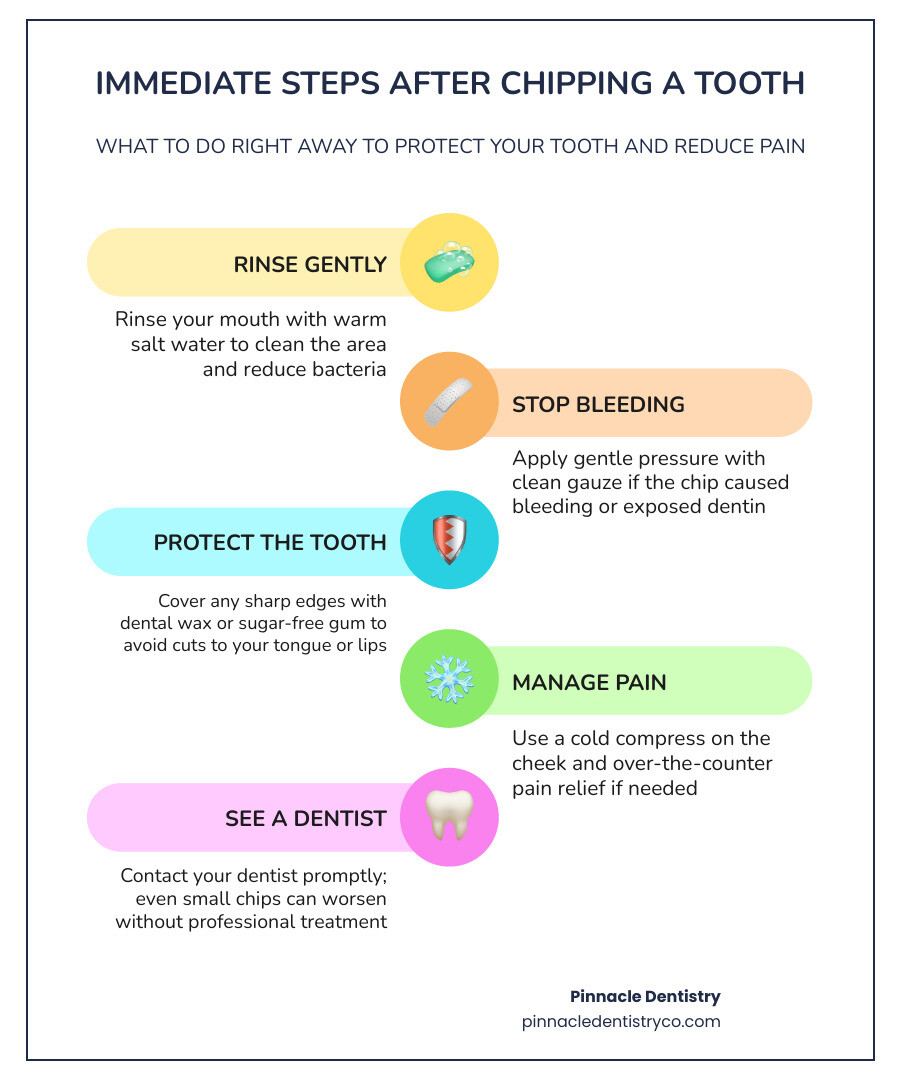
What to Do Immediately After Chipping a Tooth
Chipping a tooth can be startling, but taking the right steps in the first hour can save you from unnecessary pain and reduce the risk of infection.
If you or a loved one just chipped a tooth, follow this step-by-step first aid guide:
- Rinse Your Mouth: Gently rinse with warm salt water to clean the area and reduce bacteria.
- Save the Broken Pieces: If you can find the chipped fragment, save it in a small container of milk or saliva. In some cases, a dentist can reattach the original piece.
- Stop Any Bleeding: Apply gentle pressure to the area with a clean piece of gauze or a damp tea bag for about ten minutes.
- Manage Swelling and Pain: Place a cold compress on the outside of your cheek or lip to keep swelling down. You can also take over-the-counter pain relievers like ibuprofen.
- Protect Your Soft Tissues: If the tooth has a sharp or jagged edge, cover it with a piece of temporary dental wax or sugarless chewing gum to prevent it from cutting your tongue, lips, or cheek.
- Avoid Chewing on That Side: Stick to soft foods and avoid extreme hot or cold temperatures until you see a professional.
Most importantly, contact a dental office right away. If you are experiencing severe pain, throbbing, or uncontrolled bleeding, you should seek out emergency dentist services to stabilize your mouth and relieve your discomfort.
Understanding the Cost of Chipped Tooth Repair
The cost of repairing a chipped tooth is not a one-size-fits-all number. It depends heavily on the severity of the damage, the location of the tooth, the materials used, and your dental insurance coverage. Because every smile is unique, pricing can vary depending on several factors, and patients should request a professional estimate for accurate pricing.
Generally, the complexity of the procedure is the primary driver of the overall cost. A simple cosmetic fix will naturally require a different investment than a comprehensive structural restoration. For instance, minor treatments like smoothing out a tiny nick or applying composite resin are typically the most budget-friendly options. On the other hand, custom-fabricated restorations like porcelain veneers or dental crowns involve laboratory fees and high-grade materials, which can increase the overall cost. If the damage has reached the inner nerve of the tooth, requiring root canal therapy or even an extraction and a dental implant, the treatment plan becomes more complex and the cost will reflect those advanced procedures.
Your geographic location and the expertise of your dental provider can also influence the final cost. However, the most significant factor in your out-of-pocket expenses is often your dental insurance policy. Dental plans typically categorize treatments into two main areas:
- Restorative Treatments: Procedures like crowns, root canals, and protective fillings that are medically necessary to restore oral health and function are usually covered by dental insurance, often covering a significant percentage of the total cost.
- Cosmetic Treatments: Procedures performed solely to improve the appearance of your smile, such as porcelain veneers or bonding on front teeth with no structural damage, are rarely covered by insurance.
Many patients utilize Health Savings Accounts (HSAs) or Flexible Spending Accounts (FSAs) to help manage out-of-pocket expenses for these procedures, allowing them to use pre-tax dollars for their dental care.
How a Dentist Evaluates and Repairs a Chipped Tooth Based on Cost
When you visit us for an evaluation, our goal is always to find the most conservative and cost-effective treatment that will safely restore your smile. We do not believe in over-prescribing complex procedures when a simpler, more affordable solution will achieve an excellent result.
During your appointment, we will perform a visual examination, take digital X-rays to check the health of the root, and evaluate your bite pattern. If the chip is small and does not threaten the structural integrity of the tooth, we will often recommend dental bonding solutions as a budget-friendly, highly aesthetic option. By tailoring our treatment plans to your unique dental needs and financial preferences, we ensure that you receive the highest quality care without unexpected financial stress.
Frequently Asked Questions
Can a dentist repair a chipped tooth if it does not hurt?
Yes, a dentist should always evaluate a chipped tooth even if it is completely painless. Without the protective enamel layer, the inner dentin is exposed to bacteria, which increases your risk of decay, sensitivity, and eventual infection.
How long does a chipped tooth repair last?
The lifespan of a repair depends on the treatment used. Dental bonding typically lasts between 3 and 7 years, while porcelain veneers and dental crowns can easily last 10 to 15 years or longer with proper oral hygiene and regular dental checkups.
Is repairing a chipped tooth painful?
Most chipped tooth repairs are completely painless. Minor procedures like polishing and bonding do not require any numbing or anesthesia. For deeper restorations like crowns or root canals, local anesthesia is used to ensure you remain comfortable throughout the process.
Can a chipped tooth heal on its own?
No, a chipped tooth cannot heal naturally. Unlike bones or skin, tooth enamel does not contain living cells and cannot regenerate. Once a tooth is chipped, professional dental intervention is required to repair the structure.
What happens if you leave a chipped tooth untreated?
Leaving a chipped tooth untreated can lead to progressive damage. The rough edge can wear down opposing teeth, the exposed inner layers can develop deep decay, and the structural weakness can cause the tooth to split further, potentially requiring a root canal or extraction.
Does dental insurance cover chipped tooth repair?
Dental insurance usually covers a portion of the cost if the repair is deemed medically necessary to restore oral function, such as a crown or a restorative filling. However, if the treatment is purely cosmetic, like a veneer, it is typically not covered.
Can a chipped front tooth be fixed invisibly?
Yes, modern composite resins and dental ceramics are highly advanced. Dentists can precisely match the shade, translucency, and texture of your natural teeth, making the repair virtually invisible to the naked eye.
What is the cheapest way to fix a chipped tooth?
The most affordable way to fix a chipped tooth is smoothing and polishing for very minor nicks, or dental bonding for small to moderate chips. Resolving the issue early prevents the need for more expensive treatments down the road.
When is a chipped tooth considered a dental emergency?
A chipped tooth is considered an emergency if it is accompanied by severe, throbbing pain, bleeding that will not stop, facial swelling, or if the tooth has been completely knocked loose or displaced from its socket.
How can I prevent my teeth from chipping in the future?
You can prevent future chips by avoiding chewing on hard objects like ice and hard candy, wearing a custom nightguard if you grind your teeth, using a protective mouthguard during sports, and visiting your dentist regularly to keep your enamel strong.
Conclusion
A chipped tooth can feel overwhelming, but it is a highly manageable issue that can be resolved quickly and comfortably. Whether you need a simple polish, a durable composite bond, or a custom crown, modern dental technology ensures your smile can be fully restored to its natural beauty and function. Ignoring a chipped tooth can lead to more severe complications down the road, so taking prompt action is always the best course of decision.
At Pinnacle Dentistry, we are proud to serve families in Colorado Springs, CO, with personalized, high-quality care. Our team features certified MAGD dentists, a rare distinction achieved by less than 2% of general dentists nationwide, representing a deep commitment to continuing education and clinical excellence.
Whether you need a quick cosmetic fix, a durable dental crown, or a comprehensive smile restoration, the experienced team at Pinnacle Dentistry is ready to help. Schedule your professional dental consultation today to restore your smile’s health, function, and confidence.
