
The Best Desensitizing Toothpastes of 2026: What Actually Works
Finding the best desensitizing toothpaste can make the difference between dreading your morning coffee and actually enjoying it. If you’re dealing with that sharp, sudden sting from hot, cold, or sweet foods, you’re far from alone. Research shows that 40% or more of adults experience tooth sensitivity at some point, and around 11.5% of people in the U.S. deal with it regularly.
Quick answer: top desensitizing toothpaste types by need
| Need | Best Formulation Type |
|---|---|
| Fastest relief | Stannous fluoride rapid-relief formula, relief in about 3 days |
| Strongest protection | Prescription 1.1% sodium fluoride + 5% potassium nitrate |
| Gum health + sensitivity | Dual-action stannous fluoride + gum formula |
| Natural/fluoride-free | Nano-hydroxyapatite remineralizing paste |
| Whitening + sensitivity | 5% potassium nitrate low-abrasive whitening formula |
| Fastest tubule sealing | 8% arginine + calcium carbonate formula |
| Triple protection | Sensitivity + gum + enamel shield formula |
| Herbal alternative | Natural extract paste with clove oil and plant-based actives |
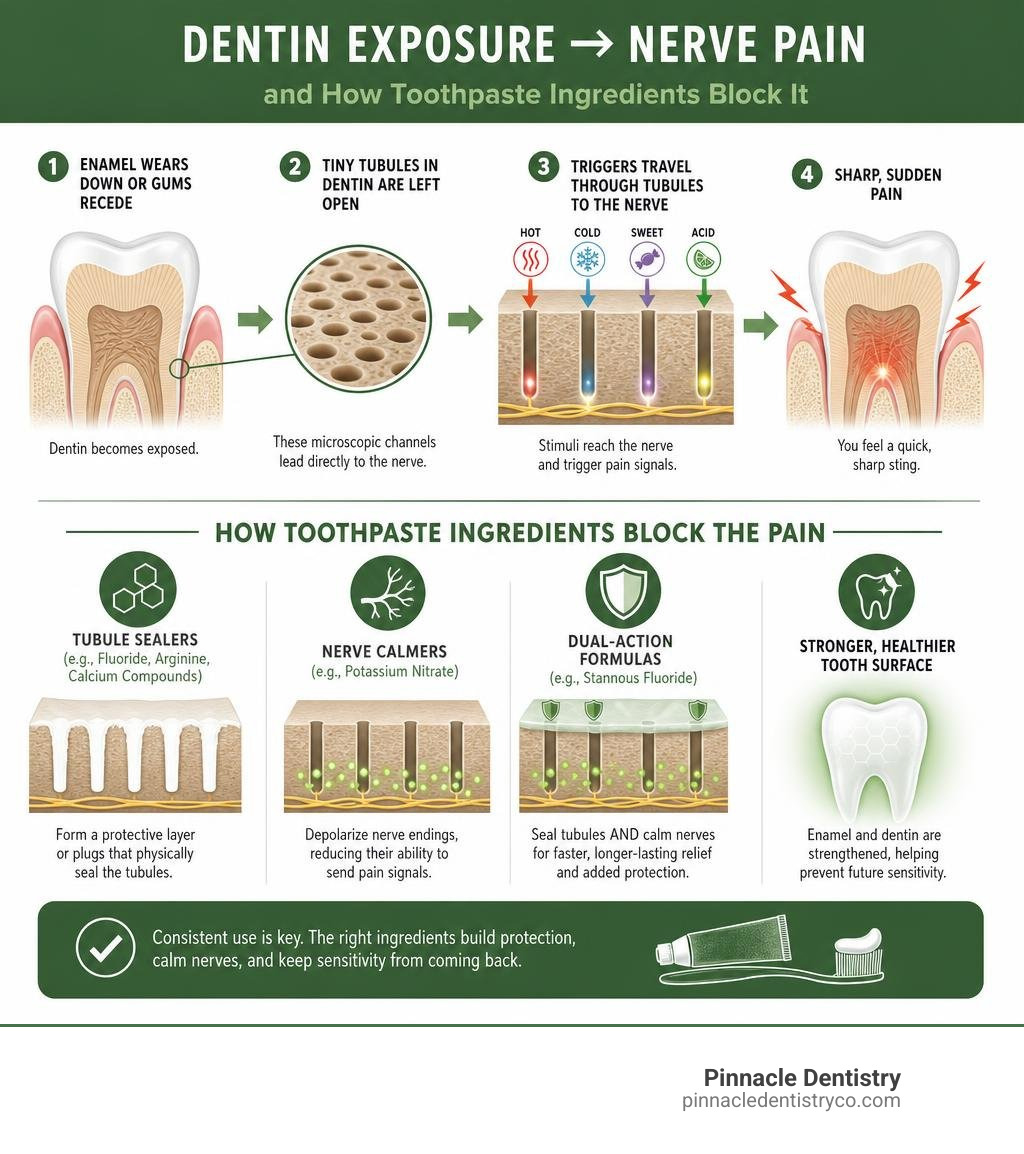
The pain happens because enamel wears down or gums recede, leaving tiny tubes in your dentin exposed. These tubes connect directly to your tooth’s nerve. Heat, cold, pressure, and acids travel through those tubes and trigger pain signals almost instantly.
The good news is that the right toothpaste can either calm those nerves or physically seal those tubes, and some formulas do both.
This guide breaks down 8 of the most effective desensitizing toothpaste formulations available in 2026, what ingredients make them work, and how to use them correctly to get the most relief.
I’m Dr. Thomas Jennings, DDS, MAGD, founder of Pinnacle Dentistry in Colorado Springs, CO, and I’ve spent over 35 years helping patients find the right products to manage sensitivity as part of a long-term oral health plan. Choosing the best desensitizing toothpaste for your specific situation is something I guide patients through every day, and this article reflects what the clinical evidence and real patient outcomes actually show.
Related content about best desensitizing toothpaste:
Understanding Tooth Sensitivity: Causes and Science
To find a product that works, we first have to understand why teeth hurt in the first place. Underneath the hard outer enamel of your teeth lies a highly sensitive layer called dentin. This layer contains millions of microscopic pathways known as dentin tubules. These tubules lead straight to the pulp chamber, which contains the tooth’s nerves and blood supply.
Under normal conditions, your enamel protects the visible crown of your tooth, while your gums cover and protect the roots. However, if that protective barrier is compromised, any tactile stimuli, like a toothbrush, or thermal triggers, like cold air or hot soup, can cause fluid inside the tubules to shift. This movement irritates the nerve endings, creating that familiar, sharp flash of pain known as dentin hypersensitivity.
Several factors contribute to this condition:
- Enamel erosion: Consuming acidic foods, beverages, or experiencing acid reflux can wear away enamel over time.
- Gum recession: Periodontal issues or aggressive brushing can cause gums to pull away from the tooth, exposing the vulnerable root surfaces which lack enamel.
- Aggressive brushing: Using a hard-bristled brush or applying too much pressure physically wears down both the enamel and the gumline.
- Teeth grinding, bruxism: The intense pressure of grinding fractures enamel at the gumline, called abfraction, and thins the chewing surfaces.
Understanding these root issues is the first step toward finding relief. To explore the biological mechanics of this process further, read our comprehensive guide on tooth sensitivity causes, treatment, and prevention.
How to Choose the Best Desensitizing Toothpaste for Your Needs
When shopping for the best desensitizing toothpaste, it is easy to get overwhelmed by the rows of colorful boxes in the dental aisle. To make an informed choice, you need to look past the marketing claims and focus on the active ingredients.
Generally, desensitizing toothpastes work in one of two ways:
- Nerve calming, depolarization: These formulas use chemical compounds to temporarily numb the nerve endings inside the tooth, preventing them from transmitting pain signals to the brain.
- Tubule occlusion, physical blocking: These formulas contain microscopic particles that act like tiny corks, physically plugging the exposed dentin tubules to block external triggers from reaching the nerve.
We always recommend looking for the American Dental Association, ADA, Seal of Acceptance on the packaging. This seal indicates that the product has been independently evaluated and clinically proven to be both safe and effective for relieving sensitivity. For a complete breakdown of how these formulas compare to standard toothpastes, you can read our glossary entry on desensitizing toothpaste.
Active Ingredients in the Best Desensitizing Toothpaste
The active ingredients are the engine of any sensitivity paste. The most common and clinically validated options include:
- Potassium nitrate: The gold standard for nerve calming. It delivers potassium ions that penetrate the dentin tubules to block nerve transmission. It typically requires about two weeks of consistent, twice-daily use to build up therapeutic levels. You can review the official regulatory guidelines for these formulations on the FDA drug label for potassium nitrate and sodium fluoride paste.
- Stannous fluoride: A dual-action champion. Unlike sodium fluoride, which primarily fights cavities, stannous fluoride creates a robust, mineralized barrier over the exposed dentin tubules while simultaneously strengthening enamel and fighting plaque bacteria.
- Arginine and calcium carbonate: A rapid-acting combination. Arginine, an amino acid, binds with calcium carbonate to form a sticky, protective paste that rapidly seals the openings of the tubules, offering relief much faster than nerve-calming alternatives.
- Nano-hydroxyapatite, n-HAp: A modern, biocompatible alternative. Hydroxyapatite makes up roughly 97% of your natural enamel. Synthetic nano-hydroxyapatite binds to the tooth surface to remineralize enamel and naturally plug exposed tubules without relying on synthetic chemicals.
When to Switch to the Best Desensitizing Toothpaste
If you experience chronic sensitivity to hot or cold drinks, switching to a specialized paste should be your first line of defense. It is also highly beneficial to start using a desensitizing paste two weeks prior to undergoing professional teeth whitening to minimize post-whitening discomfort.
While mild, temporary sensitivity after a dental cleaning or a cold beverage is common, severe or localized pain requires a targeted approach.
Top 8 Generic Desensitizing Toothpaste Formulations That Work
To help you compare your options, we have structured a detailed breakdown of the eight most effective desensitizing formulations available today.
| Formulation Type | Key Active Ingredients | Primary Mechanism | Best For | Expected Relief |
|---|---|---|---|---|
| 1. Prescription-Strength Paste | 1.1% Sodium Fluoride, 5% Potassium Nitrate | Nerve calming + high-dose remineralization | Severe sensitivity & high cavity risk | 2 weeks |
| 2. Rapid Relief Formula | 0.454% Stannous Fluoride | Physical tubule occlusion | Quick relief | 3 days |
| 3. Dual-Action Gum Formula | Stannous Fluoride | Tubule occlusion + anti-plaque | Receding gums & sensitivity | 1 to 2 weeks |
| 4. Triple-Action Shield | Stannous Fluoride, Enamel Hardening agents | Occlusion + enamel rehardening | Thinning enamel | 2 weeks |
| 5. Maximum Strength Whitening | 5% Potassium Nitrate, Sodium Fluoride | Nerve calming + low abrasives | Sensitive teeth needing stain removal | 2 weeks |
| 6. Arginine & Calcium Paste | 8% Arginine, Calcium Carbonate | Rapid physical sealing | Near-instant surface sealing | Immediate to days |
| 7. Nano-Hydroxyapatite Paste | Nano-Hydroxyapatite (n-HAp) | Biocompatible remineralization | Natural, fluoride-free care | 2 to 4 weeks |
| 8. Herbal & Natural Paste | Clove Oil, Spinach Extract, Natural Minerals | Plant-based nerve soothing | Natural lifestyle preferences | 2 to 4 weeks |
1. Prescription-Strength 1.1% Sodium Fluoride and 5% Potassium Nitrate Paste
For patients dealing with severe, persistent sensitivity or those who are highly prone to dental decay, over-the-counter options are sometimes not enough. This is where prescription-strength formulations step in. Delivering a massive 5000 ppm of fluoride, four times the concentration of standard retail pastes, this formula combines maximum nerve desensitization with advanced cavity defense.
The 5% potassium nitrate works over a two-week period to calm the internal nerve endings, while the high-concentration sodium fluoride aggressively remineralizes weak spots along the enamel and root surfaces. This formula is highly recommended for patients experiencing gum recession or dry mouth. To read the clinical specifications of this high-potency treatment, you can view the Colgate PreviDent 5000 ppm sensitive specification.
2. Rapid Relief Stannous Fluoride Formula
If you have a beach vacation coming up or simply cannot wait weeks for relief, a rapid-relief stannous fluoride formula is an excellent choice. This formulation is engineered for speed, utilizing a specialized stannous fluoride compound that begins sealing exposed dentin pathways from the very first brush.
Clinical trials show that twice-daily brushing with this formula can produce a noticeable reduction in sensitivity in as little as three days. It works by creating an acid-resistant polymer barrier over the open tubules, physically blocking the movement of fluid that triggers the nerve.
3. Dual-Action Sensitivity and Gum Health Formula
Many people do not realize that gum recession is a primary driver of tooth sensitivity. When the gum tissue pulls back, it exposes the root dentin, which is highly porous and lacks protective enamel. A dual-action formula targets both issues simultaneously by combining sensitivity relief with advanced plaque-fighting capabilities.
Using low-abrasion stannous fluoride, this paste forms a protective barrier over sensitive root areas while actively neutralizing the plaque bacteria along the gumline that cause gingivitis and bleeding. By keeping the gums firm and healthy, it helps prevent further recession.
4. Triple-Action Sensitivity, Gum, and Enamel Shield
As we age, our teeth face a triple threat: thinning enamel, receding gums, and hypersensitivity. A triple-action shield formulation is designed to tackle all three concerns in a single daily step. It works by utilizing stabilized stannous fluoride to block the dentin tubules while infusing essential minerals back into the surface of the tooth.
This process, known as enamel rehardening, strengthens the remaining tooth structure against acidic foods and beverages. At the same time, it targets the bacteria that irritate the gums, keeping your supporting tissues healthy.
5. Maximum Strength 5% Potassium Nitrate Whitening Formula
A common complaint among dental patients is that whitening toothpastes make their teeth feel incredibly sore. This is because many standard whitening pastes rely on highly abrasive particles to scrub away surface stains, which can wear down enamel and expose the dentin underneath.
A maximum strength 5% potassium nitrate whitening formula solves this problem. It uses the maximum allowable concentration of potassium nitrate to calm the internal tooth nerves, while utilizing a low-abrasive silica blend to gently lift surface stains without scratching your enamel. This allows you to maintain a bright smile without the physical discomfort.
6. Arginine and Calcium Carbonate Tubule Occluder
This formulation represents a major clinical breakthrough in the management of dentin hypersensitivity. Instead of waiting weeks for potassium nitrate to calm your nerves, the combination of 8% arginine and calcium carbonate creates an immediate, physical seal over the exposed dentin tubules.
Arginine is a naturally occurring amino acid that carries a positive charge, allowing it to bind to the negatively charged dentin surface. It attracts calcium carbonate particles to form a highly resilient, acid-resistant layer that mimics natural tooth structure. Clinical studies have shown that this technology provides immediate relief when massaged directly onto a sensitive tooth and maintains its protective barrier even after exposure to acidic drinks.
7. Nano-Hydroxyapatite Remineralizing Paste
For those who prefer a fluoride-free oral care routine, nano-hydroxyapatite (n-HAp) is the premier alternative. Originally developed by NASA to help astronauts maintain bone and tooth density in space, nano-hydroxyapatite is a synthetic version of the primary mineral that makes up your teeth.
Because the particles are microscopic, they can easily slip inside exposed dentin tubules, plugging the pathways and bonding directly with your natural enamel. This biocompatible process not only reduces sensitivity but also helps reverse early-stage cavities by replacing lost minerals. It is a highly effective, non-toxic option that is safe for all ages.
8. Herbal and Natural Desensitizing Paste
If you prefer a plant-based lifestyle, there are several herbal desensitizing pastes that offer effective relief. Rather than relying on synthetic chemicals, these formulations utilize natural extracts known for their soothing and anti-inflammatory properties.
Key natural active ingredients include:
- Clove Oil (Eugenol): A natural anesthetic used in dentistry for centuries to numb tooth pain and reduce inflammation.
- Spinach Extract: Rich in natural oxalates, which have been shown in clinical studies to help block exposed dentin tubules.
- Triphala and Neem: Herbal extracts that naturally fight plaque bacteria and promote healthy, firm gum tissue to prevent recession.
These natural formulations offer a gentle, chemical-free alternative that performs surprisingly well in clinical trials compared to traditional potassium salt pastes.
Proper Brushing Habits and Daily Practices for Sensitivity Relief
Even the best desensitizing toothpaste will not work if your daily habits are working against it. To get the maximum benefit from your sensitive toothpaste, try implementing these simple practices:
- Use a Soft-Bristled Brush: Hard or medium bristles act like sandpaper on your enamel and gums. Always choose a soft or extra-soft toothbrush, or use an electric toothbrush with a built-in pressure sensor.
- Adopt a Gentle Technique: Instead of scrubbing back and forth like you are cleaning a grout line, use gentle, circular strokes at a 45-degree angle to your gums. Let the bristles do the work.
- Let the Paste Sit: After brushing, spit out the excess paste but do not rinse your mouth with water right away. Leaving a thin layer of the active ingredients on your teeth for a few minutes gives them more time to penetrate the tubules and soothe the nerves.
- Mind the Clock After Eating: Acidic foods and drinks (like citrus fruits, coffee, or wine) temporarily soften your enamel. If you brush immediately after consuming them, you will scrub away microscopic layers of your teeth. Wait at least 30 minutes for your saliva to naturally restore your mouth’s pH before brushing.
Frequently Asked Questions About Sensitive Teeth
How quickly does desensitizing toothpaste work?
The relief timeline depends heavily on the active ingredient in your toothpaste. Formulas utilizing stannous fluoride or arginine can begin blocking pain within three to seven days of consistent use. Conversely, formulas that rely on potassium nitrate require about two weeks of twice-daily brushing to build up enough potassium ions around the tooth nerves to fully block the pain signals.
Can children use desensitizing toothpaste?
Children can experience tooth sensitivity due to emerging permanent teeth, orthodontic treatments, or teeth grinding. However, most over-the-counter desensitizing toothpastes are formulated for adults and children over the age of 12. If your child is complaining of tooth pain, it is best to consult a pediatric dentist to rule out cavities and get a personalized product recommendation.
Why do my teeth hurt after using whitening products?
Professional and over-the-counter whitening products contain peroxide, which penetrates the enamel to break up deep stains. During this process, the peroxide can temporarily dehydrate the tooth and irritate the internal nerve endings, leading to temporary sensitivity. Using a desensitizing paste for two weeks prior to whitening can significantly reduce this discomfort.
Is fluoride-free desensitizing toothpaste effective?
Yes, fluoride-free options can be highly effective. Formulations containing nano-hydroxyapatite (n-HAp) or arginine with calcium carbonate work by physically sealing the exposed dentin tubules and remineralizing the enamel surface. These physical blockers do not require fluoride to successfully eliminate sensitivity pain.
How does potassium nitrate stop tooth pain?
Potassium nitrate works through nerve depolarization. When you brush, the potassium ions travel down the open dentin tubules and accumulate around the nerves inside the tooth. This excess of potassium ions prevents the nerve from firing and transmitting pain signals to the brain, effectively numbing the sensitivity.
What is the difference between stannous fluoride and sodium fluoride?
While both protect against cavities, they work differently. Sodium fluoride strengthens enamel but does not help with sensitivity. Stannous fluoride, however, provides dual action: it strengthens enamel, fights plaque-causing bacteria, and physically deposits a mineral barrier over exposed dentin tubules to block sensitivity.
Can aggressive brushing cause permanent tooth sensitivity?
Yes. Brushing too hard or using a hard-bristled toothbrush can permanently wear away your protective enamel and cause your gums to recede. Once the enamel is gone and the gumline has pulled back, the underlying dentin is permanently exposed, leading to chronic sensitivity that requires therapeutic treatment.
Should I let desensitizing toothpaste sit on my teeth?
Yes, allowing the toothpaste to sit on your teeth can enhance its effectiveness. After brushing, spit out the excess foam but avoid rinsing with water immediately. Letting the remaining paste sit on your teeth for a few minutes gives the active ingredients more time to penetrate the tubules and soothe the nerves.
When should I see a dentist for tooth sensitivity?
You should see a dentist if your sensitivity is localized to a single tooth, persists for more than four weeks despite using desensitizing toothpaste, or is accompanied by swelling, discoloration, a loose tooth, or constant, throbbing pain. These symptoms often point to an underlying dental issue like a cracked tooth, decay, or an infection.
Does warm salt water help with sensitive teeth?
Warm salt water is an excellent temporary remedy. Salt is a natural disinfectant that helps reduce oral inflammation, soothe irritated gum tissues, and balance the pH levels in your mouth. While it will not permanently cure sensitivity, rinsing with warm salt water after meals can provide quick, soothing relief.
Conclusion
Finding the best desensitizing toothpaste is a highly effective, accessible way to reclaim your daily comfort and enjoy your favorite foods and drinks without fear. Whether you choose a rapid-occlusion stannous fluoride paste, a nerve-calming potassium nitrate formula, or a natural nano-hydroxyapatite alternative, consistency is the ultimate key to success.
However, while specialized toothpastes are fantastic for managing symptoms, they cannot cure underlying structural issues like deep decay, cracked teeth, or advanced gum disease. If your sensitivity is severe, localized to one spot, or persists after a few weeks of consistent use, it is time for a professional evaluation.
At Pinnacle Dentistry, we believe in providing personalized, long-term care tailored to your unique smile. Our team features certified MAGD dentists, a prestigious credential achieved by less than 2% of dentists nationwide, ensuring you receive the highest standard of restorative and preventative care in Colorado Springs, CO. We serve patients across El Paso County, CO, including Briargate, CO, from our modern office at 2430 Research Pkwy Suite 200, Colorado Springs, CO 80920.
If you are ready to put an end to tooth pain and build a comprehensive oral health plan, please contact us to schedule an appointment with our experienced team today.