
What to Do Immediately When a Root Canaled Tooth Broke
If your root canaled tooth broke, call your dentist promptly so the tooth can be evaluated and protected from further damage. A treated tooth can still have sensitive tissues around it, and a crack or lost restoration may allow bacteria to reach areas that need professional attention. This guide explains what to bring to your visit, when symptoms require urgent help, and which restorative options your dentist may discuss.
I am Dr. Thomas Jennings, DDS, MAGD, a Colorado Springs, CO dentist with over 35 years of experience. I wrote this guide to help patients understand the next steps after a treated tooth breaks and to set clear expectations for a dental evaluation. It is general educational information, not a diagnosis or a substitute for care from your dentist.
What to Do Before Your Dental Visit
Avoid chewing on the affected side, and keep any broken tooth or restoration piece in a clean container to bring to your visit. MedlinePlus advises contacting your dentist right away when a tooth is broken and bringing the piece if you can find it, as explained in its broken tooth guidance. Until your dentist examines the area, avoid hard foods such as bones, stale bread, tough bagels, and unpopped popcorn kernels. For more information about how a practice may evaluate a fracture, see our broken tooth repair page.
Is It an Emergency?
A broken root canaled tooth should be assessed by a dentist, especially if the break is large, the tooth feels loose, or biting causes discomfort. Call the office or seek emergency dental care for urgent swelling, fever, trauma, uncontrolled bleeding, or a sudden change in how your teeth fit together. MedlinePlus notes that an inability to close the upper and lower teeth together can indicate a possible jaw injury that needs medical help right away. Do not attempt to diagnose the severity at home, because a dental examination determines the appropriate next step.
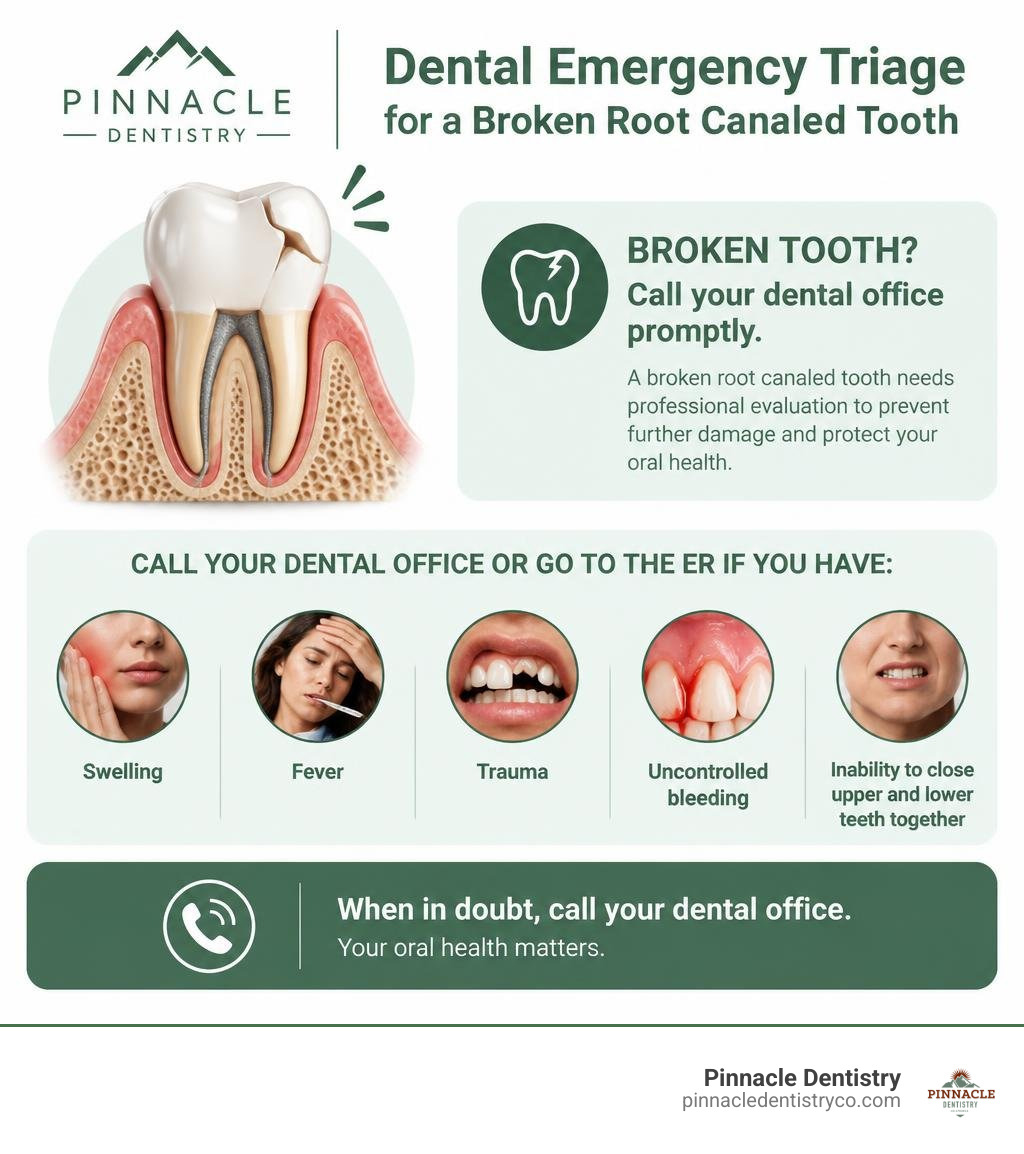
If you notice swelling that spreads, fever, facial trauma, or trouble closing your teeth together, call the office or go to the ER. Other concerns, including a chipped crown, a broken filling, or discomfort when biting, still deserve prompt dental attention. The triage information is intended to help patients recognize when to seek care, not to replace an examination.
Why Treated Teeth Fracture: Lost Tooth Structure and Bite Forces
A treated tooth does not become weak simply because it has had root canal therapy. More often, the tooth has already lost substantial structure from decay, prior fillings, trauma, or the access opening needed for treatment. When the remaining walls and ridges cannot distribute chewing forces effectively, the tooth may be more vulnerable to cracking or a broken restoration. A dentist can evaluate the amount of healthy tooth structure that remains and recommend a restoration based on the individual tooth.
MedlinePlus explains in its root canal guidance that a root canal should be followed by a permanent restoration to restore the tooth’s shape and strength for chewing, and that a final crown may be placed on top. Completing recommended root canal treatment and the final restoration helps protect the tooth after infection or injury has been addressed. The type of restoration depends on the tooth, the size of the prior restoration, bite forces, and the location of the fracture. Patients should ask their dentist how the proposed restoration supports the remaining tooth structure.
Structural Causes
Several factors can contribute when a root canaled tooth broke. Deep cavities and large older fillings can leave thinner walls that flex under normal chewing forces. Small cracks may also develop over time in teeth that have experienced repeated biting pressure, trauma, or extensive restorative work. Clenching and grinding can add force to a tooth that is already structurally compromised.
The location and direction of the crack matter as much as the amount of tooth that is missing. A fracture limited to part of the chewing surface may be managed differently from a crack that extends toward the root. A dental examination and appropriate imaging help determine whether the tooth can be restored. Avoid assuming that the visible portion of the break shows the full extent of the problem.
The Role of Delayed Crowns and Occlusal Force
A period between root canal therapy and placement of the final restoration can leave a weakened tooth exposed to normal chewing forces. Following your dentist’s root canal aftercare instructions and returning for the planned restoration are important parts of protecting the tooth. For many back teeth, a full-coverage restoration may be recommended to support the remaining structure. Your dentist can explain whether a crown, onlay, or another restoration is appropriate.
Sleep bruxism and daytime clenching can also place repeated pressure on treated teeth and restorations. If grinding is suspected, a dentist may discuss a custom nightguard and other ways to reduce bite-related stress. Regular dental visits allow the practice to monitor restorations for wear, cracks, or changes in the bite. Prompt evaluation is particularly important when a tooth suddenly feels different during chewing.
Types of Tooth Fractures and How They Impact Repair
The location and depth of a fracture influence the treatment discussion and long-term outlook. A dentist looks at the remaining tooth structure, the bite, the gum line, and whether the crack extends into the root. Some fractures involve only an outer cusp or restoration, while others may affect the deeper root structure. Only an examination can determine which category applies to a particular tooth.
Cusp Fractures and Minor Chips
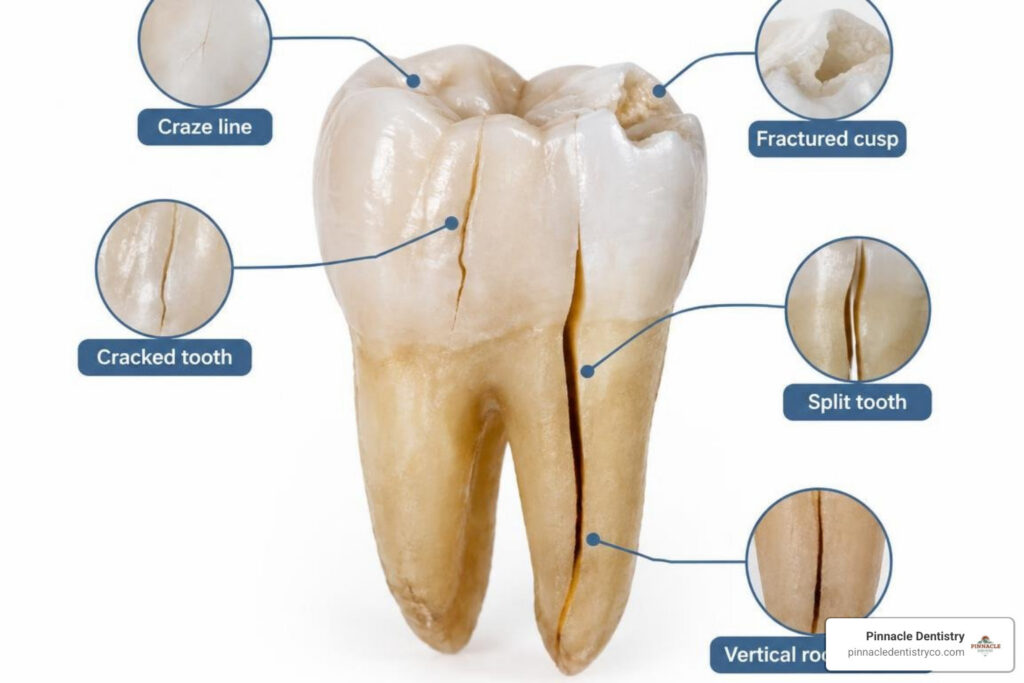
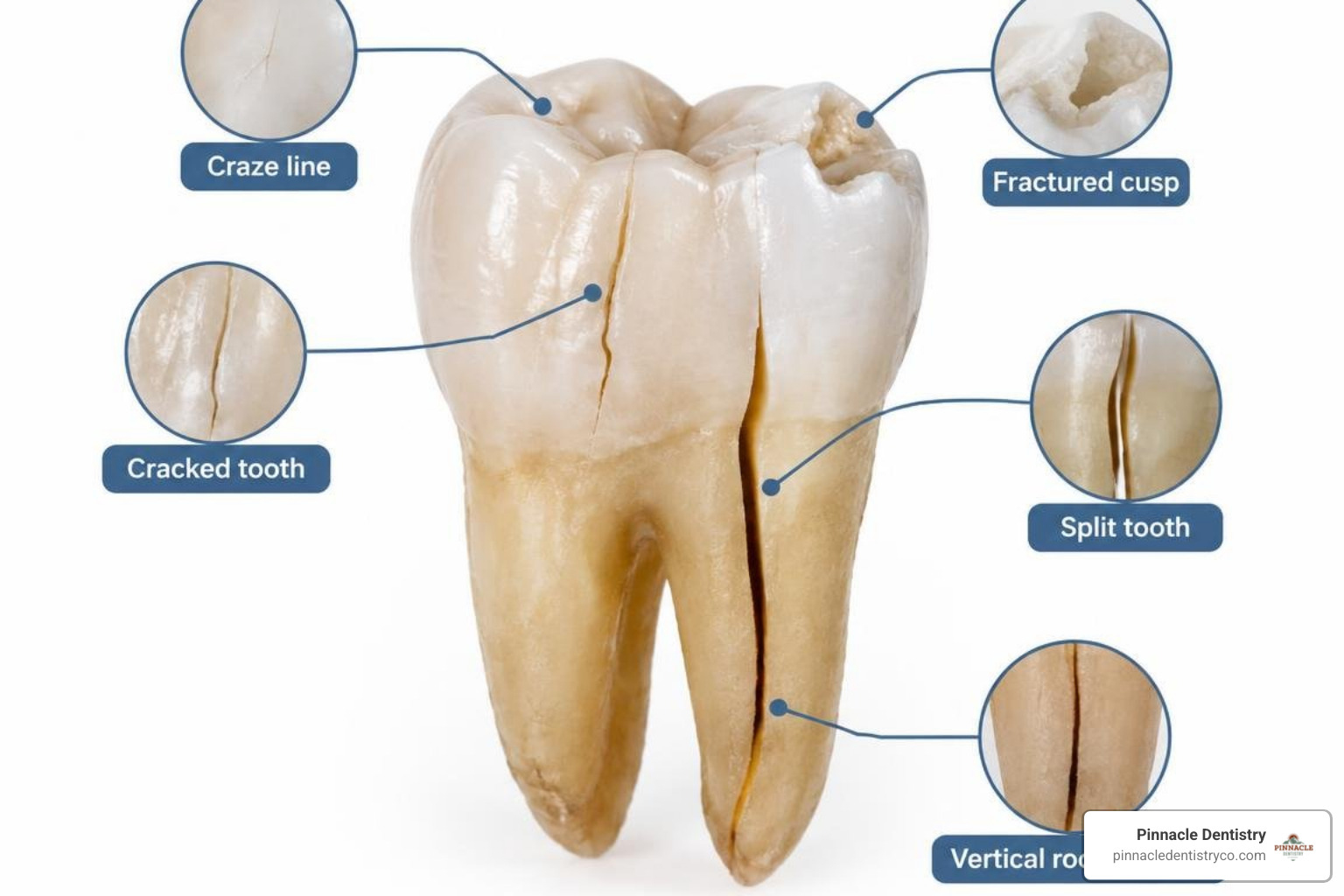
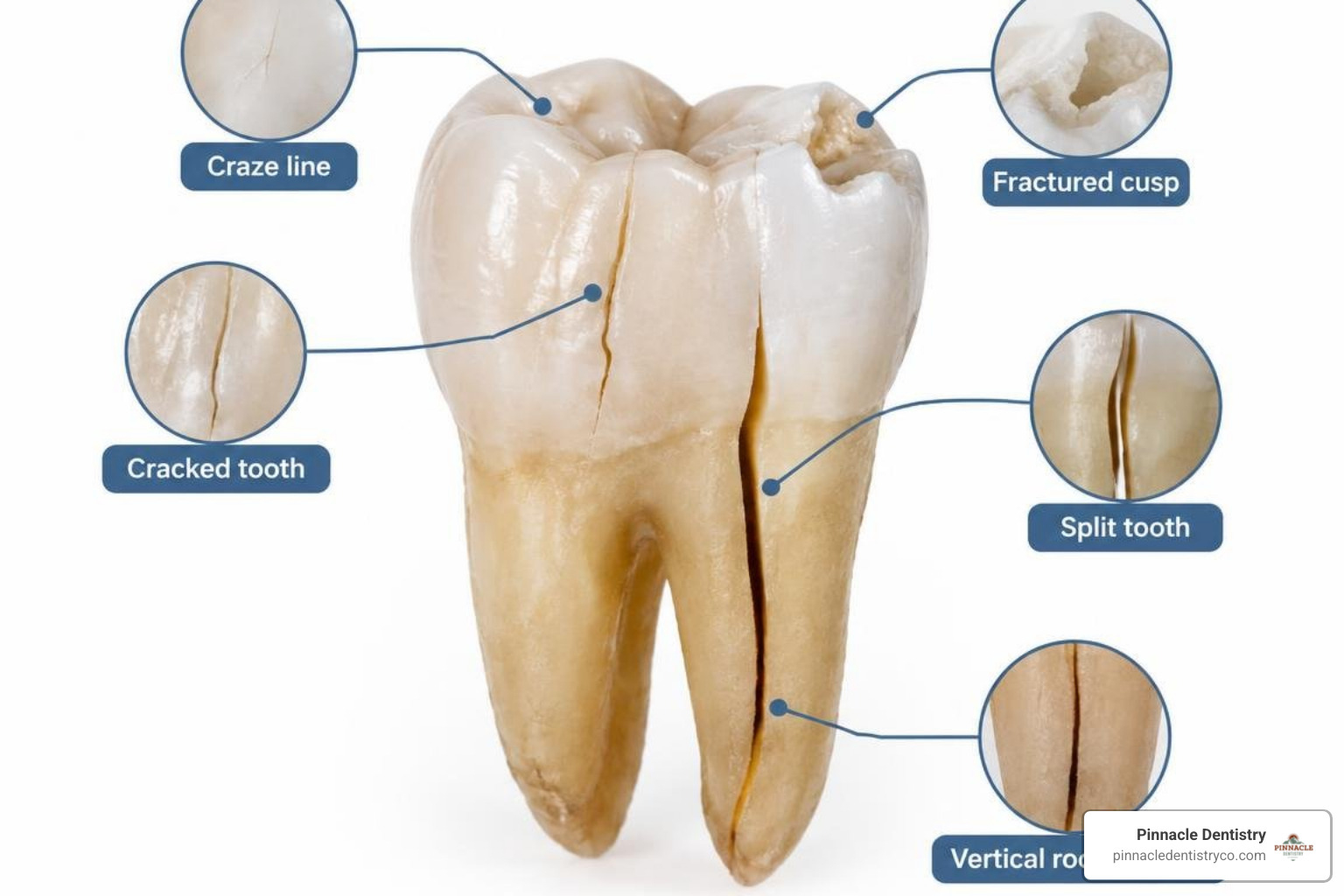
A fractured cusp is a break in part of the chewing surface, often near the outer edge of the tooth. When enough healthy tooth structure remains and the fracture is above the gum line, a dentist may discuss smoothing the area, bonding, an onlay, or a crown. The right option depends on the tooth’s size, location, and the forces placed on it during chewing. A prompt visit helps prevent a small fracture from becoming more complicated.
Cracked Teeth and Split Teeth
A cracked tooth has a fracture line that may begin on the chewing surface and extend downward. If the crack is limited and the remaining tooth can be supported, a protective restoration may be considered. A split tooth has separated into distinct segments and can be more difficult to restore. Your dentist will assess whether the tooth can be retained or whether another treatment plan should be discussed.
Vertical Root Fractures and Breaks at the Gum Line
A vertical root fracture may begin in the root and extend toward the visible part of the tooth. These fractures can be difficult to identify because symptoms may be subtle, yet the crack can create a pathway for bacteria and inflammation around the root. If a vertical root fracture is confirmed, your dentist will discuss whether the tooth can be managed or whether extraction is the more predictable option. Do not delay evaluation if the tooth feels loose, the gum is swollen, or biting discomfort develops.
When a tooth breaks near the gum line, the amount of sound tooth structure above the bone helps guide the restorative discussion. Your dentist may discuss options such as crown lengthening or surgical extrusion when additional healthy structure must be exposed for a restoration. These procedures are not appropriate for every situation, and they may be discussed alongside alternatives such as extraction and replacement. The goal is to choose a treatment plan that is clinically sound for the individual tooth.
Clinical Treatment and Restoration Options
At Pinnacle Dentistry, treatment planning focuses on preserving natural tooth structure when that approach is clinically appropriate. A dental examination helps identify the fracture pattern, the condition of the restoration, and the amount of healthy tooth that remains. The discussion may include conservative repair, a protective restoration, or replacement if the tooth cannot be predictably restored. Recommendations are tailored to the tooth and the patient’s oral health needs.
Minimally Invasive Bonding and Onlays
For a small chip or limited cusp fracture, a dentist may discuss composite bonding or an onlay when enough healthy tooth structure remains. These options can rebuild missing areas while preserving more of the natural tooth than a full crown in selected situations. The restoration must fit the bite and support the areas that receive chewing pressure. Your dentist will determine whether this approach is appropriate after evaluating the crack and surrounding structure.
Advanced Endocrowns and Full Dental Crowns
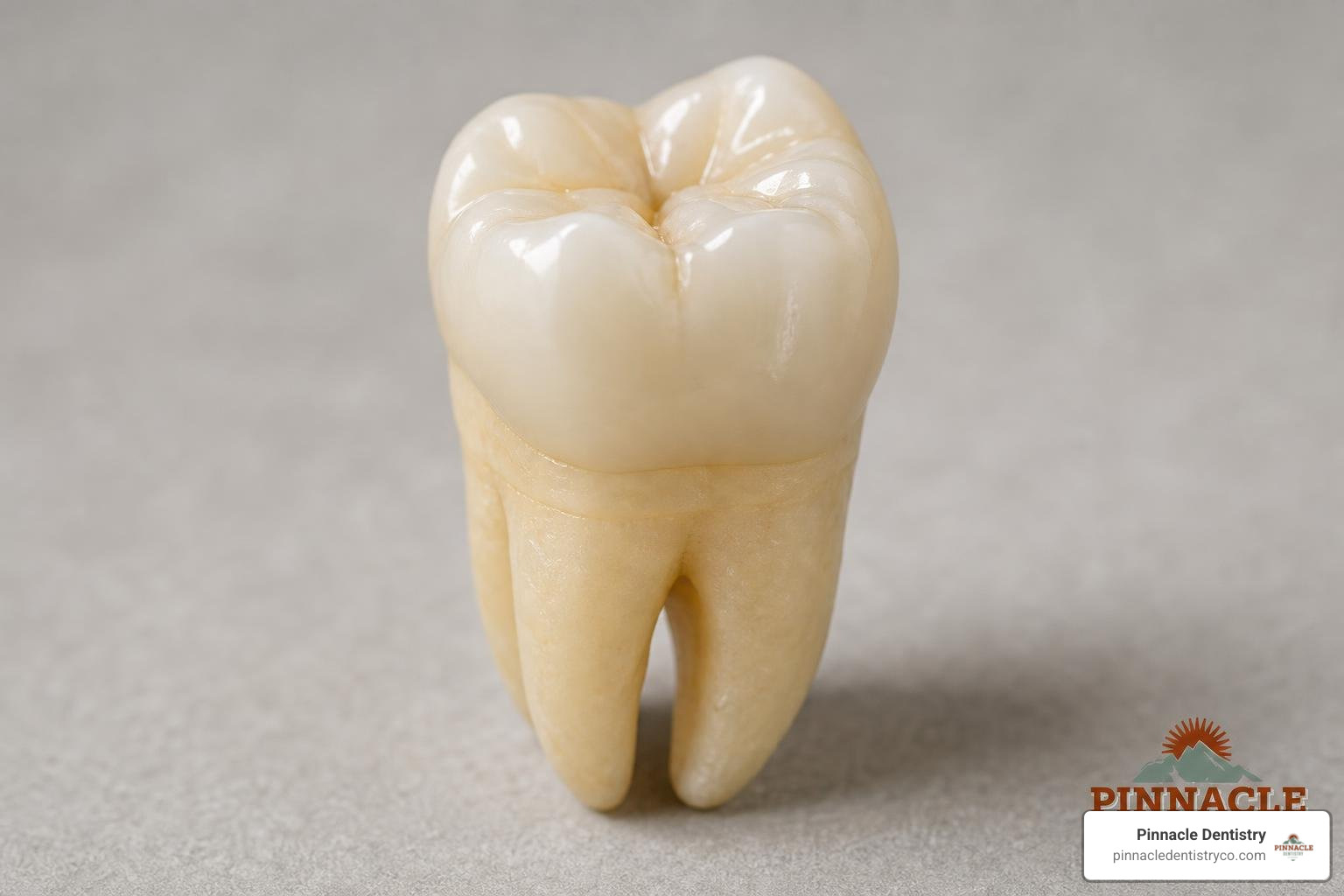
Molars and premolars with extensive loss of tooth structure may need broader cuspal coverage. Depending on the tooth and its root canal access, a dentist may discuss an endocrown, a core restoration, or a full dental crown. These restorations are designed to support the remaining tooth and help it withstand chewing forces. The final choice should reflect the fracture pattern, the amount of sound structure, and the patient’s bite.
Crown Lengthening and Surgical Extrusion
When a tooth breaks at or below the gum line, it may be difficult to create enough stable tooth structure for a restoration. A dentist may discuss crown lengthening or surgical extrusion as possible ways to expose more healthy structure before a crown is considered. These options depend on the tooth, the surrounding bone and gum tissue, and the location of the fracture. They are part of a broader treatment discussion rather than a standard solution for every broken tooth.
When Extraction and Replacement Become Necessary
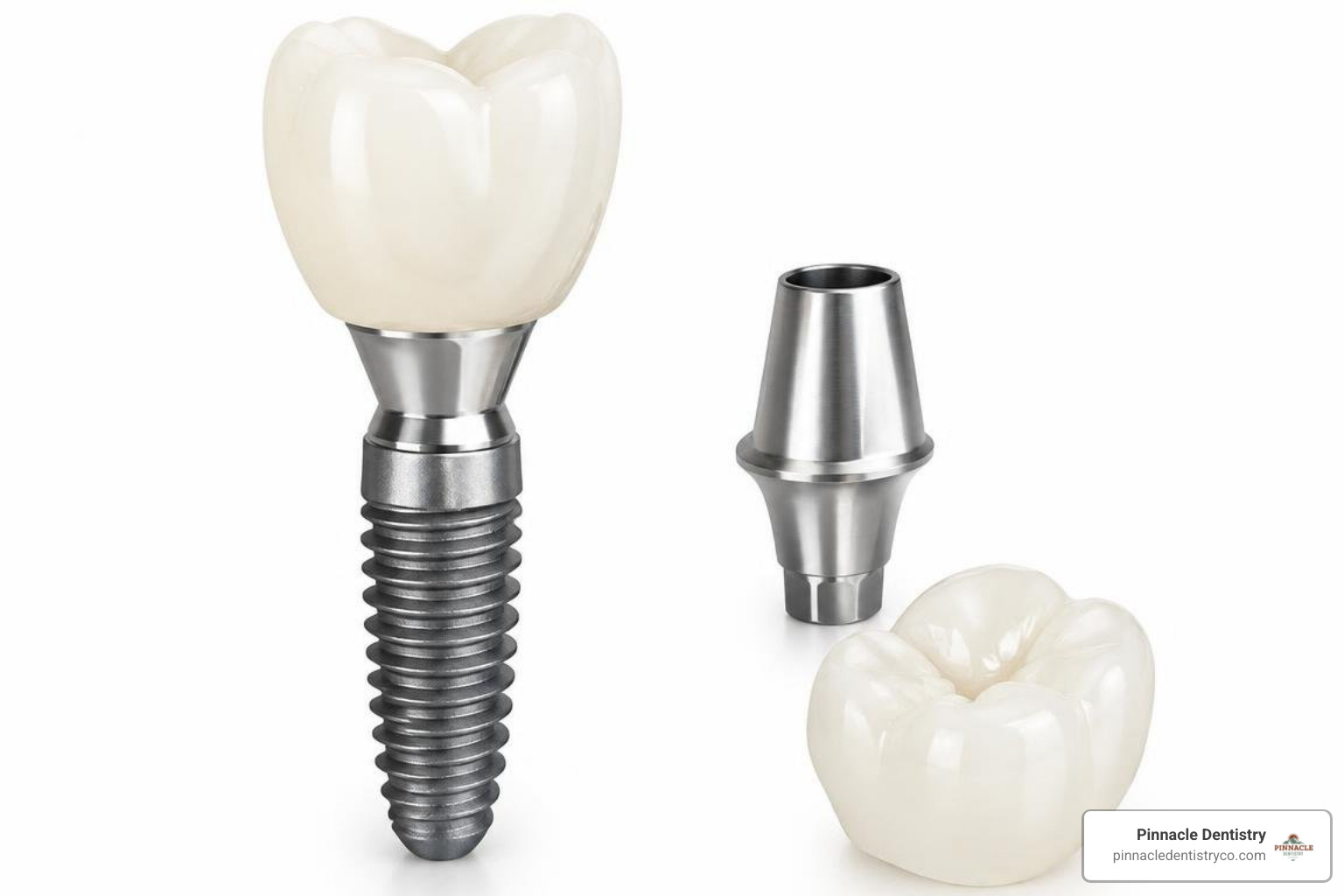
If a fracture extends deeply into the root or leaves too little sound tooth structure for a predictable restoration, extraction may be discussed. A dentist will review the condition of the tooth and the available replacement options, which can include a dental implant, bridge, or removable appliance. Preserving a natural tooth is preferred when it can be restored with a reasonable prognosis, but repeated treatment is not always the best path. A clear discussion of benefits, limits, and next steps helps patients make an informed decision.
Advanced Reinforcement Materials and Biomimetic Solutions
Modern restorative dentistry includes materials and techniques intended to support the remaining tooth while preserving healthy structure when possible. The best approach is not the same for every root-treated tooth, because the amount of remaining enamel and dentin, the location of the tooth, and the bite all matter. A dentist may consider how a restoration distributes chewing forces and how easily the tooth can be monitored over time. The goal is a restoration that fits the patient’s clinical needs rather than a one-size-fits-all solution.
Fiber-Reinforced Composites for Enhanced Fracture Resistance
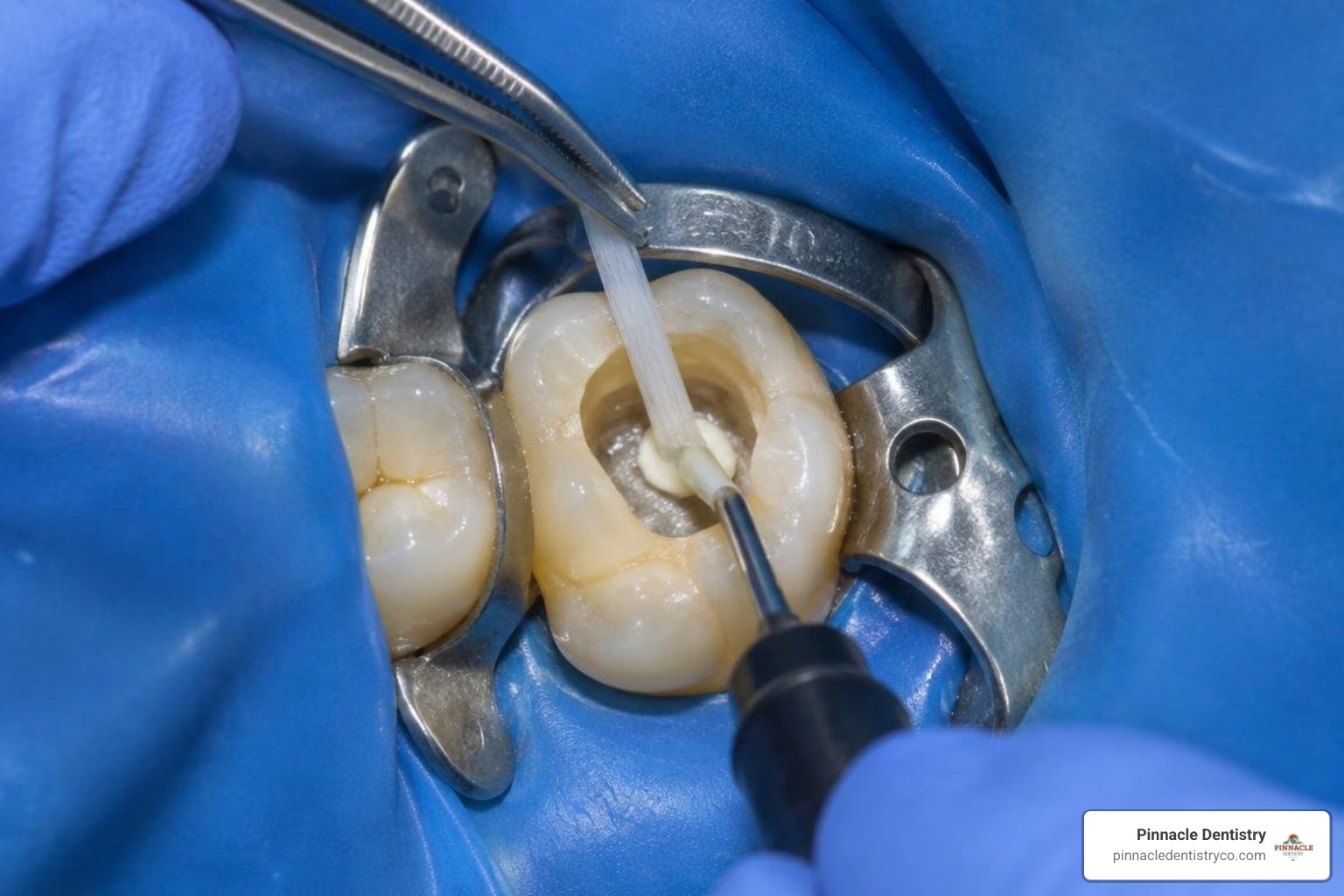
Fiber-reinforced composite materials may be considered in selected restorative situations to help support a tooth’s core. Their use depends on the tooth’s structure, the planned restoration, and the dentist’s assessment of bite forces. They are not a substitute for an evaluation when a crack extends into the root or when the tooth is otherwise not restorable. Patients should ask how any proposed material fits into the overall restorative plan.
Biomimetic Principles in Restorative Dentistry
Biomimetic dentistry aims to preserve healthy tooth tissue and use adhesive techniques thoughtfully when rebuilding damaged teeth. It may include conservative preparation, layered restorative materials, and careful attention to how the restoration functions in the bite. Learn more about biomimetic dentistry and how this approach may be discussed for an individual tooth. Your dentist can explain whether a conservative restorative plan is suitable for your fracture pattern and oral health needs.
Frequently Asked Questions About Broken Root Canaled Teeth
Can a root canal tooth break?
Yes. A tooth that has had root canal treatment can still crack, lose part of a filling, or break if it has lost substantial structure from decay, an older restoration, trauma, or repeated biting forces. A dentist can evaluate the fracture and explain whether the tooth can be protected with a restoration.
Why did my root canal tooth break without pain?
Because the tooth’s inner nerve has been treated, a fracture may not cause the usual temperature sensitivity that alerts patients to a problem. Pressure when chewing, swelling near the tooth, or a change in how the bite feels still warrants an examination by a dentist.
Can a broken root canal tooth be saved?
Sometimes. Whether a broken root canal tooth can be saved depends on the fracture pattern, the amount of healthy tooth structure left, the condition of the root, and the tooth’s location in the bite. Your dentist can discuss whether a restoration is a reasonable option or whether another treatment approach is more predictable.
Is a broken root canal tooth an emergency?
A broken root canal tooth should be assessed promptly, especially if the tooth feels loose, biting is uncomfortable, or the break is large. Swelling, fever, facial trauma, uncontrolled bleeding, or trouble closing the teeth together requires urgent care, so call the office or go to the ER.
What should I do if my crown fell off a root canal tooth?
Call the office promptly and keep the crown in a clean container to bring to the appointment. Avoid chewing on that side until a dentist evaluates the tooth and the crown, because the exposed tooth may be more vulnerable to further damage.
Will I need a new crown after the tooth breaks?
Your dentist may recommend replacing the crown when it is damaged, loose, or no longer provides reliable coverage for the tooth. The recommendation is based on the break itself, the condition of the tooth under the crown, and the expected stability of the restoration.
What should I bring to my dental appointment?
Bring any broken tooth, filling, or crown pieces that you can find in a clean container. Be ready to explain when the break happened and whether you noticed swelling, trauma, changes in your bite, or discomfort when chewing.
Can a broken root canal tooth get infected?
Yes. If a crack or broken restoration allows bacteria to reach previously sealed areas, infection or inflammation may develop around the tooth. A dentist can examine the tooth and determine what treatment, if any, is appropriate.
When is a dental implant considered after a severe fracture?
A dental implant may be discussed when a fracture extends deeply into the root or too little sound tooth structure remains for a predictable restoration. Your dentist can review replacement options after assessing the tooth and the surrounding oral health conditions.
Can teeth grinding break a tooth after a root canal?
Yes. Clenching and grinding can place repeated force on a tooth or restoration that is already structurally compromised. A dentist may evaluate bite-related wear and discuss ways to reduce stress on the tooth after treatment.
Restoring Strength and Function to Your Smile
A broken treated tooth needs a timely dental evaluation so your dentist can assess the fracture, the surrounding tissues, and the condition of the existing restoration. Avoid chewing on the affected side, bring any broken piece you can find, and call the office promptly for guidance. Urgent swelling, fever, trauma, uncontrolled bleeding, or trouble closing your teeth together requires a call to the office or a visit to the ER. The right next step depends on the tooth, not on a home assessment.
At Pinnacle Dentistry, we provide general and family dental care for patients in Colorado Springs, CO, and have been serving patients since 1989. Dr. Thomas Jennings is a Master of the Academy of General Dentistry (MAGD). If your root canaled tooth broke, contact our office to arrange an evaluation and discuss appropriate care.
Pinnacle Dentistry, 2430 Research Pkwy Suite 200, Colorado Springs, CO 80920, (719) 590-7100