Are There Real Alternatives to Dental Crowns?
The good news for anyone exploring alternatives to dental crowns is that a dentist may be able to restore a damaged tooth while preserving more natural structure. The best choice depends on the location of the tooth, the amount of healthy structure that remains, bite forces, and your overall oral health. A crown is sometimes the right choice, but it is not the only option for every tooth.
I am Dr. Thomas Jennings, DDS, MAGD, a Colorado Springs, CO dentist with over 35 years of experience. This guide explains common restorative options that may preserve more of a natural tooth when they are appropriate. It also explains when a traditional crown may offer the better long-term approach after an examination. The goal is to help patients prepare for a clear discussion of their restorative options.
| Alternative | Best For | Invasiveness |
|---|---|---|
| Dental bonding | Minor chips, small cracks | Very low |
| Inlays | Decay inside the cusps | Low |
| Onlays | Decay covering one or more cusps | Low to moderate |
| Porcelain veneers | Front tooth cosmetic damage | Low |
| Endocrowns | Some root-canal-treated molars | Moderate |
| Fiber-reinforced composite | Selected weakened teeth | Low to moderate |
| Pulp capping | Deep decay near the nerve | Low |
| Resin-bonded bridge | Single missing tooth | Low |
Traditional crowns are reliable restorations, but they require preparing the tooth so a full cap can fit. That preparation permanently removes some tooth structure, which is why a careful exam matters before choosing a restoration. For patients in Colorado Springs, CO, discussing alternatives to dental crowns with a dentist can clarify whether a more conservative option is appropriate.
biomimetic dentistry focuses on restoring a tooth in a way that respects its remaining structure and function. Depending on the tooth, options may include bonding, an inlay, an onlay, an endocrown, or another restoration selected after an exam. These treatments are not interchangeable, and a dentist should evaluate the tooth before recommending one.
Why Preserving Natural Tooth Structure Matters
When a tooth is damaged by decay or trauma, preserving as much healthy structure as possible can support a thoughtful restorative plan. Natural enamel and dentin have different roles in how a tooth handles biting forces, so the amount and location of damage matter. A dentist can explain which restoration fits the tooth and whether monitoring, a filling, an onlay, or a crown is appropriate.
Preparing a tooth for a crown removes tooth structure so the restoration can fit. MedlinePlus notes in its dental crowns guidance that a tooth under a crown can become more sensitive to hot and cold, and it also describes concerns such as decay under a crown or a crown that chips, cracks, or falls off. Those possibilities are reasons to discuss the expected benefits and limitations of each option with your dentist.
Preserving remaining structure can be an important part of planning a restoration, especially when a conservative option is suitable. Our overview of preserving natural teeth explains why early evaluation and regular dental visits matter. If you have tooth pain, sensitivity, or a visible crack, see your dentist rather than trying to treat the problem at home.
The National Institute of Dental and Craniofacial Research (NIDCR) reports in its dental caries in adults data that nearly 90% of adults ages 20 to 64 have had decay in their teeth. It also reports that 1 in 5 adults in that age group have had untreated decay. Because so many adults will need a restoration at some point, it helps to know the options that keep more natural tooth structure.
Conservative Alternatives to Dental Crowns for Damaged Teeth
For many patients in Colorado Springs, CO, learning that a full crown may not be the only option can be reassuring. Conservative dentistry aims to replace damaged or decayed areas while retaining sound tooth structure when that approach is appropriate. The dentist considers the size and location of the problem, the condition of the remaining tooth, and how the tooth functions in your bite.
These options can provide structural support and a natural appearance when selected for the right situation. A chipped front tooth, a cavity, or a worn chewing surface may call for different materials and techniques. An examination helps determine whether a conservative restoration is suitable or whether a crown provides more dependable coverage.
Biomimetic Bonding
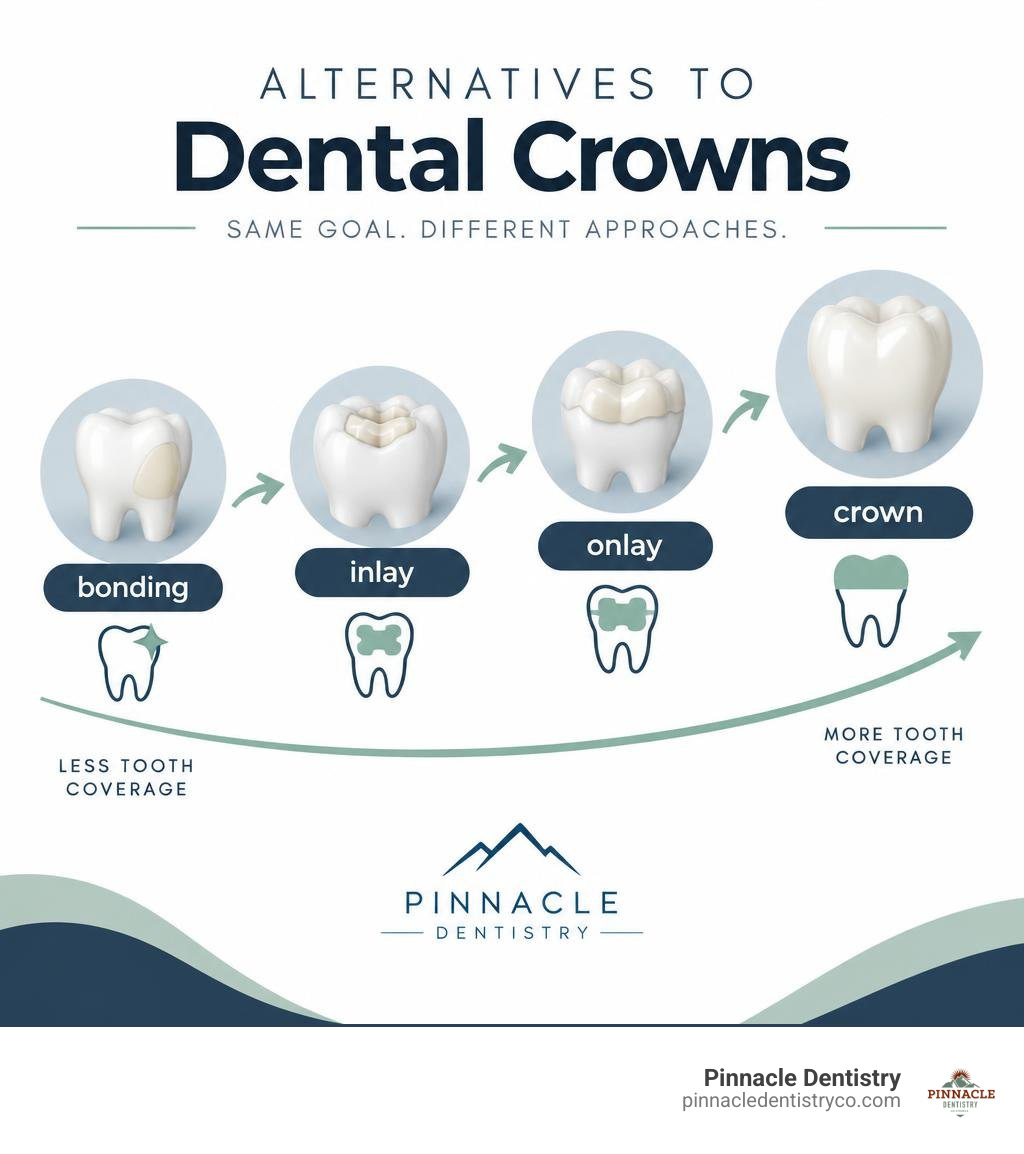
dental bonding can repair some minor chips, small cracks, and areas of decay with tooth-colored composite resin. MedlinePlus explains in its dental cavities guidance that composite resin more closely matches the natural tooth and is strong enough for use anywhere in the mouth, including back teeth. Your dentist can tell you whether bonding is appropriate for the size of the repair and the forces on that tooth.
Bonding may preserve more tooth structure than a full-coverage restoration when damage is limited. It can still need maintenance, particularly in areas that receive heavy biting pressure. If symptoms such as pain, swelling, fever, or trauma are present, call the office or go to the ER for urgent care rather than relying on an online article.
Inlays and Onlays
When a tooth has more damage than a standard filling can address but does not need full coverage, an inlay or onlay may be considered. These restorations are custom made to fit the damaged area and can be created from materials such as porcelain or composite resin. The dentist evaluates the remaining walls of the tooth, the location of the damage, and your bite before recommending one.
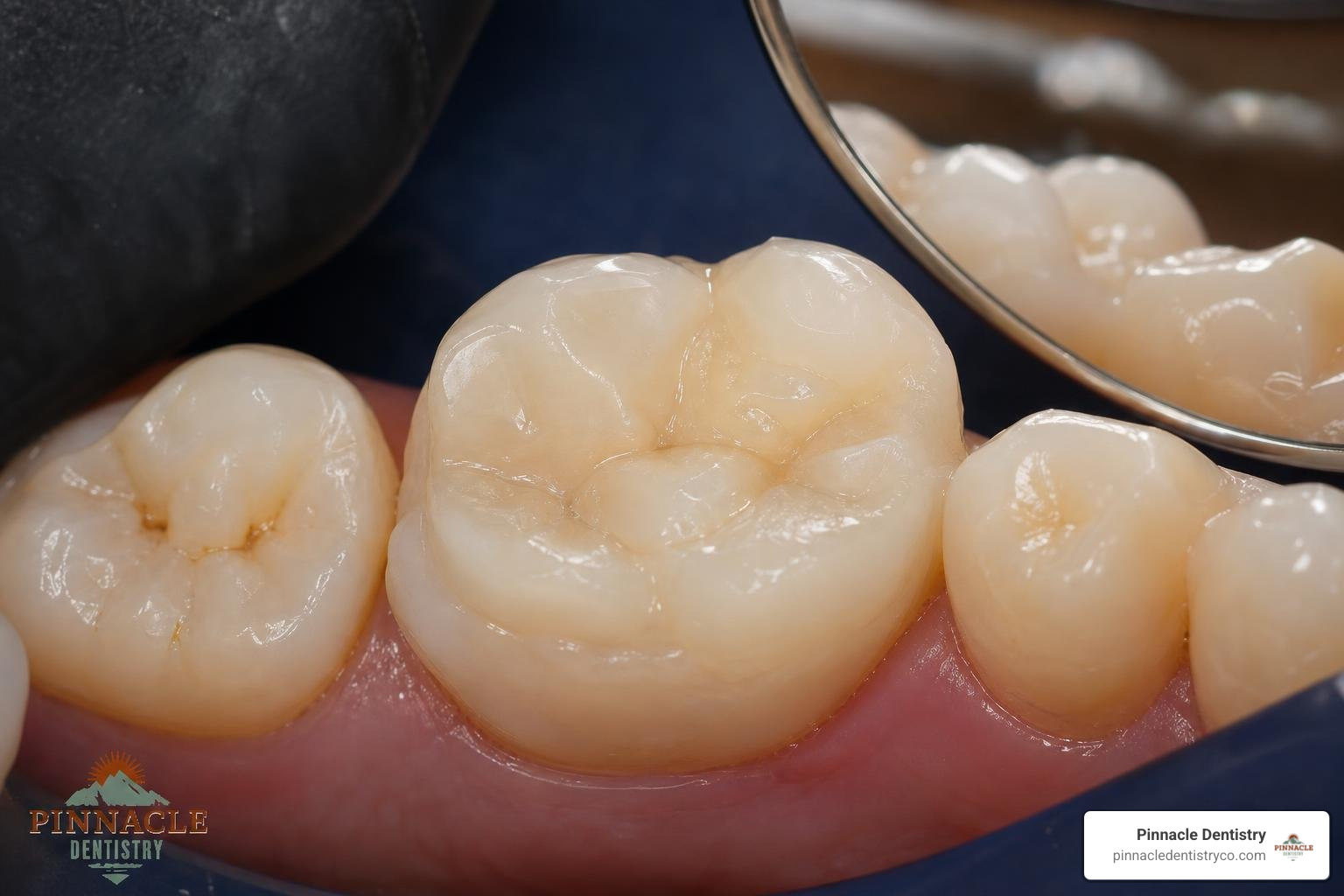
- Inlays: These fit within the grooves of a tooth and replace decayed or damaged material inside the cusps.
- Onlays: These extend over a damaged cusp or part of the chewing surface while retaining other areas of healthy tooth structure.
Inlays and onlays can be useful when a tooth needs more support than a filling but may not require a full crown. They are not the right solution for every crack or large area of damage. Your dentist can compare them with a crown and explain the clinical reasons for the recommendation.
Options for Weakened and Root-Canal-Treated Teeth
A tooth that has had root canal treatment needs a permanent restoration to protect and support it. Depending on the tooth and the structure that remains, the dentist may discuss a crown, an onlay, an endocrown, or another restoration. The right option depends on the tooth’s location, the amount of damage, and how it functions in the bite.
Fiber-Reinforced Composites and Endocrowns
Fiber-reinforced composite restorations and endocrowns are options a dentist may discuss for some weakened or root-canal-treated teeth. They are intended for specific clinical situations, not as automatic replacements for crowns. An examination is necessary to determine whether the remaining tooth structure can support one of these approaches.
Fiber-reinforced materials may be used within a restoration to help manage forces on a damaged tooth. Endocrowns are restorations designed for selected back teeth after root canal treatment. Your dentist can explain the potential benefits and limitations of each option based on your individual tooth.
Because weakened teeth can fracture or develop new problems, prompt dental evaluation is important when a tooth has pain, a loose restoration, or a visible crack. Avoid assuming that one technique will fit every situation. A dentist can assess the tooth and discuss a restoration plan that matches the findings.
Pulp Capping and Root Canal Decisions
When decay is deep, a dentist may discuss whether vital pulp therapy, such as pulp capping, is appropriate or whether root canal treatment is needed. The decision depends on the condition of the pulp, the extent of decay, symptoms, and examination findings. Pulp capping is not a promise that root canal treatment can be avoided.
When a pulp is close to or exposed by decay, treatment should be planned by a dentist after a clinical evaluation. If you have swelling, fever, facial trauma, or severe pain, call the office or go to the ER for urgent care. Do not delay care while waiting for symptoms to improve on their own.
Replacing Missing Teeth Without Full-Coverage Crowns
When a patient is missing a single tooth, a traditional bridge may require preparing the neighboring teeth to support the restoration. A resin-bonded bridge, sometimes called a Maryland bridge, may need less preparation when it is appropriate. Your dentist can compare these choices with other replacement options based on the location of the space, your bite, and the condition of the nearby teeth.
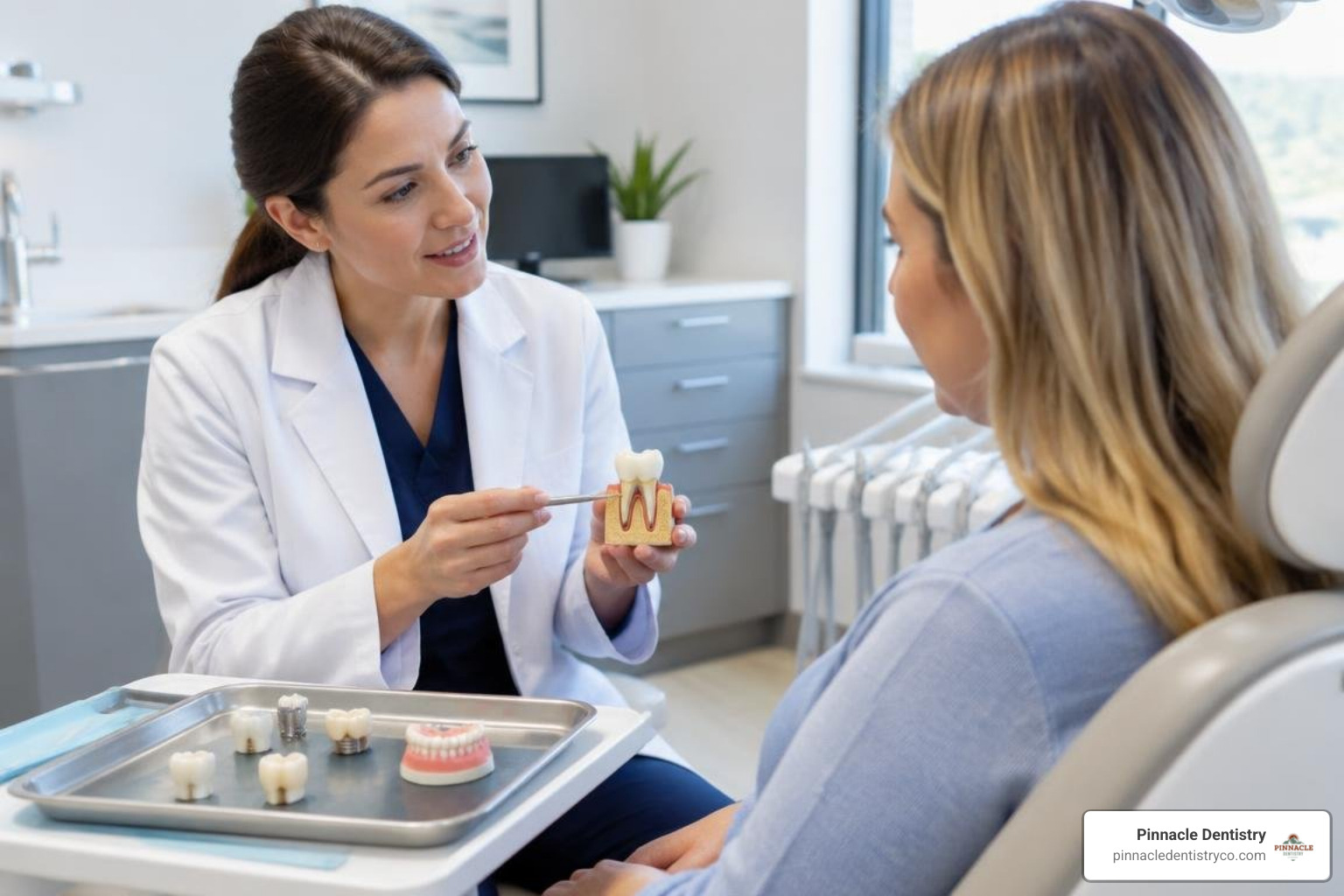
A dental bridge can replace a missing tooth by connecting a replacement tooth to support from the neighboring teeth. The design and materials depend on the location of the missing tooth and the health of the supporting teeth. A dentist can explain whether a conventional bridge, a resin-bonded bridge, or another option best fits your needs.
When is a Traditional Dental Crown Still the Best Option?
Conservative restorations can be appropriate in many situations, but a traditional dental crown may still be the better choice for some teeth. In Colorado Springs, CO, a dentist evaluates the tooth’s remaining structure, cracks, decay, bite forces, and prior restorations before making a recommendation. MedlinePlus explains that crowns can repair a weak tooth and help keep it from breaking, support and cover a tooth, or attach a bridge.
A full-coverage crown may be recommended when:
- Extensive structural loss: The remaining tooth does not provide enough support for a filling, inlay, onlay, or bonded restoration.
- Cracked teeth: A crown may be recommended to protect a cracked tooth. A crack that extends into the root needs an exam to decide the best option.
- Heavy bruxism: Severe teeth grinding can place substantial force on a restoration, so the dentist may discuss a crown or another protective plan.
- Failed restorations: A tooth with repeated restoration problems may need a different approach to protect the remaining structure.
A discussion about dental crowns should include what the crown is intended to protect and what future care it may need. MedlinePlus also notes possible issues such as decay under a crown, sensitivity, or a restoration that chips, cracks, or comes off. Regular checkups can help your dentist monitor the tooth and restoration.
Frequently Asked Questions About Crown Alternatives
Which crown alternatives might suit a damaged tooth?
Bonding, veneers, inlays, and onlays may be considered when the remaining tooth structure can support them. Each option is designed for different types and locations of damage. A dentist recommends a restoration after examining the tooth and reviewing how it functions in your bite.
Could an onlay protect my tooth instead of a crown?
An onlay covers part of a tooth, usually a damaged chewing surface or cusp, while leaving other healthy areas uncovered. It may be appropriate when the tooth has enough stable structure remaining. A dentist will check for decay, cracks, and bite concerns before recommending an onlay.
What affects the lifespan of a crown alternative?
The material, the location of the restoration, bite forces, daily oral care, and regular checkups can affect how long a restoration serves a tooth. Ceramic restorations and composite bonding have different maintenance needs. Bonding generally needs repair or replacement sooner than ceramic.
Is bonding a lasting substitute for a crown?
Bonding can address selected minor chips, small cracks, and areas of decay without covering the whole tooth. It may not provide enough support for a tooth with extensive damage or heavy biting forces. Your dentist can explain whether bonding is a reasonable choice for the tooth being treated.
How does biomimetic dentistry guide restoration choices?
This approach considers the amount of healthy tooth structure that remains and how the tooth needs to function after treatment. A filling, inlay, onlay, or crown may be considered depending on the clinical findings. The goal is to choose a restoration that fits the tooth rather than avoiding crowns in every situation.
Will a crown alternative feel different when I chew?
A well-planned restoration should be adjusted so it works comfortably with your bite. It can take time to notice a new restoration, and you should tell your dentist if your bite feels uneven or the tooth remains sensitive. Do not attempt to adjust a restoration at home.
How do I know which option is right for my tooth?
Your dentist starts with an examination and may use X-rays when they are needed to understand the tooth and surrounding structures. The dentist then explains the options, including the expected benefits and limitations of each approach. That conversation helps you choose a treatment plan that fits the clinical findings.
After root canal treatment, does every tooth need a crown?
A tooth that has had root canal treatment needs a permanent restoration, but the type of restoration depends on the tooth and how much sound structure remains. A crown, onlay, endocrown, or another option may be considered after an examination. Your dentist will explain which approach best supports the treated tooth.
What are fiber-reinforced composites in restorative dentistry?
Fiber-reinforced composites are materials that may be used as part of a restoration for selected weakened teeth. They are not appropriate for every tooth, and their use depends on the damage, remaining structure, and bite. Your dentist can explain whether this type of material is relevant to your treatment plan.
When is a traditional dental crown the better choice?
A crown may be the better choice when a tooth has extensive damage, a significant crack, repeated restoration problems, or limited remaining structure. Crowns can also be considered for teeth that need protection after root canal treatment. Your dentist can explain why a crown or a more conservative restoration is recommended.
Talk With Your Dentist About Your Options
Pinnacle Dentistry has been serving patients since 1989 with general and family dental care in Colorado Springs, CO. Dr. Thomas Jennings is a Master of the Academy of General Dentistry (MAGD). If you have tooth pain, sensitivity, a loose restoration, or a visible crack, see your dentist for an evaluation rather than relying on home treatment.
A dentist can review the condition of the tooth, discuss whether alternatives to dental crowns are appropriate, and explain when a traditional crown may offer more protection. If urgent swelling, fever, or trauma occurs, call the office or go to the ER. Clear guidance after an exam can help you make an informed decision about the next step. For a personal evaluation in Colorado Springs, CO, contact our office to discuss your restorative options with Pinnacle Dentistry.
Pinnacle Dentistry, 2430 Research Pkwy Suite 200, Colorado Springs, CO 80920, (719) 590-7100