
Full Dentures at a Glance
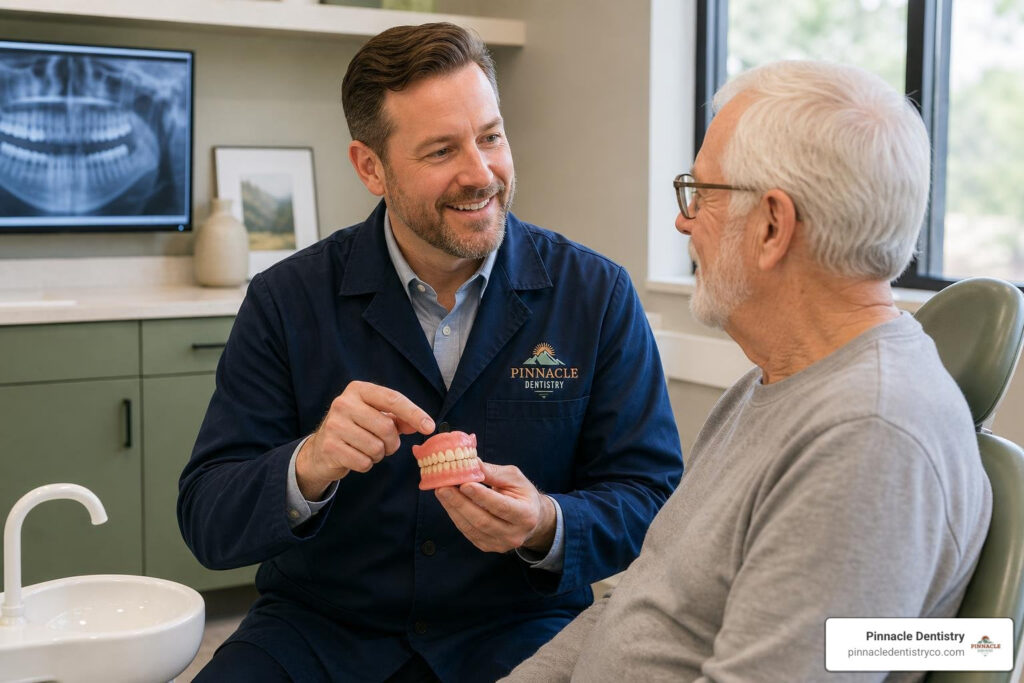
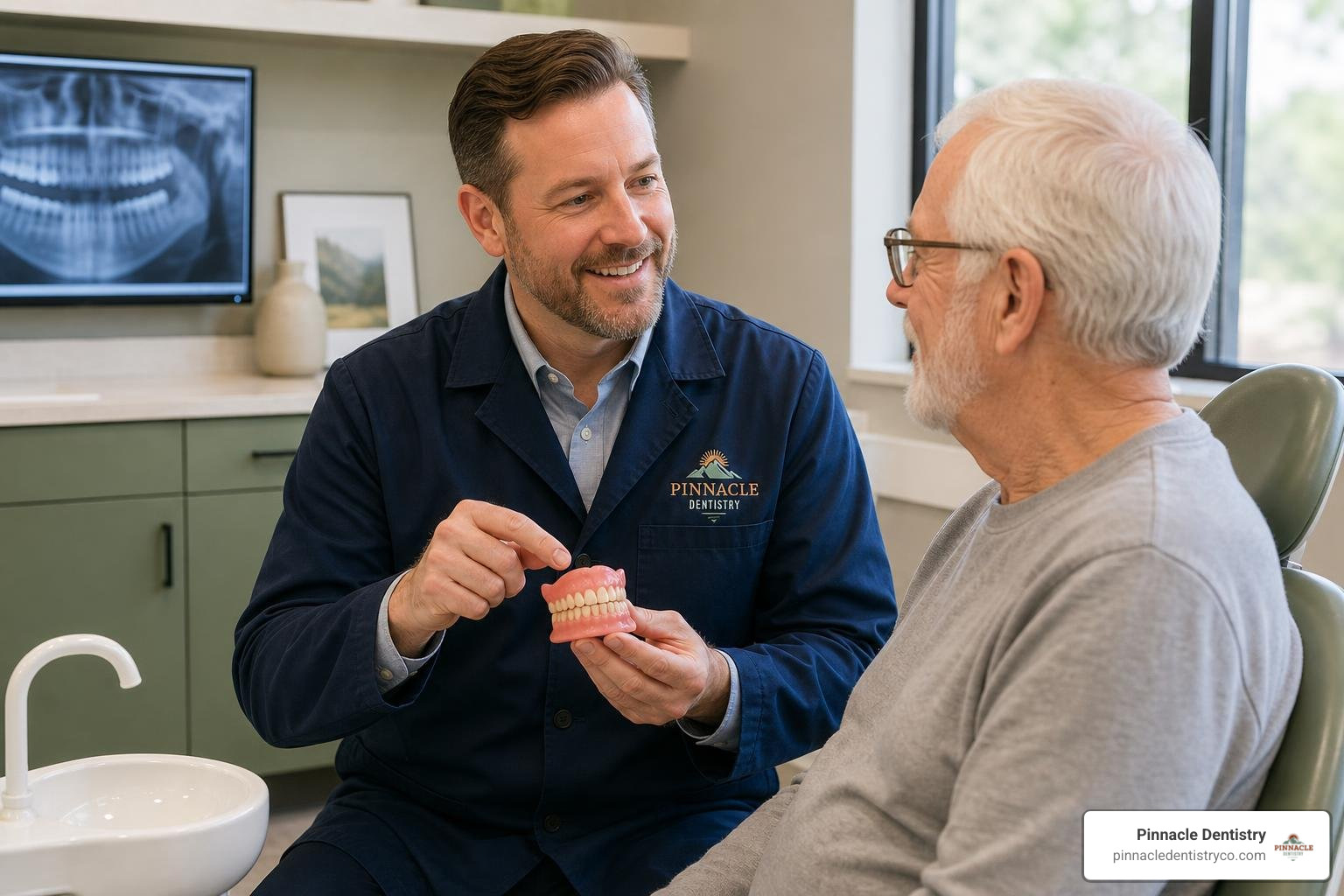
Full dentures are removable dental appliances that replace all of the teeth in your upper jaw, lower jaw, or both. They rest on the gums and may be held in place by natural suction, denture adhesive, or implant attachments, depending on the treatment plan. They can help restore the appearance of a complete smile and support everyday speaking and eating.
- Who they are for: People who have lost all of their natural teeth in one or both arches
- How they work: They rest on your gums and may be supported by natural suction, adhesive, or implants
- Types available: Traditional removable dentures and implant-supported overdentures
- Ongoing care: Daily cleaning, overnight removal when appropriate, and regular dental visits
If you have lost all or most of your teeth, full dentures can be one option to discuss with your dentist. Tooth loss can affect eating, speech, and the way your mouth feels from day to day, so a careful dental evaluation matters. Your dentist can review your oral health, explain the available choices, and help you decide whether dentures fit your needs.
Modern denture treatment is tailored to the individual rather than a one-size-fits-all process. Dentures may feel unfamiliar at first, and eating and speaking can feel different while you adjust. Regular follow-up allows your dentist to check the fit and make changes as your mouth changes.
I am Dr. Thomas Jennings, DDS, MAGD, a Colorado Springs, CO dentist with over 35 years of experience. This guide explains the main denture types, what the fitting process can involve, and how to approach daily care. It also outlines when to see your dentist for adjustments, repairs, or questions about comfort.
Understanding Full Dentures: Types, Fit, and Function
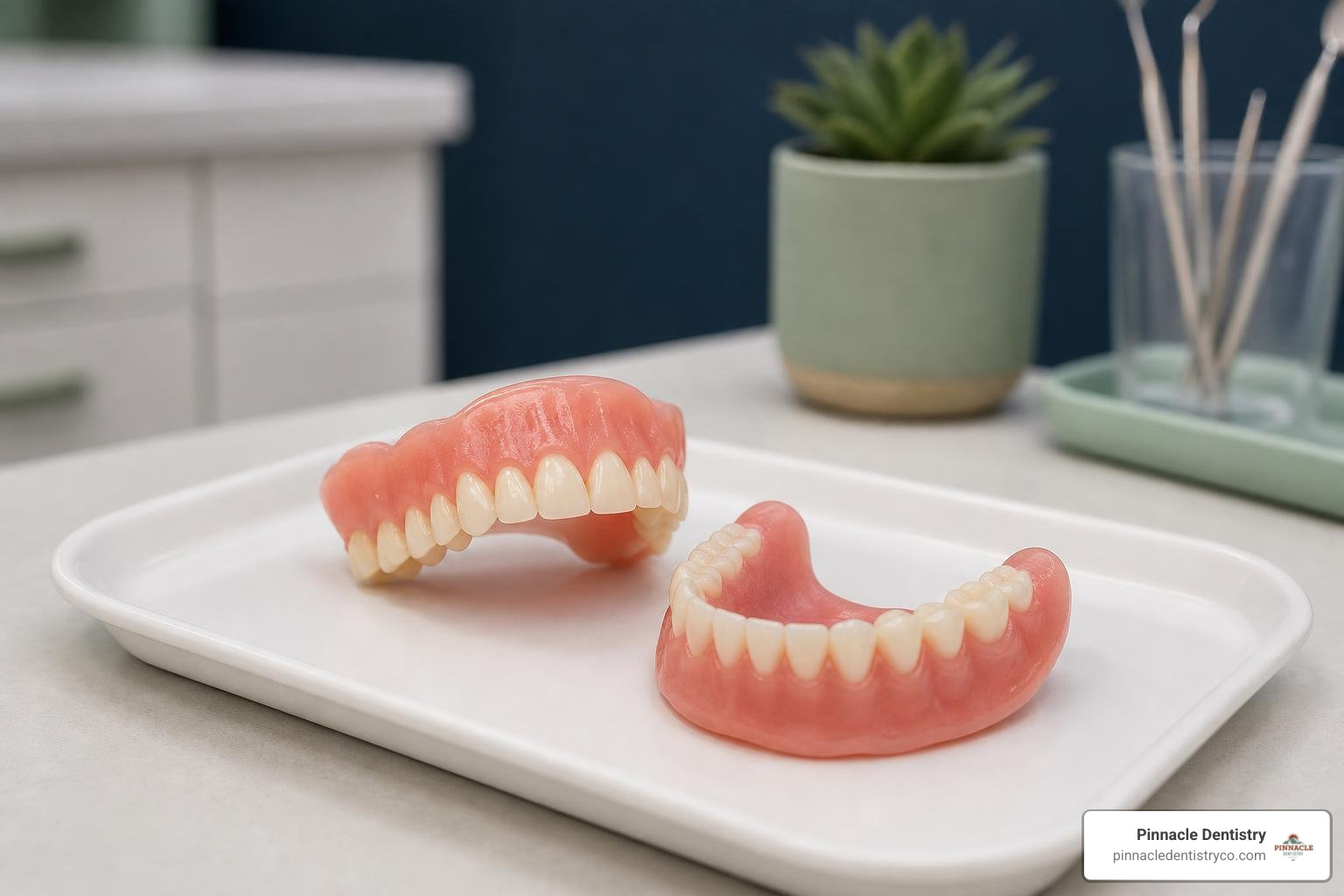
A complete denture replaces all teeth in an upper or lower arch and rests on the gum tissue. It is made with an acrylic base and artificial teeth selected to suit the patient’s mouth and treatment goals. The fit, appearance, and bite are evaluated by the dentist as part of the fitting process.
medlineplus denture guide explains that complete dentures cover an entire upper or lower jaw and may feel strange at first. Speaking and eating may feel different while you adjust, and dentures can make it harder to feel the temperature of hot foods and liquids. Your dentist can explain practical precautions and help you adapt to the appliance.
Who May Be a Candidate?
Dentures may be considered when all teeth in an arch are missing or when remaining teeth cannot be retained. Gum disease, extensive decay, injury, or long-term tooth loss can affect the available treatment choices. A dentist examines your mouth and may take X-rays to assess the teeth, gums, and supporting bone before discussing a recommendation.
At Pinnacle Dentistry, patients receive an evaluation based on their specific oral health needs. The conversation may include the condition of remaining teeth, the health of the gums, and whether tooth extractions are part of the treatment plan. If you have pain, swelling, fever, or recent trauma, see your dentist, and call the office or go to the ER for urgent symptoms.
Full and Partial Dentures
A partial denture is used when healthy natural teeth remain, while a complete denture replaces all teeth in an arch. The design, support, and daily care needs differ, so an exam is important before choosing an option. Learn more about full and partial dentures and review our guide to types of dentures before your visit.
A complete denture covers a broader area because no natural teeth remain to support it. Your dentist checks how the denture fits against the gums and how the upper and lower teeth meet. Follow-up visits give the dentist an opportunity to adjust the appliance if it feels loose, rubs, or affects normal function.
Comparing Traditional and Implant-Supported Options
Traditional removable dentures and implant-supported overdentures are two approaches your dentist may discuss after tooth loss. Both options require an individual evaluation because the health of the gums, bone, and surrounding tissues can affect what is appropriate. The goal is to choose an option that can be fitted, cleaned, and maintained with professional follow-up.
| Feature | Traditional Removable Dentures | Implant-Supported Overdentures |
|---|---|---|
| Primary Support | Resting directly on the gum tissue | Attached to dental implants in the bone |
| Retention Method | Natural suction or denture adhesive | Attachments connected to implants |
| Jawbone Preservation | Bone changes over time | Implants may help maintain bone |
| Palate Coverage | May cover the upper palate | May allow less palate coverage |
Traditional Removable Dentures
Traditional dentures rest on the gums and are designed to fit the shape of the mouth. An upper denture usually covers the palate to help with retention, while a lower denture has room for the tongue. As the mouth changes, the denture may need adjustment, relining, or replacement by a dentist.
A lower denture can be more likely to move because it has less surface area for support. Denture adhesive may help in some situations, but it should not replace a professional evaluation when the fit changes. If the denture rubs, shifts repeatedly, or causes soreness, see your dentist for guidance.
Implant-Supported Overdentures
An implant-supported overdenture connects to dental implants placed in the jawbone. The attachments can provide a different type of support than a denture that rests only on the gums. Your dentist can explain the procedure, healing process, and maintenance needs before you decide whether this approach is appropriate.
Some patients ask whether implants may help with denture movement or support. A dentist can evaluate the available bone and overall oral health, then discuss whether dental implants are an option. Careful cleaning and scheduled follow-up remain important with either type of denture.
The Clinical Journey to Restoring Your Smile
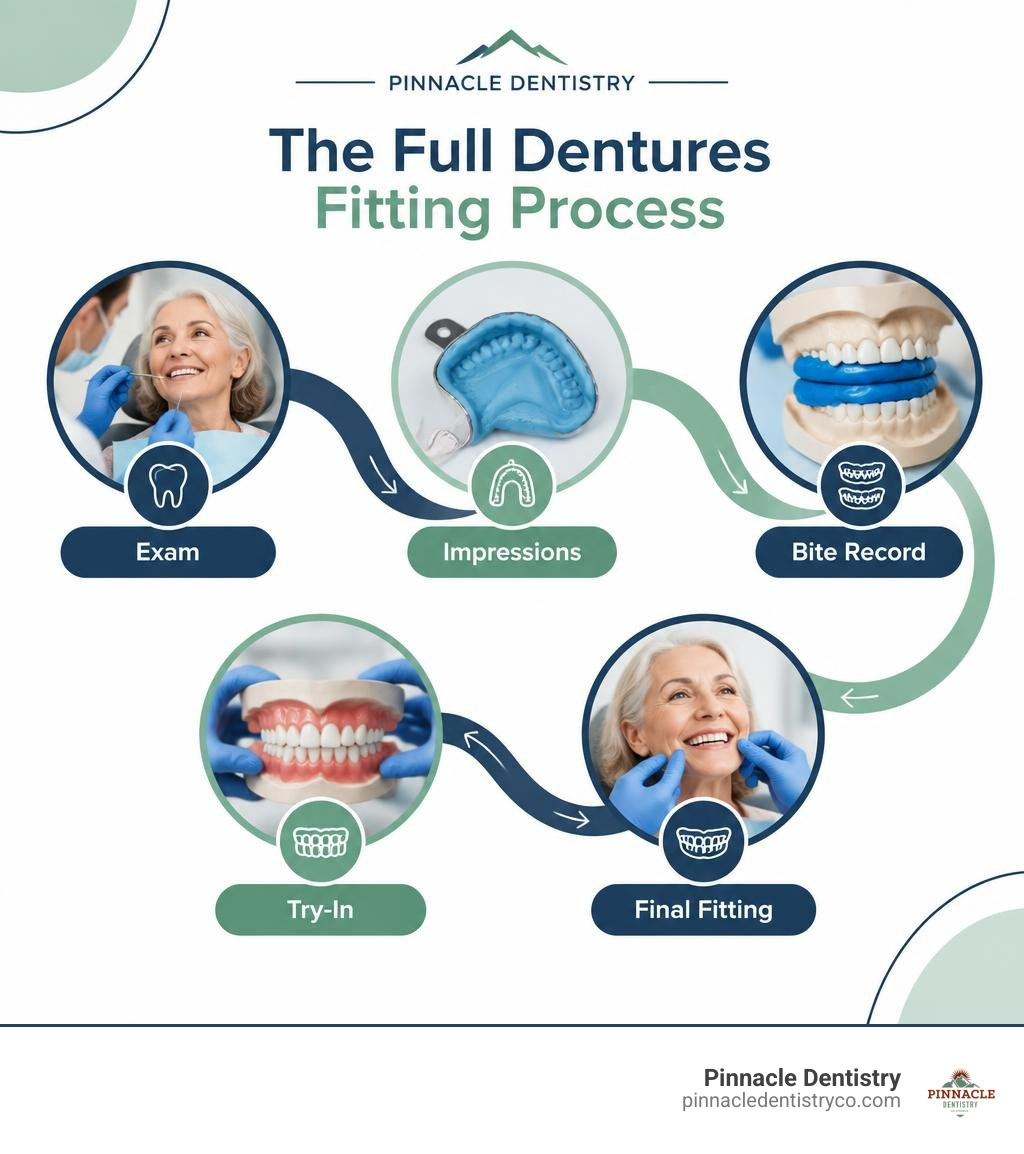
Getting dentures involves a series of appointments so the dentist can evaluate your mouth, record how your jaws meet, and check the final fit. Each mouth is different, and treatment may involve additional visits when the gums or bite need attention. Your dentist will explain what to expect before the process begins.
At Pinnacle Dentistry, the process is planned around your oral health and treatment goals. The dentist may review your dental history, examine your mouth, and take X-rays when they are needed for planning. If you have symptoms such as pain or sore areas, see your dentist so the cause can be evaluated.
The Fitting Process
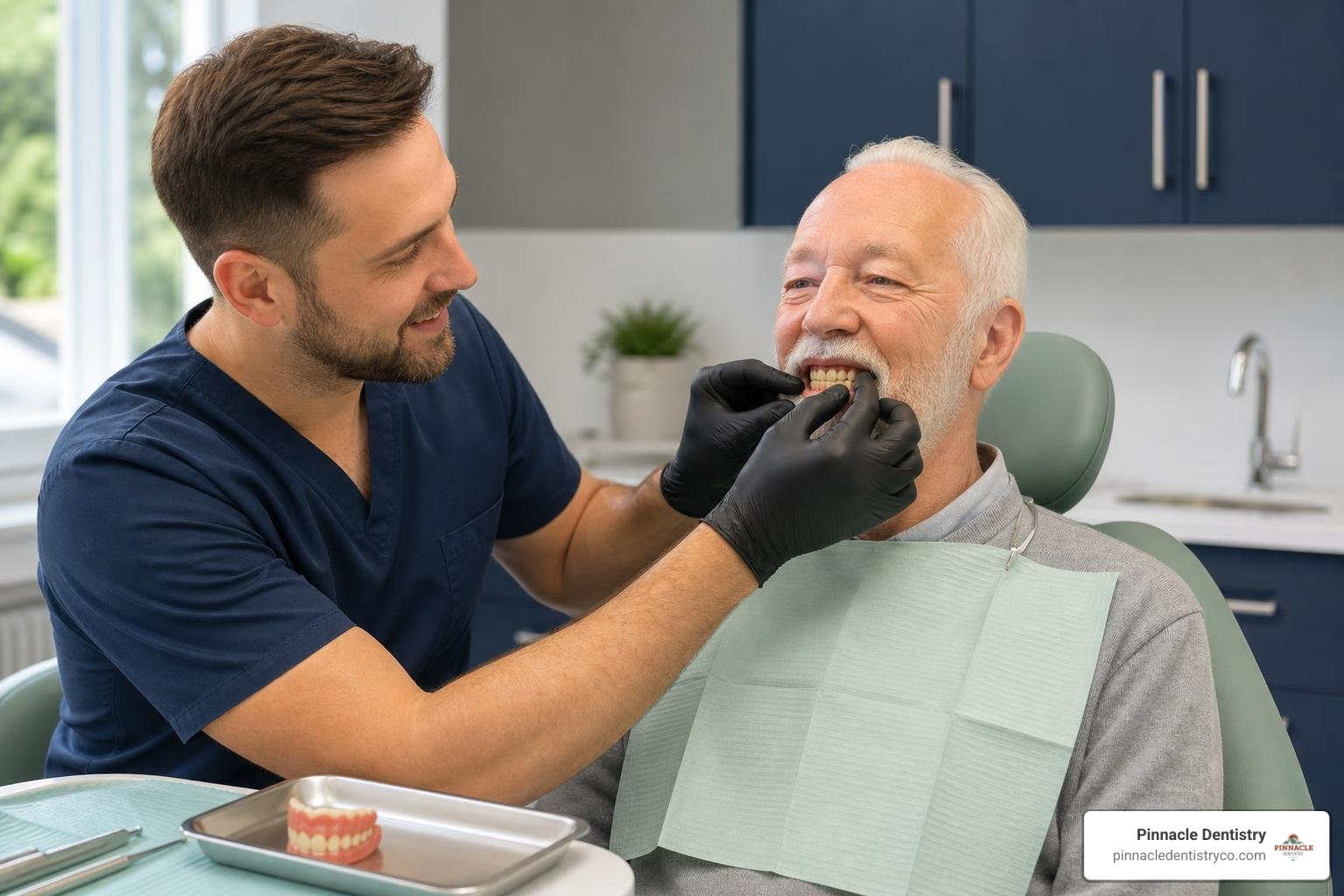
The process often begins with an evaluation and impressions of the gums and oral tissues. The dentist records the relationship between the upper and lower jaws, then reviews a wax try-in to assess tooth position, appearance, and bite. After the final denture is made, the dentist checks the fit and makes adjustments as needed.
Follow-up is part of denture care, not an optional extra. Early visits help the dentist identify pressure areas, review cleaning questions, and make adjustments when the appliance does not feel right. Contact the office if you develop persistent soreness, changes in fit, or difficulty using the denture.
Immediate and Conventional Dentures
When teeth need to be removed, a dentist may discuss an immediate denture as one possible treatment option. It is prepared before the extraction visit and placed after the teeth are removed, allowing the patient to leave with a denture in place. As the gums heal, immediate dentures usually need adjustments or relining.
Conventional dentures are made after the dentist determines that the mouth is ready for impressions and final fitting. The timing varies because healing and oral health needs differ from person to person. Your dentist will explain the expected sequence of appointments and whether an immediate or conventional approach better fits your situation.
Daily Care, Maintenance, and Longevity
Daily care helps keep dentures clean and gives you a chance to notice changes in fit or comfort. Food particles and plaque can build up on the appliance, and the gums and tongue still need regular attention. If you notice sore areas, persistent odor, or a denture that moves more than usual, see your dentist.
The cdc oral health tips advises adults to visit a dentist at least once a year, even when they wear dentures and have lost some or all of their teeth. The CDC also advises cleaning dentures daily and, if you can, removing them all night because wearing dentures could put you at risk for fungal infections in your mouth. Your dentist can give you care instructions that fit your oral health needs.
For additional guidance before your appointment, review these denture care tips. They can help you prepare questions for your dentist, but they do not replace an examination when you have discomfort or a change in fit. Seek professional care rather than trying to diagnose or correct a denture problem at home.
How to Clean and Store Your Dentures
Clean dentures daily with products and techniques recommended by your dentist. Handle the appliance carefully over a folded towel or a water-filled sink, and use a soft denture brush as directed. Clean your gums, tongue, and palate as part of your usual oral hygiene routine.

Remove dentures as directed by your dentist and store them in a safe place when they are not being worn. Avoid using store-bought glue or altering the appliance yourself if it feels loose or damaged. If the denture cracks, develops a sharp edge, or does not fit comfortably, see your dentist.
Relining, Repairs, and Lifespan
Your mouth changes over time, which can change how a denture rests on the gums. MedlinePlus notes that a dentist may want to see you often at the beginning to make sure dentures fit, and that later changes in the mouth may mean the dentures need adjustment or replacement. Those changes should be handled by your dentist.
Relining adds material to the underside of a denture to improve its fit when the gums have changed. Your dentist can determine whether relining, an adjustment, repair, or replacement is appropriate after examining the appliance and your mouth. Do not try to repair a denture at home or use store-bought glue.
If the denture cracks, chips, loses a tooth, or suddenly feels different, keep the pieces and call the office. A dentist can inspect the denture and advise you on the next step. Urgent swelling, fever, or trauma requires prompt attention, so call the office or go to the ER.
Frequently Asked Questions about Full Dentures
Can you sleep with full dentures in your mouth?
The CDC advises removing dentures all night if you can. The CDC notes that wearing dentures could put you at risk for fungal infections in your mouth. Ask your dentist whether there are any reasons your routine should be different.
How long does it take to get used to wearing full dentures?
Getting used to dentures takes time, and it is common for speaking and eating to feel different at first. Practice and follow-up visits can help you adjust to the fit and function. If discomfort continues or the denture moves, see your dentist.
How do I know when my full dentures need to be relined or replaced?
A denture that feels loose, rubs the gums, shifts, or no longer feels comfortable needs professional attention. Your mouth can change over time, which can affect how the denture fits. Your dentist can determine whether an adjustment, relining, or replacement is appropriate.
Can you eat normally with full dentures?
Eating can feel different when you begin wearing dentures. Start with the guidance your dentist provides and pay attention to foods or chewing patterns that cause discomfort. If eating remains difficult, see your dentist for an evaluation of the fit.
Do full dentures change your speech?
Dentures may affect speech while your mouth adjusts to the new appliance. Reading aloud and speaking slowly can help you become more comfortable. If clicking, movement, or soreness continues, see your dentist.
What is the difference between immediate and conventional full dentures?
An immediate denture is prepared before teeth are removed and placed after the extraction visit. A conventional denture is made after your dentist determines that the mouth is ready for final impressions and fitting. Both approaches may involve follow-up adjustments, and your dentist can explain which option may fit your needs.
Do you still need to see a dentist if you have full dentures?
Yes. The CDC advises visiting your dentist at least once a year, even if you wear dentures and have lost some or all of your teeth. Regular visits allow your dentist to examine your mouth and check the fit of the appliance.
How do you keep full dentures from slipping?
A denture that moves may need an adjustment, relining, or a review of the treatment plan. MedlinePlus notes that denture adhesive may help when dentures move too much, and a dentist may also discuss dental implants when appropriate. See your dentist rather than trying to change the denture yourself.
Can full dentures be converted into implant dentures?
A dentist can evaluate whether an existing denture can be adapted for implant attachments or whether a new denture is needed. The recommendation depends on the condition of the denture, your oral health, and the treatment plan. An examination is needed before making that decision.
What should I do if my denture cracks or a tooth comes off?
Do not repair the denture at home or use store-bought glue. Keep the pieces and call the office so your dentist can assess the appliance. If the problem follows trauma or is accompanied by swelling or fever, call the office or go to the ER.
Talk With Your Dentist About Full Dentures
Full dentures may be one way to restore a complete smile after tooth loss, but the best approach depends on your oral health, fit needs, and treatment goals. Pinnacle Dentistry has been serving patients since 1989, and Dr. Thomas Jennings is a Master of the Academy of General Dentistry (MAGD). A dental examination can help clarify whether traditional dentures, implant-supported options, or another plan should be considered.
If you have questions about fit, daily care, repairs, or treatment options, contact our office to schedule a visit with Pinnacle Dentistry in Colorado Springs, CO. Your dentist can examine your mouth, address symptoms, and explain the next appropriate step. If you have urgent swelling, fever, or trauma, call the office or go to the ER.
Pinnacle Dentistry, 2430 Research Pkwy Suite 200, Colorado Springs, CO 80920, (719) 590-7100