
Understanding Root Canals and Tooth Decay
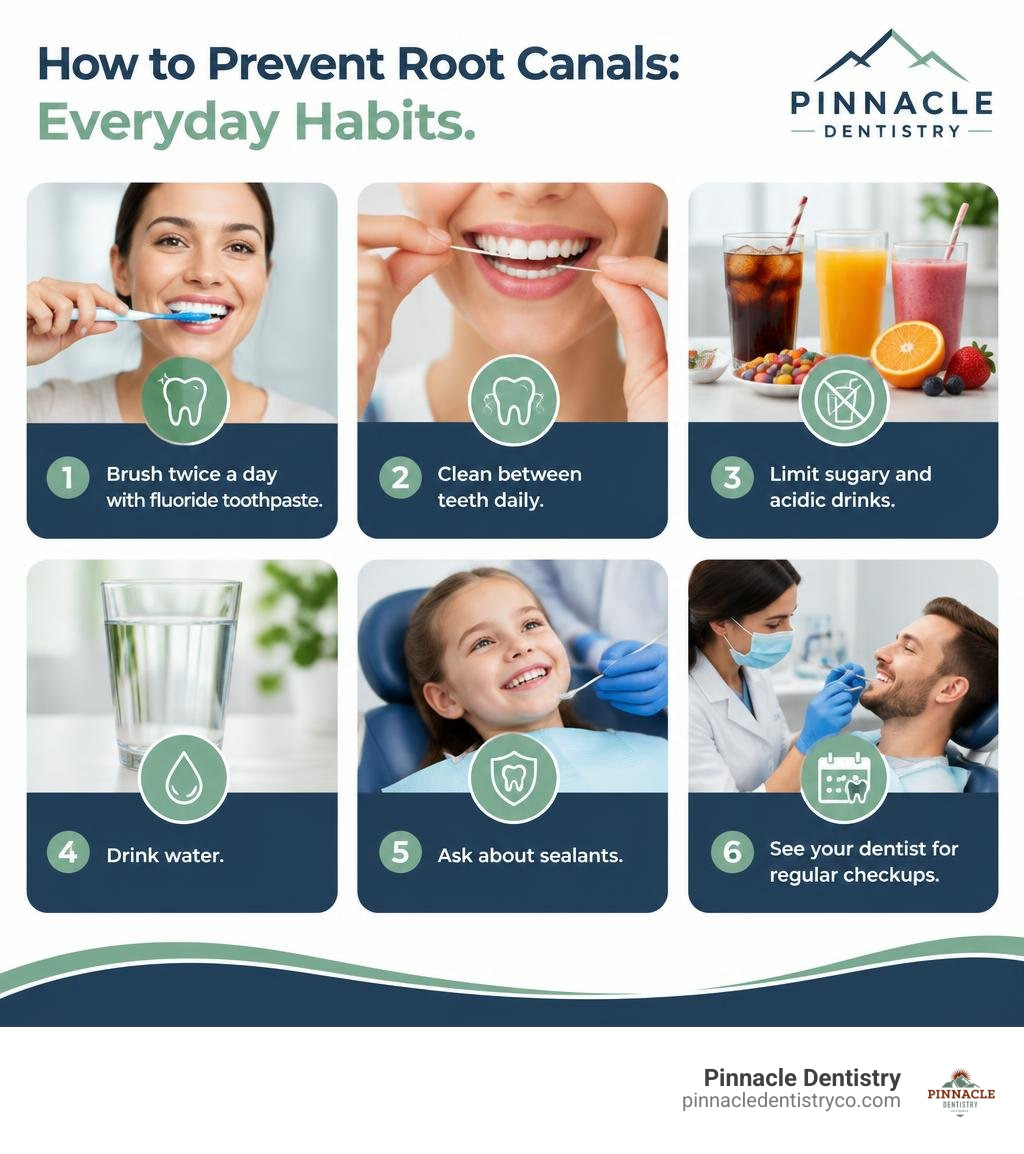
How to prevent root canals begins with preventing decay from reaching the soft tissue inside a tooth. Daily brushing, cleaning between teeth, drinking water, limiting sugary or acidic foods and drinks, and regular dental visits support that goal. These habits cannot guarantee an outcome, but they can help patients address concerns before decay becomes more serious.
I am Dr. Thomas Jennings, DDS, MAGD, owner of Pinnacle Dentistry, and I have over 35 years of experience as a family dentist. Pinnacle Dentistry has served patients in Colorado Springs, CO, since 1989. This guide on how to prevent root canals will walk you through practical habits and warning signs to discuss during a dental visit.
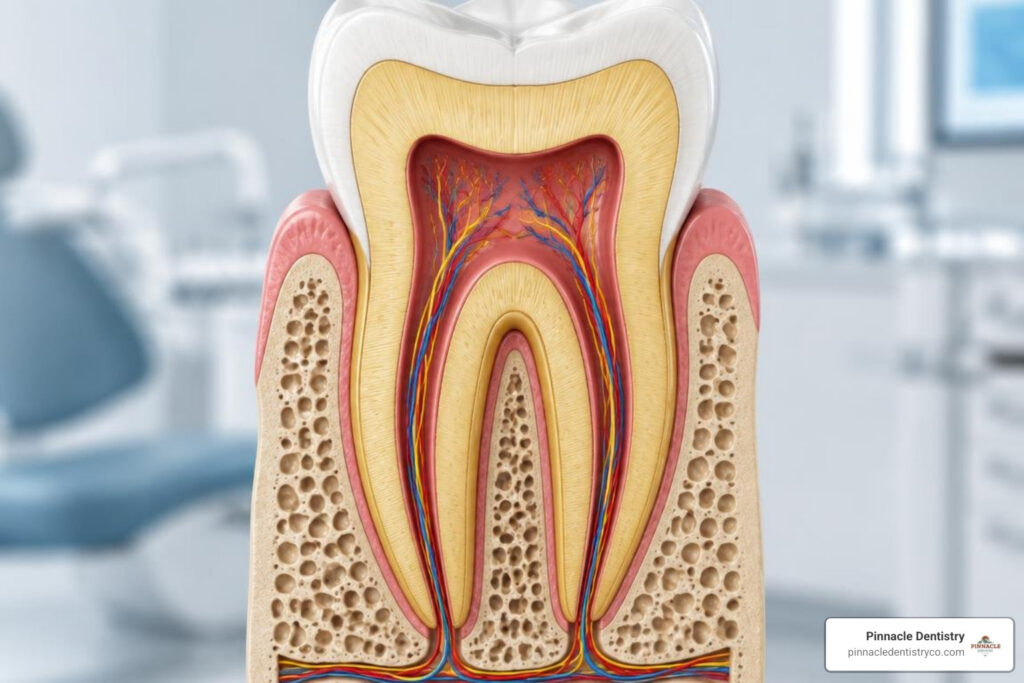
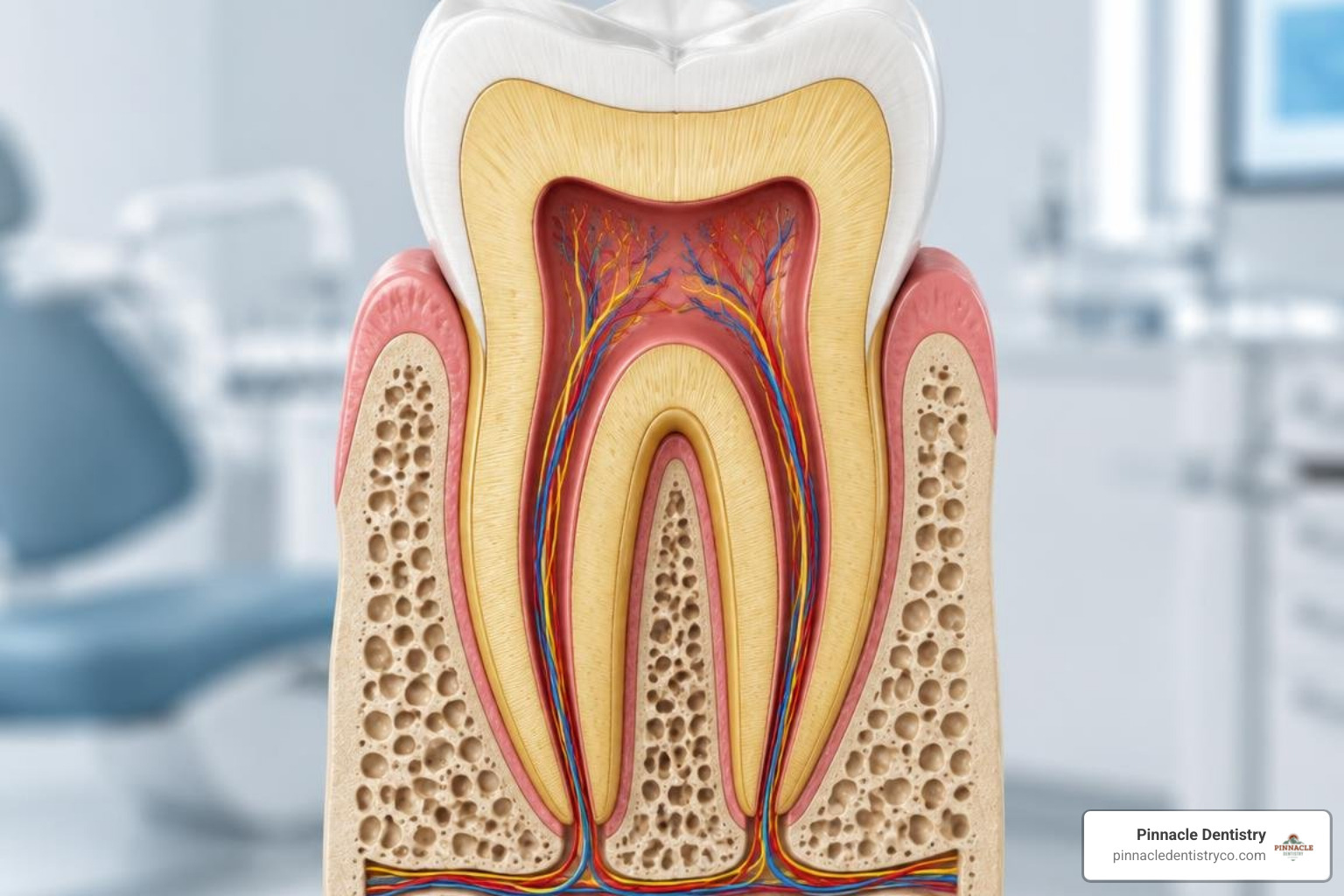
A tooth has several layers that protect the living tissue at its center. Enamel is the hard outer layer, while dentin is the softer layer beneath it. The pulp is the inner tissue containing nerves and blood vessels, and it can become irritated when decay travels deep into the tooth.
The CDC guidance explains that cavity-causing bacteria can stick to teeth and produce acid. That acid weakens enamel over time, allowing decay to move deeper. When a cavity is found early, a dentist can check the tooth and discuss the most appropriate care.
MedlinePlus explains that cavities often do not hurt unless they become large. If decay has created a hole, a filling removes the damaged material and replaces it with a material such as composite resin. When decay reaches the pulp, a dentist may recommend root canal care to help preserve the tooth.
Root canal treatment addresses infection or severe damage inside a tooth. It is not a substitute for an examination, and treatment choices depend on the individual tooth. A dentist can explain what is happening, why care is recommended, and what to expect.
Some tooth concerns develop slowly and remain easy to miss without regular care. Routine visits give the dental team an opportunity to look for enamel changes, decay, cracks, and gum concerns. This early attention can support more conservative care when it is needed.
An untreated deep infection can spread beyond the tooth and cause swelling or an abscess. Severe or throbbing pain, swelling, fever, or trauma needs prompt attention. Call the office right away, and if the office is closed, go to the ER.
How to Prevent Root Canals With Everyday Habits
Preventing deep decay depends on consistent habits and regular professional examinations. The goal is to reduce the conditions that allow bacteria and acid to damage enamel. Patients should bring questions or symptoms to their dentist instead of trying to manage a possible tooth problem alone.
Daily Brushing and Cleaning Between Teeth
Plaque is a sticky layer of bacteria that forms on teeth each day. Removing plaque with regular brushing and cleaning between teeth helps protect areas where decay can begin. A dentist can also demonstrate techniques that fit a patient’s mouth, restorations, and gum health.
Care at home works best when paired with regular preventive dental care. Professional cleanings remove buildup that patients cannot remove with ordinary daily care. An examination can also identify early changes before they become more difficult to treat.
- Brush carefully with fluoride toothpaste as part of a consistent daily routine.
- Clean between teeth using the method your dentist recommends.
- Ask about daily oral habits if plaque or gum irritation continues to be a concern.
Fluoride and Dental Sealants
Fluoride supports enamel by helping it resist acid exposure. It is commonly included in preventive dental plans when a dentist believes it is appropriate. Patients with a history of cavities can ask whether fluoride care should be part of their next visit.
The CDC reports that fluoride varnish reduces cavities in baby teeth by about one-third. The same CDC resource says sealants on back teeth prevent 80% of cavities. A sealant overview can help patients understand why deep grooves may need extra protection.
Sealants are thin protective coatings placed on the chewing surfaces of back teeth. They create a smoother barrier over grooves where food and plaque can collect. A dentist can check whether a child’s or adult’s teeth are good candidates for sealants.
Food, Drinks, and Hydration
What patients eat and drink affects the environment around their teeth. Sugary foods and acidic drinks can give bacteria fuel or expose enamel to acid. Limiting frequent exposure and choosing water more often can support a healthier mouth between visits.
Keep food guidance simple and realistic for daily routines. Reduce sugary snacks, soda, sports drinks, and other acidic beverages when possible. Water can help rinse away food particles and support normal saliva flow after meals.
Dry mouth can also raise the risk of deep decay because saliva helps wash away debris. If your mouth often feels dry, tell your dentist during an examination. The dentist can check for related dental changes and recommend professional next steps.
Protect Teeth From Cracks and Wear
A crack can give bacteria a path toward the inside of a tooth. Chips and fractures may be difficult to notice, especially when discomfort comes and goes. Patients should schedule an examination if biting feels painful or a tooth has changed after an injury.
If you grind your teeth or play contact sports, ask your dentist about protecting your teeth. A personalized recommendation considers your teeth, bite, and activity level. This approach avoids guessing about the right protection for your situation.
Tobacco use can contribute to gum problems and expose vulnerable tooth surfaces. Gum recession can leave root surfaces more vulnerable to decay than enamel-covered areas. A dental team can explain the changes they see and discuss appropriate care.
Regular Dental Visits and Early Care
Routine visits give the dentist a chance to check for decay, cracks, gum changes, and worn restorations. X-rays may be used when the dentist needs a view between teeth or beneath existing dental work. The timing and type of imaging should be based on your needs, not a fixed schedule.
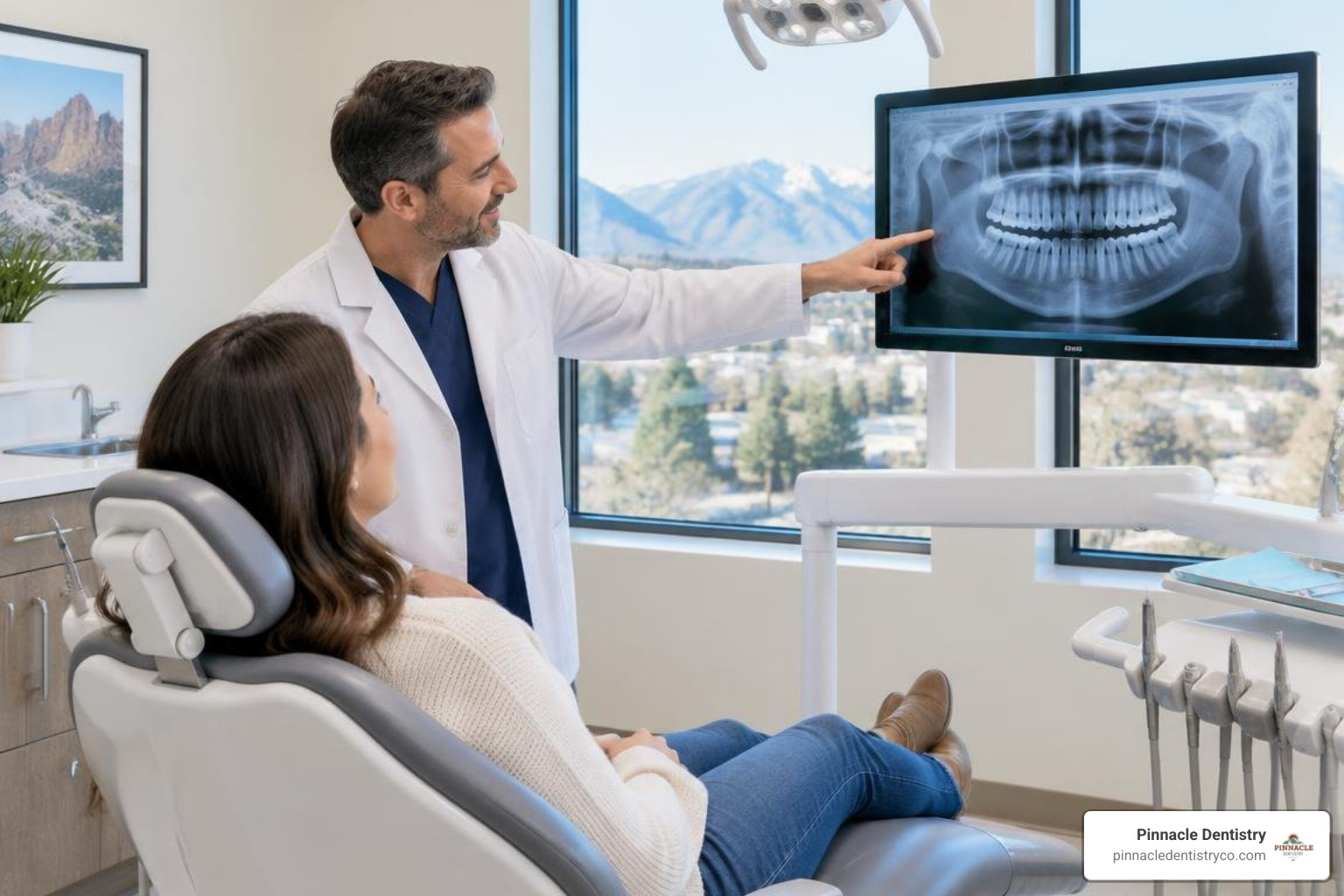
Early care can sometimes prevent a small concern from becoming a deeper problem. When a filling is needed, treating decay before it reaches the pulp can help preserve more healthy tooth structure. Patients who notice sensitivity or pain should schedule an examination rather than wait for symptoms to worsen.
Some symptoms need faster attention than a routine appointment. Severe or throbbing pain, swelling, fever, or trauma may signal a problem that needs urgent care. Contact our office so the tooth can be examined. If the office is closed, go to the ER.
Patients wondering whether a symptom could involve the tooth’s nerve can review root canal warning signs before scheduling. The information supports a conversation with the dental team, not a self-check or diagnosis. A dentist must examine the tooth to determine the appropriate care.
Recognizing Warning Signs Before Problems Spread
Cavities may not cause obvious pain when they are small. As decay moves deeper, a tooth may become sensitive, sore when biting, or painful without an obvious trigger. These changes do not identify the cause by themselves, so patients should arrange an examination with their dentist.
Some concerns are easier to describe than to understand. Patients may notice that a tooth feels different when chewing, reacts longer to temperature, or seems darker than nearby teeth. Sharing when the symptom began and what makes it worse can help the dental team during the examination.
- Temperature sensitivity: Lingering sensitivity after hot or cold foods and drinks can mean a tooth needs attention.
- Pain when biting: Pressure on one tooth may be related to decay, a crack, or another dental concern.
- Severe or throbbing pain: Call the office right away, and if the office is closed, go to the ER.
- Swelling, fever, or trauma: Call the office right away, and if the office is closed, go to the ER.
A change in tooth color can also be worth discussing during an appointment. Grey, brown, or dark yellow discoloration may follow trauma or changes inside the tooth. Our tooth discoloration guide explains common reasons a tooth can change color.
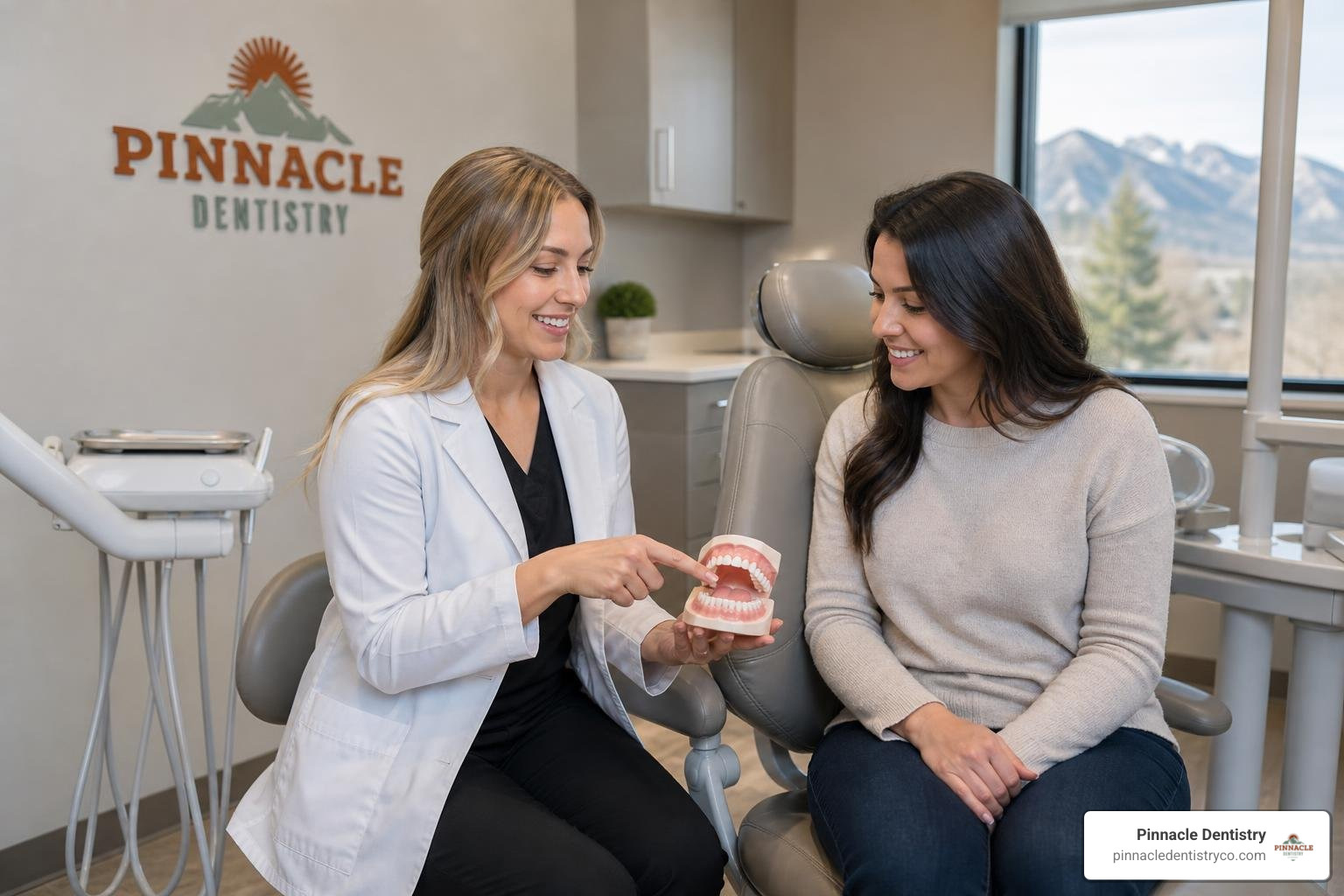
An examination helps the dentist look at the tooth, gums, and surrounding structures. The team may take X-rays when they need more information about areas that cannot be seen directly. If treatment is needed, the dentist can explain the options in plain language and answer questions before care begins.
Prompt communication can be especially helpful when symptoms change quickly. Tell the office about pain that disrupts sleep, visible swelling, fever, or a recent injury. The team can help determine whether a routine visit or more urgent evaluation is needed.
Patients should not wait for a problem to become unbearable before seeking care. A small concern can still deserve an examination, even when it comes and goes. If a tooth feels unusual, scheduling a visit gives the dentist a chance to check it carefully.
Pinnacle Dentistry is open Monday through Friday from 8 to 5. Call the office right away for swelling, fever, severe pain, or trauma, and if the office is closed, go to the ER. If the office is closed, go to the ER.
Frequently Asked Questions About Preventing Root Canals
Can an early cavity be stopped before it needs a filling?
Early enamel changes may sometimes be managed with professional preventive care and close observation. Once a cavity has formed, a dentist may recommend removing the decay and restoring the tooth. An examination determines what is appropriate for the specific tooth.
What are early signs that a tooth nerve may be in trouble?
Lingering sensitivity, pain when biting, or discomfort that starts without a clear cause can be warning signs. A tooth can also change color after injury or deep decay. Schedule an examination so a dentist can check the tooth and explain the findings.
How do dental sealants help prevent root canals?
Sealants cover deep grooves on back teeth where plaque and food can collect. By helping protect those surfaces from cavities, they can reduce the chance of decay moving deeper. A dentist can determine whether sealants are appropriate for a particular patient.
Does fluoride help prevent root canals?
Fluoride can help strengthen enamel against the acid produced by cavity-causing bacteria. It is part of many preventive dental plans, depending on a patient’s needs. Ask your dentist whether professional fluoride care is appropriate during your next visit.
Why does dry mouth raise the risk of deep decay?
Saliva helps wash away food particles and reduce the effect of acids in the mouth. When saliva is limited, teeth may be exposed to cavity-causing conditions more often. Tell your dentist if dry mouth is frequent or persistent.
Can a cracked tooth lead to a root canal?
A crack can allow bacteria to reach deeper areas of a tooth. Some cracks cause pain while chewing, but others have few obvious symptoms. A dentist can check the tooth and discuss care before the problem becomes more serious.
How often should I have dental X-rays?
Your dentist decides based on your needs, including your cavity history, existing dental work, and current examination findings. X-rays can help the dental team see areas that are not visible during a standard examination. Ask what type of imaging is appropriate for your next visit.
What should I do if a tooth suddenly becomes very sensitive?
Contact your dentist so the tooth can be checked. Sensitivity can have several causes, and an examination helps identify the appropriate next step. For swelling, fever, or severe pain, call the office right away, and if the office is closed, go to the ER.
Which foods and drinks are hardest on enamel?
Sugary snacks and acidic drinks can increase the conditions that weaken enamel. Frequent exposure can be harder on teeth than enjoying them only occasionally with meals. Drinking water and discussing dietary concerns at dental visits can support prevention.
How do regular checkups help prevent root canals?
Regular checkups let the dental team look for cavities, cracks, gum changes, and worn restorations. Finding concerns earlier can make care more straightforward and protect more healthy tooth structure. Patients should schedule an examination when symptoms appear between regular visits.
Conclusion
Preventing deep decay is about steady daily care and timely dental attention. Brush consistently, clean between teeth, limit sugary and acidic foods and drinks, and drink water. Schedule an examination when you notice sensitivity, pain, discoloration, swelling, fever, or trauma.
Patients do not need to sort out tooth symptoms alone. A dental examination can clarify whether a concern involves decay, a crack, gum irritation, or another issue. Asking questions early helps patients make informed decisions with their dental team.
If swelling, fever, severe or throbbing pain, or trauma occurs, call the office right away, and if the office is closed, go to the ER. If the office is closed, go to the ER. These symptoms need prompt attention rather than home treatment.
Pinnacle Dentistry is a general and family dental practice in Colorado Springs, CO, serving patients since 1989. Dr. Thomas Jennings, DDS, MAGD, leads the practice with a focus on clear explanations and patient-centered care. For symptoms or preventive care, contact our office to schedule a visit.
Pinnacle Dentistry
Briargate Business Center
2430 Research Pkwy Suite 200
Colorado Springs, CO 80920