
What Adults Need to Know About Fixing Overjet (And What You Can Do About It)
Fixing overjet in adults is more straightforward than most people expect, and you are never too old to get it done. Here is a quick summary of your main options:
How to Fix Overjet in Adults:
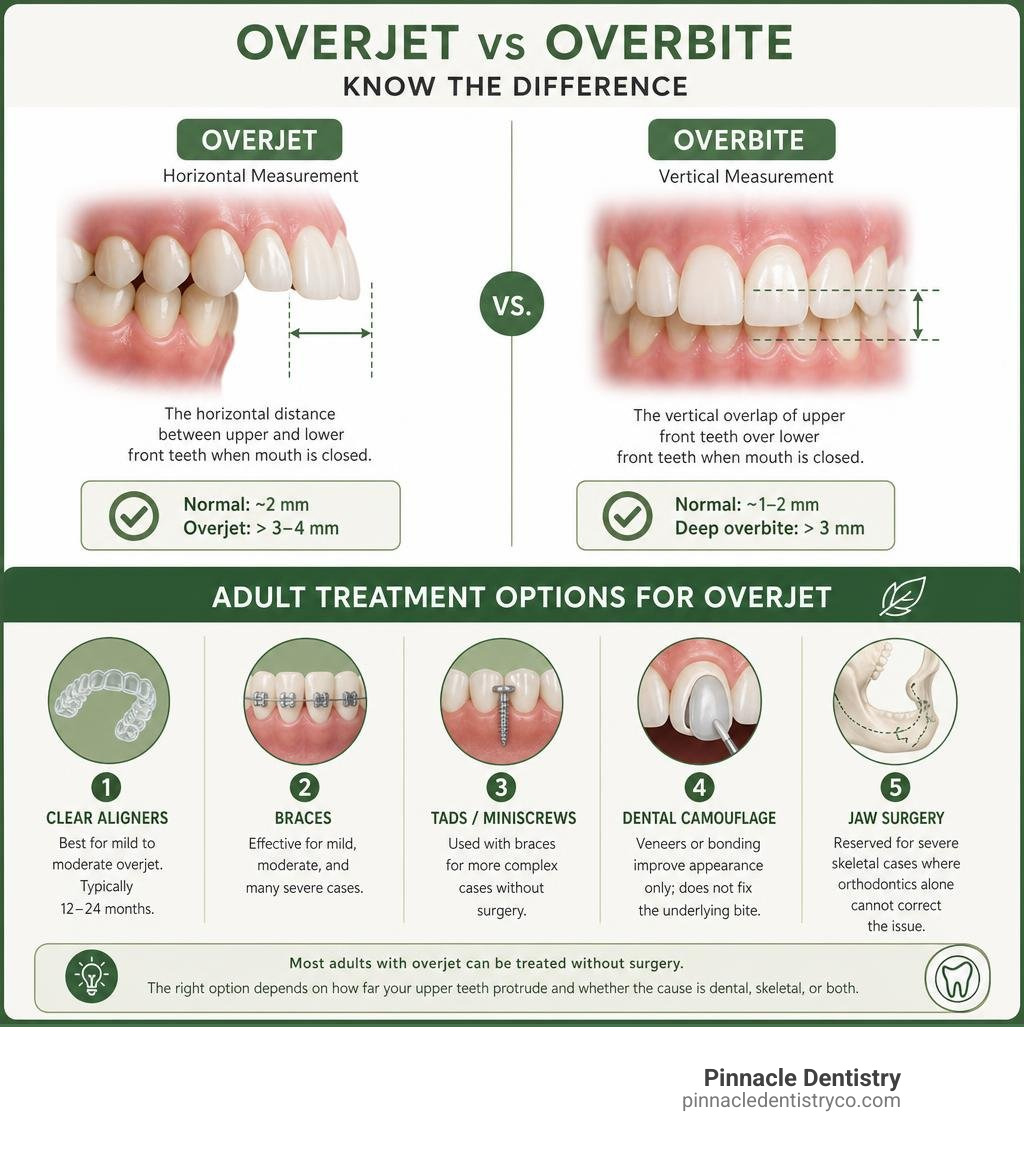
- Clear aligners (Invisalign, ClearCorrect, etc.) – Best for mild to moderate overjet; typically 12 to 24 months
- Traditional or ceramic braces – Effective for mild, moderate, and many severe cases
- Temporary anchorage devices (TADs/miniscrews) – Used alongside braces for more complex cases without surgery
- Dental camouflage (veneers, bonding) – Improves appearance only; does not fix the underlying bite
- Jaw surgery (orthognathic surgery) – Reserved for severe skeletal cases where orthodontics alone cannot correct the issue
Most adults with overjet can be treated without surgery. The right option depends on how far your upper teeth protrude and whether the cause is dental, skeletal, or both.
If your upper front teeth stick out further than they should, you are not alone. Overjet, sometimes called “buck teeth,” is one of the most common bite problems seen in adults. It is measured horizontally, meaning the gap between your upper and lower front teeth when your mouth is closed. A normal horizontal distance is about 2 millimeters. Anything beyond 3 to 4 millimeters is considered an overjet that may need attention.
Many adults live with overjet for years, assuming it is just a cosmetic issue or that treatment is only for kids. Neither is true. Left untreated, overjet can lead to jaw pain, worn-down teeth, speech difficulties, and even TMJ disorders. The good news is that modern orthodontic options make fixing it more accessible, more comfortable, and more discreet than ever before.
I am Dr. Thomas Jennings, DDS, MAGD, founder of Pinnacle Dentistry in Colorado Springs, CO, with over 35 years of experience helping patients of all ages improve their oral health, including fixing overjet in adults through personalized, conservative treatment plans. Whether you are dealing with a mild protrusion or a more complex bite issue, this guide will walk you through everything you need to know to make an informed decision.
Understanding Overjet: Causes, Symptoms, and Differences from Overbite
To understand how we treat this condition in adulthood, it helps to look at how teeth are supposed to fit together. When you close your mouth, your upper teeth should naturally rest slightly in front of your lower teeth.
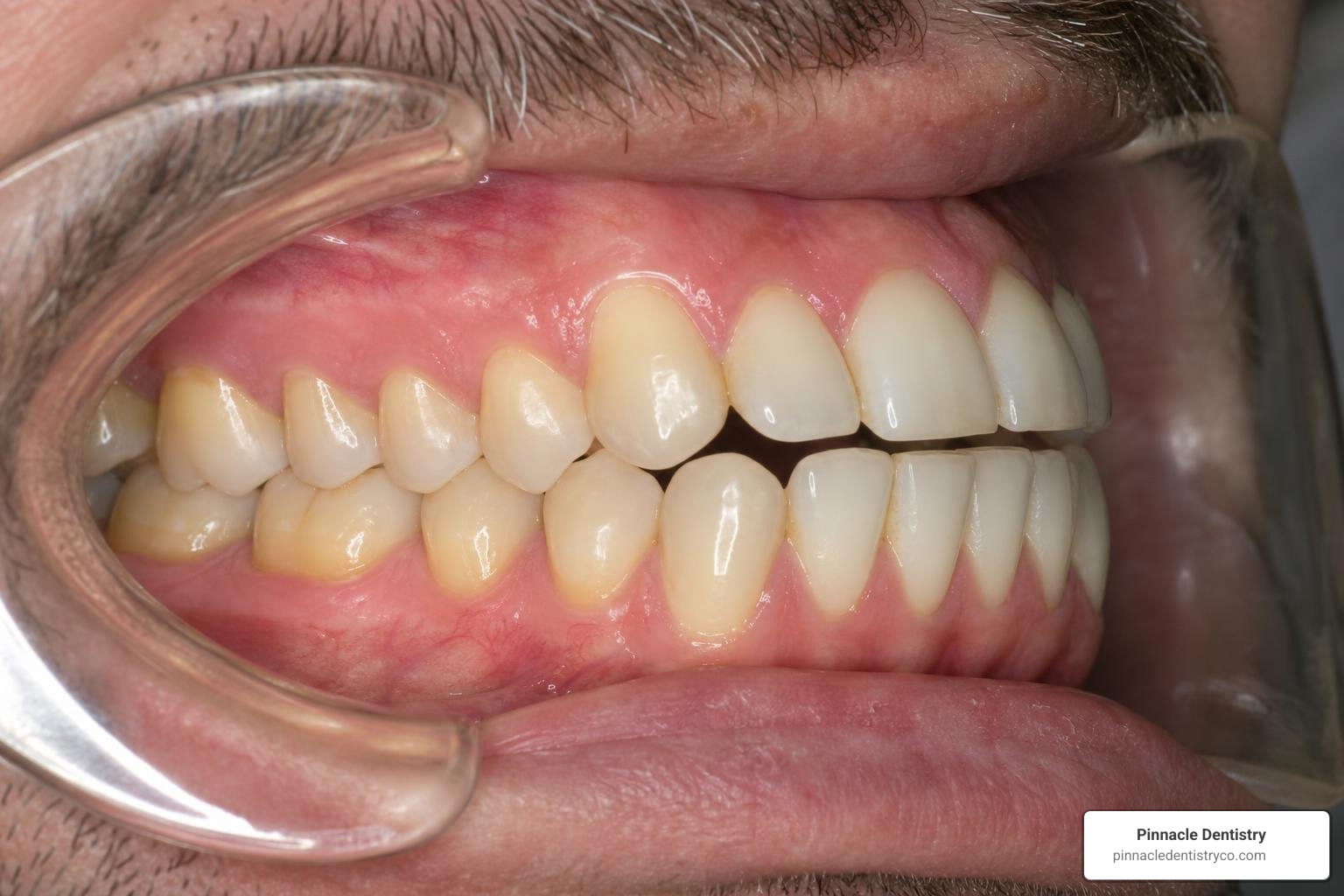
When this spacing is off, it is classified as a malocclusion. Learn more about how a bad bite affects your health to see why proper alignment matters for your overall well-being.
To help visualize where your teeth currently stand, let’s look at a quick comparison table of normal versus excessive measurements:
| Measurement Type | Normal Range | Mild to Moderate Excessive | Severe (Requires Advanced Care) |
|---|---|---|---|
| Overjet (Horizontal) | 1 to 2 mm | 3 to 7 mm | 8 mm or more |
| Overbite (Vertical) | 2 to 4 mm (or ~30% coverage) | 4 to 6 mm | Greater than 6 mm (or 100% coverage) |
The Key Differences Between Overjet and Overbite
It is incredibly common to hear people use the terms “overjet” and “overbite” interchangeably, but in the dental world, they describe two completely different dimensions of misalignment.
- Overjet is horizontal. It is the “gap” or “shelf” created when the upper front teeth protrude forward at an angle over the lower teeth. If you can rest a pencil flat on top of your lower teeth behind your upper teeth, you are looking at an overjet.
- Overbite is vertical. It refers to how much your upper front teeth overlap or cover your lower front teeth when you bite down. If your upper teeth completely hide your lower teeth when you smile, you have what we call a deep bite. To dive deeper into this vertical overlap, you can understand the vertical overlap of an overbite and how it impacts your dental health.
What Causes Overjet in Adults and Can It Worsen?
Most adults with an overjet have had some degree of it since childhood. However, many find that their protrusion seems to get worse as they get older. There are several reasons why this happens:
- Skeletal Genetics: Often, an overjet is simply the result of how your jaw bones grew. If your upper jaw (maxilla) is naturally overdeveloped, or your lower jaw (mandible) is underdeveloped and sits too far back, a horizontal gap is created.
- Childhood Habits: Prolonged thumb-sucking, heavy pacifier use past age four, or using traditional sippy cups can physically mold the pliable bones of a child’s mouth, pushing the upper teeth outward.
- Tongue Thrusting: This is a habit where the tongue presses forward against the back of the front teeth during swallowing or speaking. Over several decades, this continuous, gentle pressure acts like a slow-motion orthodontic wire, pushing the front teeth further and further out.
- Adult Tooth Loss and Shifting: If you lose back teeth as an adult, your remaining teeth will naturally drift to fill the empty spaces. This shifting can collapse your bite, causing the front teeth to flare outward and worsening an existing overjet.
Symptoms and Complications of Untreated Overjet
An overjet is far more than an aesthetic concern. When your front teeth protrude, they are no longer protected by your lips or supported properly by your lower teeth. This can lead to a host of physical complications:
- Increased Risk of Dental Trauma: Protruding front teeth are the first line of impact during falls, sports injuries, or car accidents. They are significantly more likely to chip, crack, or be knocked out entirely.
- Chewing and Speech Difficulties: Your front teeth are designed to shear and cut food. When they do not meet, chewing becomes less efficient. It can also cause lisping or whistling sounds when pronouncing certain consonants like “S” or “T.”
- TMJ Disorders and Jaw Pain: Because your teeth do not fit together naturally, your jaw muscles have to work overtime to find a stable resting position. This chronic strain can lead to temporomandibular joint (TMJ) dysfunction, causing headaches, neck pain, and clicking in the jaw.
- Accelerated Tooth Wear and Gum Decay: An uneven bite forces certain teeth to bear the brunt of your chewing forces. This leads to premature enamel wear, tooth fractures, and can even contribute to localized gum recession.
Modern Orthodontic Options for Fixing Overjet in Adults
If you are considering orthodontic treatment as an adult, you might feel hesitant about the idea of wearing metal brackets to professional meetings or social events. Fortunately, modern dental technology has completely transformed the patient experience. You do not have to look like a teenager to get a healthy, straight smile.
Before starting any treatment, a comprehensive orthodontic evaluation using 3D digital scans and X-rays is essential to map out your unique bone structure. During this process, you can also discover cosmetic dentistry services to enhance your smile to see how structural fixes can be paired with aesthetic upgrades.
Clear Aligners: A Discreet Method for Fixing Overjet in Adults
Clear aligners, such as Invisalign or ClearCorrect, are incredibly popular among adult patients. These systems use a series of custom-made, clear, medical-grade plastic trays that apply a gentle, continuous “pushing” force to guide your teeth into alignment.
- How They Work for Overjet: To pull protruding teeth back, we often place tiny, tooth-colored bumps (called attachments) on specific teeth. These attachments give the aligner trays something to grip onto, allowing them to gently pull the front teeth backward while moving the back teeth to support the new bite.
- The Compliance Factor: Because aligners are removable, their success relies entirely on your discipline. You must commit to wearing them for 20 to 22 hours every day, only taking them out to eat, drink anything other than plain water, and brush your teeth.
- Treatment Timeline: For mild to moderate cases, clear aligner treatment typically takes between 12 and 24 months.
Traditional and Lingual Braces for Fixing Overjet in Adults
For moderate to severe overjets, or cases where the teeth need to be rotated and pulled down significantly, traditional braces remain the gold standard.
- The Power of Braces: Unlike aligners, which push the teeth, braces use a “pulling” force. A metal archwire is threaded through brackets bonded to your teeth, constantly working to pull them into the correct position.
- Ceramic (Clear) Braces: If you need the power of traditional braces but want a low-profile look, ceramic braces use clear or tooth-colored brackets that blend in beautifully with your natural teeth.
- Lingual Braces: For complete invisibility, you can explore the benefits of discreet lingual braces. These custom brackets are bonded to the back (tongue side) of your teeth, hiding your treatment entirely from view while delivering the precise alignment control of traditional orthodontics.
Non-Surgical and Advanced Orthodontic Treatments
In the past, adults with severe overjets were often told their only option was major jaw surgery. Today, advanced orthodontic techniques allow us to treat highly complex skeletal misalignments right in the office, completely avoiding the operating room for many patients.
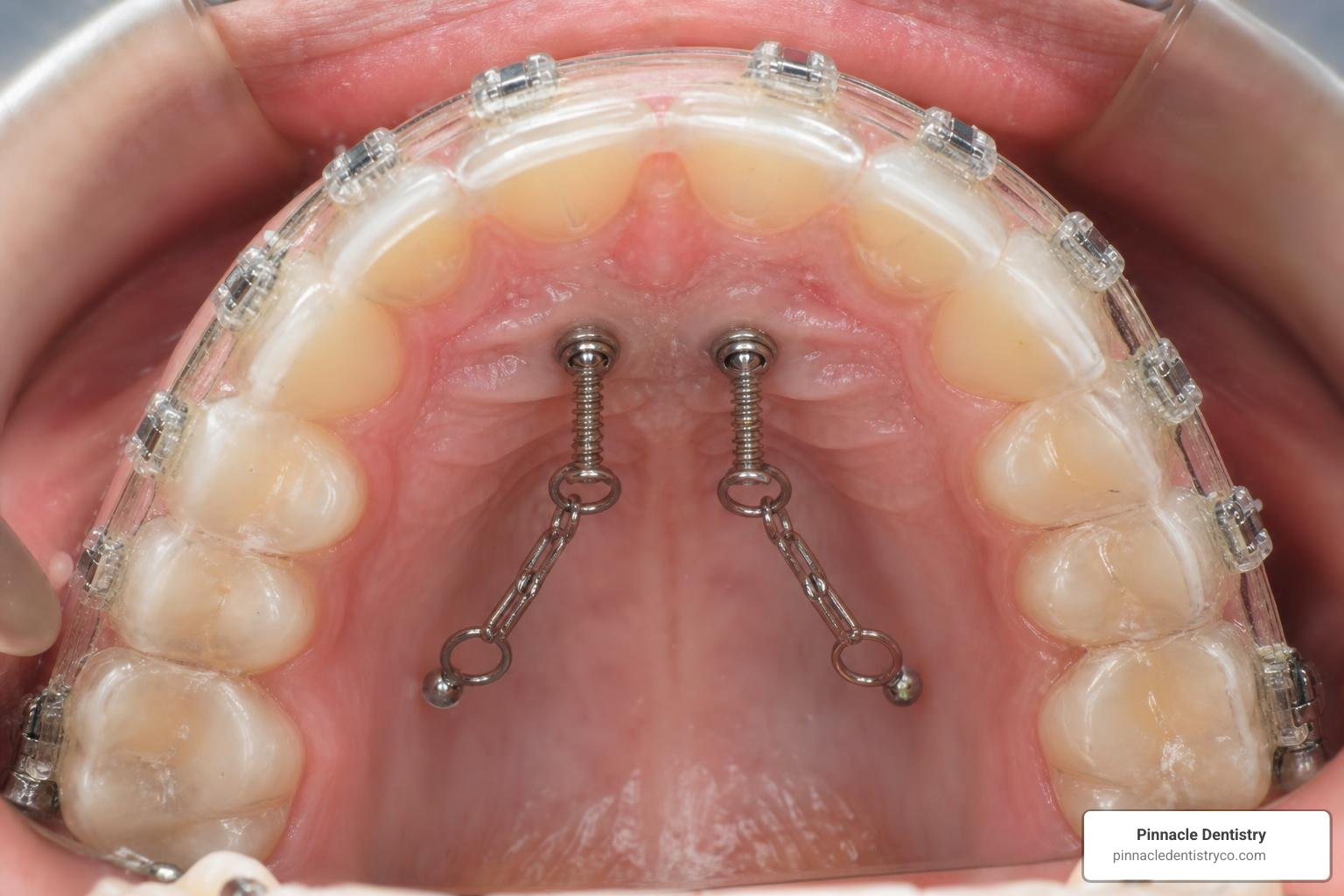
Temporary Anchorage Devices (TADs) and Miniscrews
One of the greatest breakthroughs in modern orthodontics is the use of Temporary Anchorage Devices (TADs), also known as orthodontic miniscrews. These are tiny, biocompatible titanium screws placed temporarily into the jawbone to act as fixed anchor points.
- Why Anchorage Matters: When an orthodontist pulls front teeth backward, the laws of physics dictate that the back teeth will also pull forward. To prevent this, we can use a miniscrew as an absolute anchor.
- Vertical Control and Gummy Smiles: Miniscrews allow us to perform incredible feats of vertical movement. For example, we can intrude (push up) the entire upper arch of teeth. This not only pulls the front teeth back to fix the overjet but can also correct a severe gummy smile. You can read the scientific research on miniscrew-assisted vertical control to see how this technique has successfully treated complex adult cases.
- Replicating Surgical Results: By using a single midpalatal screw or buccal miniscrews, we can achieve uniform intrusion of the upper teeth. To learn more about this conservative alternative to surgery, you can read about total maxillary intrusion for gummy smiles.
- Skeletal Camouflage: For adults with a retrognathic (receding) lower jaw, TADs allow us to guide the teeth in a way that encourages a slight counterclockwise rotation of the mandible, making the chin look more prominent without invasive bone cuts. Check out this research on non-surgical orthodontic approaches for complex cases to learn how these advanced mechanics work.
Dental Camouflage and Restorative Options
If your overjet is purely dental (meaning your jaw bones are perfectly aligned, but your teeth simply flare outward), and the protrusion is very mild, cosmetic dentistry can sometimes be used to “camouflage” the gap.
- Veneers and Bonding: By placing custom porcelain veneers or dental bonding on the front teeth, we can visually reshape them to appear more aligned.
- The Catch: It is vital to understand that cosmetic treatments do not move the roots of your teeth or correct an underlying misaligned bite. They simply change the outward shape of the teeth. If you choose this route, you must understand how your overall bite is affected. To see how these physical devices differ from cosmetic covers, you can understand how an orthodontic appliance works to keep your teeth healthy and functional.
When Jaw Surgery is Necessary for Adult Overjet Correction
While modern orthodontics can work wonders, there are times when a skeletal discrepancy is simply too severe to be corrected by moving the teeth alone.
If an adult patient has an overjet of 8 to 10 millimeters or more, attempting to force the teeth backward through the bone can cause severe root resorption, gum recession, or push the teeth entirely out of their supporting bone.
In these cases, orthognathic (jaw) surgery is the safest and most stable path to a healthy bite.
- How the Process Works: Surgical treatment is a collaborative effort between your orthodontist and an oral and maxillofacial surgeon. First, you will wear braces for several months to align the teeth within each individual jaw arch.
- The Surgical Procedure: Once the teeth are ready, the surgeon performs a maxillary osteotomy or mandibular advancement to physically reposition the jaw bones into perfect harmony. For patients with severe maxillary protrusion, a specialized procedure can be performed to reposition the anterior segment of the jaw backward. You can read a detailed scientific study on maxillary anterior alveolar osteotomy to see how this combined approach achieves highly stable, life-changing results.
- Recovery and Stability: Following surgery, a brief period of postsurgical orthodontics is used to fine-tune the bite. To understand what to expect during this transformation, you can learn about the process of orthognathic surgery and how it permanently improves both breathing and facial balance.
Frequently Asked Questions About Fixing Overjet in Adults
Can you fix an overjet in adults without surgery?
Yes, the vast majority of adults with overjet can be treated successfully without surgery. Using modern clear aligners, traditional braces, or miniscrew-assisted vertical control, we can safely guide protruding teeth back into alignment. Surgery is typically reserved only for severe skeletal discrepancies where the jawbones themselves are significantly misaligned.
How long does it take to fix an overjet in adults?
On average, adult overjet correction takes between 12 and 24 months. The exact timeline depends on the severity of your protrusion, whether we need to create space by extracting teeth or using miniscrews, and how consistently you wear your aligners or elastics.
Can Invisalign fix a severe overjet?
Invisalign is highly effective for mild to moderate overjets. However, for severe overjets (greater than 8 mm) or cases that require significant skeletal movement, traditional braces paired with temporary anchorage devices (TADs) or jaw surgery are usually required to achieve a stable, healthy result.
What happens if an adult overjet is left untreated?
Leaving an overjet untreated can lead to premature tooth wear, jaw muscle strain, chronic headaches, and TMJ disorders. Protruding front teeth are also much more vulnerable to chipping or fracturing during accidental impacts, and they can make chewing and clear speech more difficult.
Is overjet correction painful for adults?
You can expect some mild soreness and pressure for a few days after getting your braces put on, having them adjusted, or switching to a new set of clear aligners. This discomfort is temporary and easily managed with over-the-counter pain relievers. Modern orthodontic appliances use light, continuous forces designed to move teeth as comfortably as possible.
Does fixing an overjet change your face shape?
Yes, correcting a significant overjet can beautifully improve your facial profile. Pulling protruding front teeth back allows your lips to close naturally and comfortably at rest, reducing strain around your mouth. In cases where we use advanced mechanics or surgery to bring the lower jaw forward, it can dramatically improve chin projection and balance your entire profile.
Can tongue thrusting cause an overjet to return after treatment?
Yes. If you have a habit of pushing your tongue forward against your front teeth when you swallow or speak, that continuous pressure can cause your overjet to relapse over time. We often recommend myofunctional therapy alongside orthodontic treatment to retrain your tongue muscles and ensure your new smile stays stable.
How much does it cost to fix an overjet in adults?
The pricing for overjet correction can vary depending on several factors, including the complexity of your bite, the type of appliance you choose (such as clear aligners, traditional braces, or lingual braces), and the overall duration of your treatment. Many dental insurance plans offer partial orthodontic coverage for adults, and most offices provide flexible monthly payment plans to fit your budget.
Do I need to wear a retainer forever after overjet correction?
Yes, wearing a retainer is a lifelong commitment if you want to keep your teeth in their new, aligned positions. Teeth have a natural “memory” and will attempt to drift back to their original spots. Most patients wear their retainers full-time for the first few months after treatment, transitioning to wearing them only at night for the long term.
How do I choose the right provider for adult overjet treatment?
Look for an experienced dentist or orthodontist who uses advanced 3D imaging technology and offers a wide range of treatment options. Choosing a provider with advanced credentials, such as a Mastership from the Academy of General Dentistry (MAGD), ensures you are receiving care from a clinician committed to the highest standards of continuing dental education and clinical excellence.
Conclusion
Pinnacle Dentistry is proud to serve families in Colorado Springs, CO, El Paso County, CO, and Briargate, CO with the highest standard of preventative, cosmetic, and restorative dental care. Our practice is led by certified MAGD dentists (a prestigious Mastership distinction achieved by less than 2% of dentists nationwide), ensuring that your treatment plan is backed by exceptional clinical expertise and personalized attention.
We believe that a healthy, aligned smile can completely transform your confidence, comfort, and quality of life. If you are ready to explore your options for correcting a protruding bite, you can schedule a consultation to address your overbite or overjet with our experienced team.
Do not let your teeth walk out of the room before you do. To take the first step toward a healthier, more confident smile, please visit Pinnacle Dentistry at 2430 Research Pkwy Suite 200 Colorado Springs, CO 80920, or contact our booking team today to schedule your personalized consultation.
