


How to Floss Your Teeth Without Hurting Your Gums
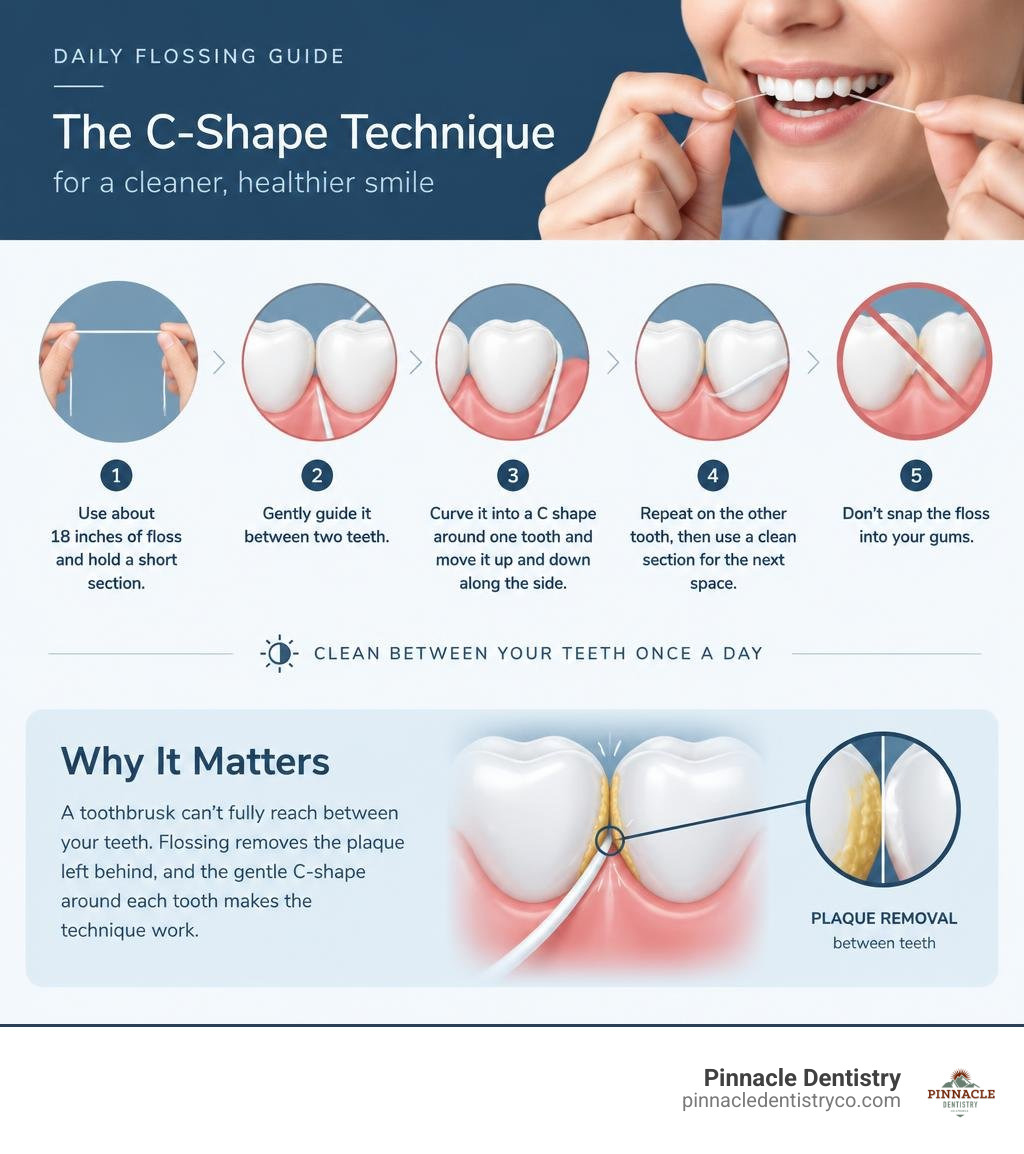
Tips on flossing can help patients clean the spaces a toothbrush cannot reach comfortably. Use a manageable length of floss and hold a short working section between your fingers. Guide it gently between two teeth, then curve it around one tooth in a C shape. Move the floss up and down against that tooth before cleaning the neighboring tooth.
I am Dr. Thomas Jennings, DDS, MAGD, owner of Pinnacle Dentistry, and I have over 35 years of experience as a family dentist. These tips on flossing walk you through a comfortable technique, helpful tool choices, and ways to adjust your routine. They also explain when ongoing bleeding, pain, or difficulty deserves a conversation with your dentist.
Avoid forcing floss through a tight contact or snapping it into tender gum tissue. A gentle rocking motion helps the floss pass through without causing a sharp pinch. Advance to a clean section as you move from space to space. This simple routine supports a cleaner feeling mouth without turning home care into a complicated task.
Why Cleaning Between Your Teeth Matters
A toothbrush cleans the broad, visible surfaces of each tooth, but it cannot fully clean tight spaces. Food debris and plaque, a sticky film of bacteria, can collect where teeth meet. Removing that buildup gently helps support healthier gums and fresher breath. Consistent home care also makes it easier to notice changes worth discussing during dental visits.
The National Institute of Dental and Craniofacial Research explains in its flossing guidance that flossing cleans between the teeth where brushing cannot reach. That simple action removes material from areas that are easy to miss during routine brushing. If plaque remains undisturbed, it can harden into tartar that requires professional removal. Regular preventive dental care gives your dentist an opportunity to check those harder-to-reach areas.
How Plaque Can Affect Your Gums
Plaque develops when bacteria mix with food particles and saliva along tooth surfaces. It can irritate the gums, making them look red, feel tender, or bleed during brushing. Gentle daily cleaning removes the film before it has more time to build up. Bleeding that continues or becomes heavier should be evaluated by your dentist.
Gum irritation can worsen when plaque remains around the tooth and gumline for long periods. In advanced cases, infection can affect the tissues that help hold teeth in place. That is why home care and professional visits work best together. Learn more about periodontal care options when gum concerns continue.
Building a Practical Daily Routine
The CDC’s oral health tips advise brushing well twice a day and flossing between your teeth to remove dental plaque. Keep floss where you will see it during your usual evening routine. A small cue, such as placing it beside your toothbrush, can make the habit easier to remember. Healthy smile habits can also help patients keep daily care simple and consistent.
The C-Shape Method: Step-by-Step Guide to Flossing Properly
A careful technique matters more than using extra force or rushing through the routine. The floss should follow the curve of each tooth rather than cutting straight into the gums. Work slowly enough to feel the floss touch the tooth surface. That contact is what helps lift away plaque from the side of each tooth.
Step-by-Step Execution of the C-Shape Wrap
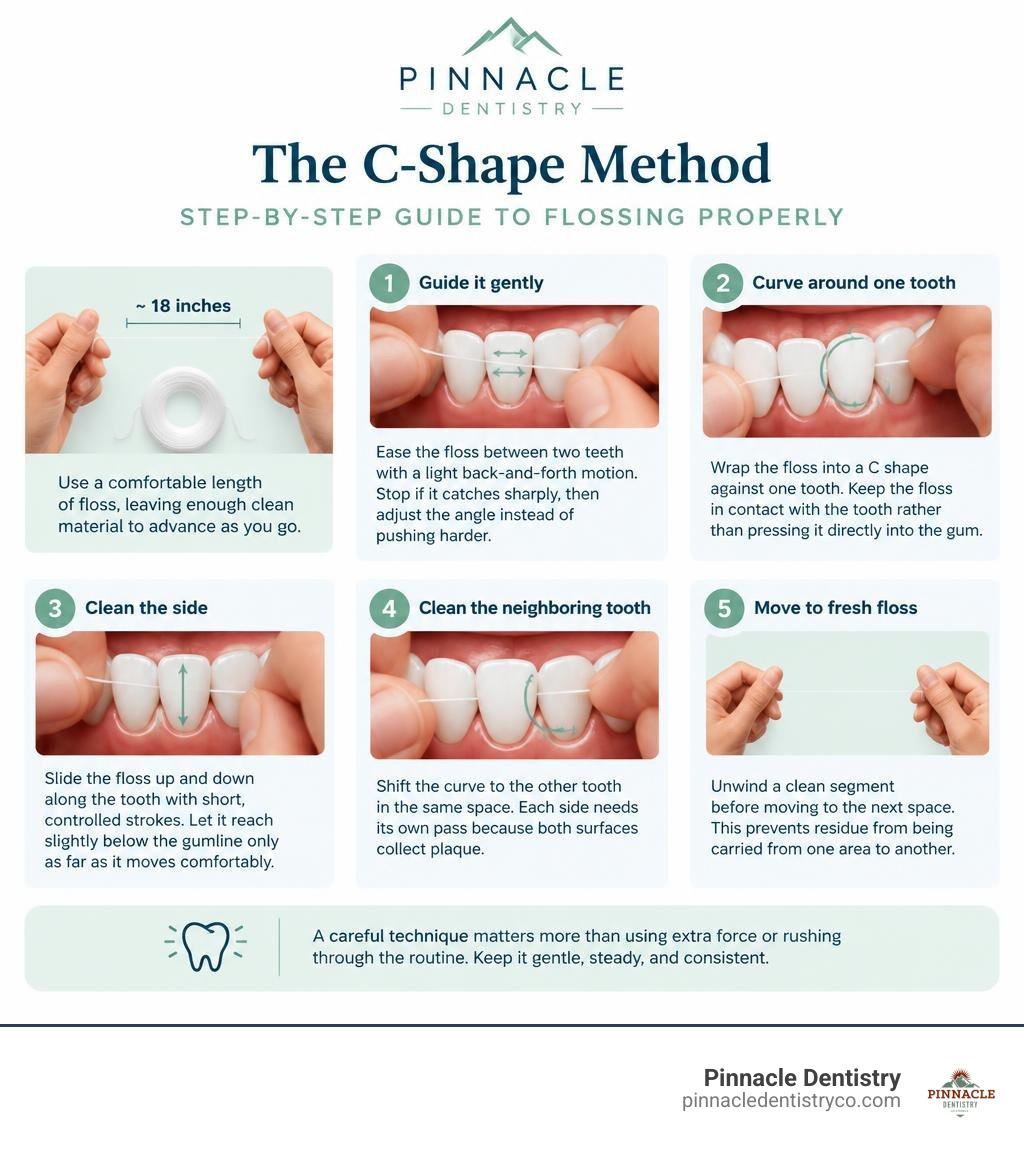
Use a comfortable length of floss, leaving enough clean material to advance as you go. Wind most of it around a middle finger on one hand. Wind the remaining end around the middle finger on your other hand. Keep a short section between your thumbs and index fingers for steady control.
- Guide it gently: Ease the floss between two teeth with a light back-and-forth motion. Stop if it catches sharply, then adjust the angle instead of pushing harder.
- Curve around one tooth: Wrap the floss into a C shape against one tooth. Keep the floss in contact with the tooth rather than pressing it directly into the gum.
- Clean the side: Slide the floss up and down along the tooth with short, controlled strokes. Let it reach slightly below the gumline only as far as it moves comfortably.
- Clean the neighboring tooth: Shift the curve to the other tooth in the same space. Each side needs its own pass because both surfaces collect plaque.
- Move to fresh floss: Unwind a clean segment before moving to the next space. This prevents residue from being carried from one area to another.
If a contact feels unusually tight, choose a thinner floss or ask your dentist for a tool recommendation. Some people find a mirror helpful, while others find it easier to floss by feel. Try not to saw aggressively, because repeated force can irritate the gum edge. With practice, the motions become smoother and more predictable.
Timing and Order: Should You Floss Before or After Brushing?
Either order can work when the routine is performed carefully and consistently. Some patients prefer flossing first because it clears debris before they brush. Others find it easier to floss after brushing because their mouth feels cleaner. Choose the order that helps you complete both parts of your routine regularly.
After flossing, brush all tooth surfaces with a soft-bristled toothbrush and fluoride toothpaste. Spit out excess toothpaste after brushing instead of rinsing right away. This leaves fluoride in contact with the teeth for longer. If a technique feels uncomfortable, bring your floss to your next visit for personalized guidance.
Tips on Flossing for Daily Plaque Removal
The most useful interdental tool is usually the one you can use gently and consistently. Different tooth shapes, dental work, and hand comfort can affect which option feels easiest. A dentist can help you choose a tool that fits your mouth and routine. The goal is careful cleaning, not a perfect-looking technique on the first attempt.
Practical Choices for Sensitive Gums
Nylon floss works well for many patients and is widely available. Waxed floss or dental tape may slide more easily through tight contacts. If floss shreds repeatedly, a smoother single-filament option may be more comfortable. Ask your dentist to check for a rough filling edge if shredding starts suddenly.
Sensitive gums deserve a light touch rather than a pause in daily care. Use short strokes and keep the floss against the tooth surface. A healthy gum care routine can support gentle habits between office visits. If bleeding or soreness does not settle, schedule a dental evaluation instead of pushing through pain.
Avoid using fingernails, paper, or other household items to clean between teeth. These items can injure gums or leave debris behind. Use floss, a floss holder, or an interdental brush designed for oral care. Keep tools clean and replace disposable options after use.
Flossing Around Crowns, Bridges and Implants
Crowns, bridges, and implants need careful cleaning around their edges. Food and plaque can collect near these restorations, especially where a bridge meets the gums. Your dentist can show you the safest angle for cleaning around your specific dental work. Do not force floss beneath a fixed restoration if it catches or resists.
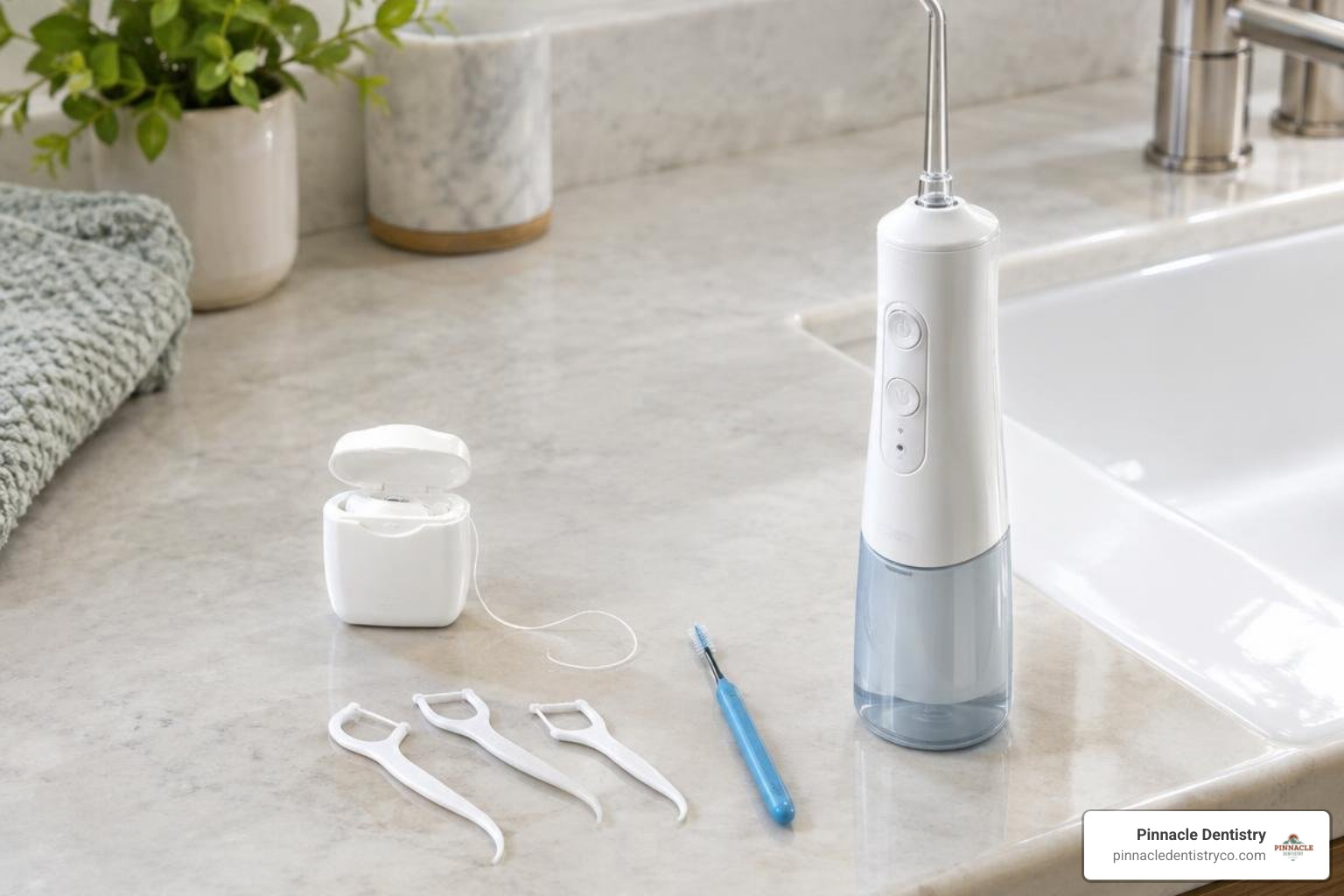
- Floss threaders help guide floss beneath a bridge so you can clean the area carefully.
- Interdental brushes can clean open spaces near restorations when your dentist recommends the right size.
- Water flossers can rinse away loose debris around dental work and support a complete home routine.
These tools support flossing but do not replace regular professional care. Patients with restorations benefit from bringing their preferred tool to a visit. Your dentist can confirm whether it is reaching the areas that need attention. Personalized ultrasonic cleaning may also be recommended when tartar has collected around difficult areas.
Interdental Care Across Different Stages of Life
Oral care routines change as hands, teeth, and daily schedules change. The same gentle goal remains important at every stage, clean between teeth without hurting the gums. Families can make flossing feel more manageable by choosing tools that match each person’s needs. A dentist can also offer practical demonstrations during routine visits.
When and How Children Should Start Flossing
Parents can begin cleaning between a child’s teeth when neighboring teeth touch. Young children usually need an adult to handle flossing safely and thoroughly. A child-sized floss holder may make the routine feel less intimidating. Keep the process calm, brief, and part of the same routine as brushing.
Use simple language while you help, such as cleaning the sides where the toothbrush cannot fit. Praise cooperation rather than expecting perfect technique from a child. Children gradually develop the coordination to take more responsibility themselves. Kids’ brushing tips can help families build supportive daily habits.
Pay attention if a child reports pain, has persistent bleeding, or avoids one area repeatedly. Those concerns can signal that brushing or flossing needs a gentler approach. They can also be a reason to schedule a checkup. Your dental team can recommend an age-appropriate tool and demonstrate how to use it.
Preserving Natural Teeth and Molars in Older Adults
Older adults may notice that hand strength, arthritis, or dental restorations make string floss harder to manage. A floss holder can provide a steadier grip without requiring as much finger control. Interdental brushes can be useful for spaces that your dentist says are appropriate. Water flossers may also help rinse debris from areas that are difficult to reach.
Dry mouth, gum recession, and changes in dental work can make home care feel different over time. Choose a tool that feels secure and does not strain the hands. Move slowly around exposed roots, which are more sensitive than enamel-covered tooth surfaces. Mention any discomfort at your next appointment so your dentist can adjust your routine.
Professional cleanings remain an important partner to home care at every age. They remove tartar that brushing and flossing cannot remove at home. Patients in Colorado Springs, CO, can discuss their daily routine during visits with Pinnacle Dentistry. The practice has been serving patients since 1989 with general and family dental care.
Frequently Asked Questions About Flossing
How often should I floss?
Floss once each day as part of a regular home-care routine. Choose a time when you can move slowly and clean each space carefully. Consistency matters more than trying to make up for missed days. Ask your dentist which tool best fits your teeth and gums.
Why do my gums bleed when I floss?
Bleeding can happen when gums are irritated by plaque near the tooth edges. Use a gentle C-shaped motion instead of snapping floss into the gums. Keep cleaning carefully, but do not scrub hard or force the floss. See your dentist if bleeding does not settle or becomes heavier.
Should I floss before or after brushing?
Both choices can work when you brush and clean between teeth consistently. Flossing first may help clear debris before brushing begins. Flossing afterward may feel easier because your mouth already feels fresh. Pick the order that helps you maintain the habit without rushing.
Are water flossers as good as string floss?
Water flossers can rinse loose debris and feel easier around certain dental restorations. String floss cleans tooth sides through direct contact with each surface. Many patients use both tools when their dentist recommends that approach. Ask which combination suits your teeth, gums, and dental work.
What is the most common flossing mistake?
The most common mistake is snapping floss down into the gums. This can cause soreness while missing the curved tooth surfaces that need cleaning. Guide the floss through the contact with a soft rocking motion. Then wrap it around each tooth before using short strokes.
Can flossing create gaps between my teeth?
Flossing does not create gaps between healthy teeth. It removes plaque and food particles from spaces that already exist. As gum swelling improves, the area may simply look different. Ask your dentist about any new space or change that concerns you.
What should I do if floss shreds between tight teeth?
Try waxed floss, dental tape, or a smoother single-filament floss. Use a gentle back-and-forth rocking motion instead of pulling sharply through the contact. Repeated shredding can sometimes mean a rough edge needs professional attention. Mention the location during your next dental visit.
Is waxed or unwaxed floss better?
Both types can clean well when they fit comfortably between your teeth. Waxed floss often glides more easily through tight contacts. Unwaxed floss may feel grippier on tooth surfaces for some patients. Choose the option you can use gently and consistently.
When should children start flossing?
Children can start flossing when neighboring teeth touch together. An adult should help until the child can use the tool safely. Keep the routine relaxed and use simple explanations about cleaning hidden spaces. Ask your dentist for guidance if a child resists or reports discomfort.
What if flossing hurts even when I am gentle?
Pain can occur when gums are irritated, floss catches, or a dental problem needs attention. Stop forcing the floss and try a slower motion with a comfortable tool. Persistent pain should not be ignored or treated by using more pressure. See your dentist if pain does not settle. Facial swelling or fever needs a call to the office right away, and if the office is closed, go to the ER.
Conclusion
A gentle flossing routine can make daily home care more complete and more comfortable. Follow the curve of each tooth, use clean floss as you move along, and avoid forcing tight contacts. Small adjustments in grip, tool choice, and timing can make the routine easier to maintain. Bring questions or persistent discomfort to your dentist instead of trying to solve pain at home.
At Pinnacle Dentistry, general and family dental care is centered on practical guidance for everyday oral health. The practice is led by Dr. Thomas Jennings, DDS, MAGD, and has been serving patients since 1989. For a routine visit or personalized home-care guidance in Colorado Springs, CO, contact our office today.
Pinnacle Dentistry
Briargate Business Center
2430 Research Pkwy Suite 200
Colorado Springs, CO 80920