

What Is Dental Bonding and Is It Right for You?
Dental bonding is a cosmetic and restorative procedure where a tooth-colored composite resin is applied directly to a tooth, shaped to match your natural smile, and hardened with a special curing light, all in a single visit.
Here is a quick overview of what you need to know:
- What it fixes: Chipped, cracked, or discolored teeth, small gaps, exposed roots, and minor misshapen teeth
- How long it takes: About 30 to 60 minutes per tooth
- Does it hurt: No, most patients need no anesthesia at all
- How long it lasts: Typically 4 to 10 years depending on care habits
- Cost: Pricing varies depending on the number of teeth and complexity of the case
- Is it reversible: Yes, unlike veneers, it requires little to no enamel removal
- Insurance: May be partially covered when used for restorative purposes; cosmetic cases are usually not covered
Sometimes the smallest imperfections are the ones that bother us most. A tiny chip, a stubborn stain, or a small gap between front teeth can make a person feel self-conscious about smiling, even when their overall dental health is good. Dental bonding offers a fast, affordable, and minimally invasive way to address those concerns without committing to more extensive treatment.
At Pinnacle Dentistry in Colorado Springs, CO, our experienced dental team helps patients restore and enhance their smiles with personalized cosmetic and restorative treatments, including dental bonding. This guide explains what to expect so you can decide whether bonding is the right choice for you and your family.
What is Dental Bonding and How Does It Work?
To understand how dental bonding transforms a smile, it helps to look at the clinical science behind the treatment. At its core, the procedure is a blend of chemistry and artistic sculpting. We use a pliable, tooth-colored material to physically rebuild missing or damaged tooth structure.
The primary material used is composite resin. Unlike old-fashioned silver amalgam fillings, which rely on mechanical undercuts to stay wedged inside a tooth, modern composite resin bonds directly to the natural enamel on a microscopic level.
To achieve this chemical bond, we must prepare the tooth surface first. We apply a mild, blue-tinted phosphoric acid gel to the enamel for roughly 15 to 20 seconds. This process, known as acid etching, creates microscopic rough areas in the enamel. Once we rinse away the gel and dry the tooth, we apply a liquid bonding agent. This liquid flows into those microscopic rough spots. When we cure it with a specialized high-intensity blue light, it hardens instantly, forming a structural bridge between your natural tooth and the composite resin.
Our dental bonding glossary explains the treatment in simple terms and can help you understand the language used during your consultation.
The Science Behind the Composite Resin Material
The composite resin itself is a highly engineered material. It is not just simple plastic, rather, it is a sophisticated hybrid mixture. It typically consists of a fluid organic polymer matrix, such as bisphenol A-glycidyl methacrylate, reinforced by a high concentration of inorganic filler particles like silica, quartz, or barium glass. These filler particles make up about 60% to 80% of the material’s total weight. They provide the wear resistance, structural strength, and polished gloss necessary to mimic natural tooth enamel.
In modern cosmetic dentistry, we utilize nanohybrid composites. These materials combine microscopic and sub-microscopic particles to achieve an optimal balance, they are strong enough to withstand daily chewing forces while remaining smooth enough to hold a beautiful, light-reflecting polish.
Color matching is another area where clinical science shines. Your natural teeth are not a single, solid white shade. They have layers of varying opacity, yellow undertones near the gumline, and translucent edges. To create a seamless restoration, we use digital shade guides and hand-mixed composite pigments. By layering different shades and opacities of resin, we can recreate the natural depth of your teeth, making the final restoration virtually invisible at conversational distance.
Step-by-Step Guide to the Teeth Bonding Procedure
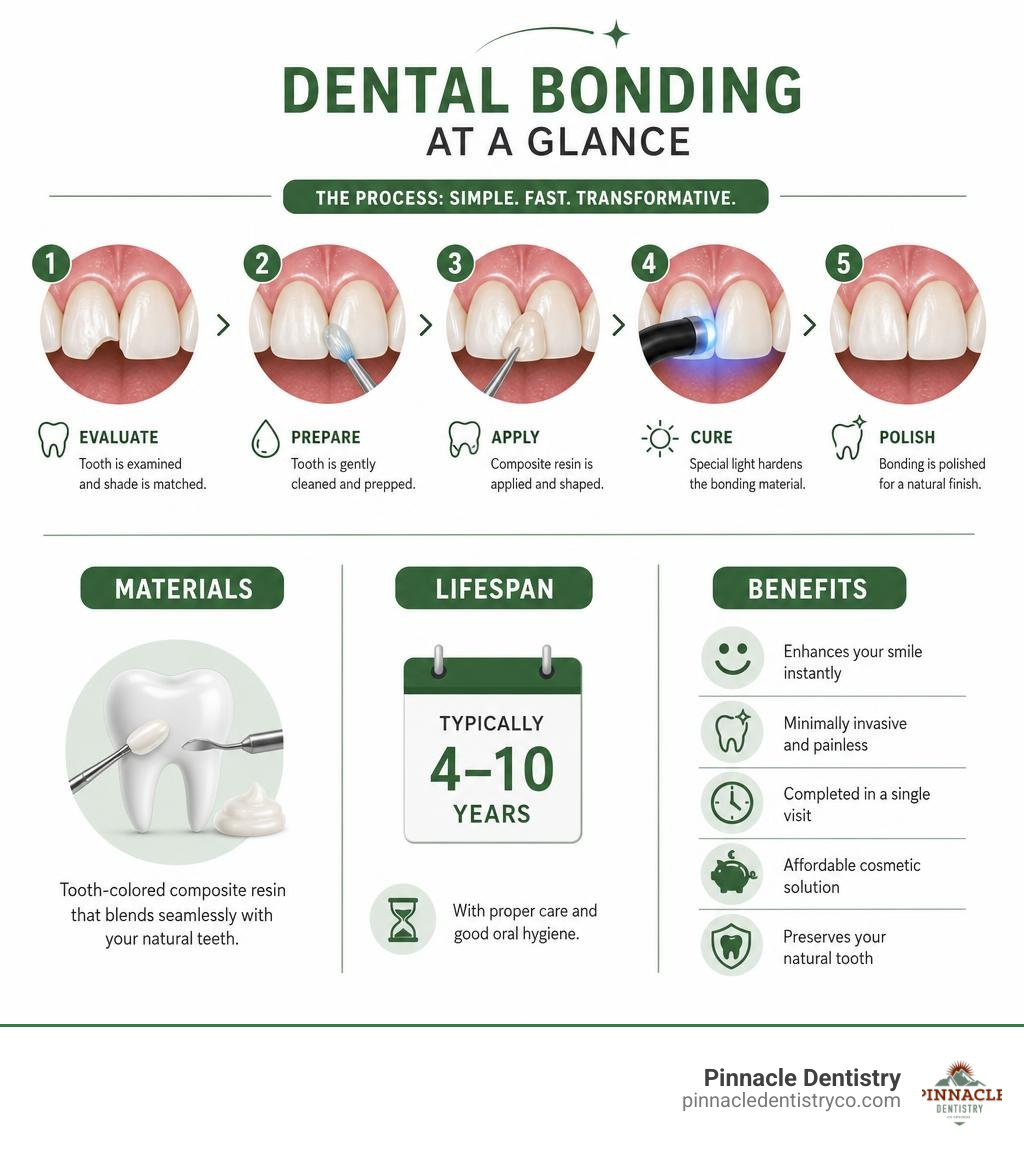
The entire clinical process is efficient and straightforward, usually completed in under an hour per tooth.
Here is exactly what you can expect during your appointment:
- Shade Selection: We begin by using a shade guide to select the exact composite resin colors that match your surrounding teeth.
- Tooth Preparation: We clean the tooth thoroughly. If we are not treating decay, we do not need to numb the area. We then apply the phosphoric acid etching gel to roughen the surface.
- Applying the Bonding Agent: After rinsing and drying the etched tooth, we paint on the liquid bonding adhesive and cure it for a few seconds using our specialized blue light.
- Layering the Composite: We apply the putty-like composite resin in thin layers, usually 1.5 to 2 millimeters at a time. This ensures that the curing light can penetrate and fully harden each layer.
- Sculpting and Curing: We carefully sculpt each layer to match your natural tooth contour. Each layer is cured with the blue light for 10 to 20 seconds to trigger polymerization.
- Shaping and Polishing: Once the final layer is hard, we use fine dental burs to trim and shape the restoration. Finally, we use polishing discs and a diamond polishing paste to give the tooth a natural, high-gloss sheen.
Patients considering a conservative cosmetic improvement can learn more about our dental bonding service and discuss whether it fits their smile goals during a visit with Pinnacle Dentistry.
Common Cosmetic and Restorative Applications
Because composite resin is incredibly versatile, we use it to solve a wide variety of cosmetic and functional dental concerns. It serves as an excellent entry point for conservative cosmetic dentistry because it allows us to make significant visual changes without permanently altering your healthy tooth structure.
At Pinnacle Dentistry, we frequently recommend bonding to address several issues:
- Chipped or Cracked Teeth: This is the most common use. Whether you chipped a front tooth on a glass bottle or sustained a minor sports injury, we can rebuild the broken edge in a single visit.
- Gaps and Diastemas: If you have a small space between your front teeth that makes you self-conscious, we can widen the adjacent teeth slightly with composite resin to close the gap naturally.
- Tooth Discoloration: Some dark stains, such as those caused by childhood tetracycline use or physical trauma to the tooth pulp, do not respond to chemical teeth whitening. We can mask these stubborn stains by covering the front surface of the tooth with a thin layer of color-matched resin.
- Misshapen or Short Teeth: If you have a tooth that is naturally smaller than the others, or has worn down over time, we can lengthen and reshape it to match your smile.
- Exposed Roots and Gum Recession: When gums recede, they expose the sensitive, yellow root surfaces of your teeth. We can apply bonding material over these exposed roots to eliminate temperature sensitivity and protect the tooth from root decay.
When we use bonding to restore decayed areas or protect damaged teeth, it falls under restorative dentistry. The composite material physically seals the tooth, helping keep harmful bacteria out and reinforcing the remaining natural structure.
Who is a Good Candidate for Dental Bonding?
While bonding is a fantastic solution for many patients, it is not always the right fit for every situation. The ideal candidate for this procedure is someone who has minor cosmetic or structural imperfections and overall healthy teeth and gums.
First, we must ensure that any underlying dental issues, such as active tooth decay or periodontal disease, are fully treated before we perform cosmetic bonding.
Second, the structural integrity of the tooth matters. Because composite resin is a type of specialized plastic, it is not as strong as natural tooth enamel or porcelain. Therefore, bonding is best suited for low-pressure areas of the mouth, such as the front teeth. If a tooth has a massive cavity or has lost more than half of its natural structure, a porcelain crown or veneer will provide the necessary strength to withstand heavy biting forces.
Finally, patients who suffer from severe bruxism, chronic nighttime teeth grinding, may not be ideal candidates unless they are willing to wear a custom nightguard. The immense, repetitive forces of grinding can chip or debond the composite resin over time.
Comparing Bonding to Alternative Treatments
When planning a smile transformation in Colorado Springs, CO, it is helpful to look at how bonding compares to other common dental restorations like porcelain veneers and crowns. Each option has distinct advantages and trade-offs in terms of durability, cost, and how much natural tooth structure must be removed.
Veneers are thin shells of medical-grade porcelain that are custom-crafted in a laboratory and bonded to the front surfaces of your teeth. Crowns, on the other hand, are protective caps that cover the entire visible portion of a damaged tooth. While bonding can be completed in under an hour, veneers and crowns typically require at least two appointments spread over a couple of weeks, as we must take impressions and send them to a professional dental lab.
Composite Bonding vs Veneers
The choice between dental bonding and porcelain veneers often comes down to your long-term cosmetic goals, your budget, and how you feel about permanent dental work.
For patients weighing a conservative repair against a longer-term cosmetic option, our comparison of dental bonding vs veneers explains how durability, stain resistance, and enamel preservation differ. The most significant clinical difference lies in the preservation of your natural enamel. To place a porcelain veneer, we must permanently shave down a thin layer of your tooth’s enamel, usually about 0.5 millimeters, to prevent the veneer from looking bulky. Because of this enamel removal, veneers are an irreversible treatment; those teeth will always require a restoration.
In contrast, dental bonding is entirely reversible. We only need to lightly etch the surface of the enamel to create a microscopic grip. If you ever decide to remove the bonding in the future, your natural tooth underneath remains fully intact.
However, porcelain has a clear advantage when it comes to longevity and aesthetics. Porcelain is completely non-porous, meaning it is highly resistant to stains from coffee, tea, and red wine. It also reflects light in a way that closely mimics the natural translucency of enamel. Composite resin, being slightly more porous, will gradually stain over several years and may require periodic polishing to maintain its original luster.
Composite Bonding vs Fillings
Many patients ask if there is a difference between dental bonding and a standard filling. Clinically, they use the same composite resin material, but they serve different primary purposes.
Our overview of dental bonding vs fillings can help clarify whether a cosmetic repair or cavity treatment better matches your needs. In short, a composite filling is a restorative treatment used to repair structural damage caused by a cavity. We remove the decayed tissue and place the composite resin into the prepared space to seal the tooth.
Cosmetic bonding, while using the same material, is focused on reshaping, lengthening, or color-matching a tooth for aesthetic improvement. The application technique is more artistic, as the material is layered on the outer surface of the tooth rather than placed inside a cavity.
Lifespan, Durability, and Maintenance
How long your composite restoration lasts depends heavily on the location of the restoration, your bite alignment, and your daily lifestyle habits. On average, standard dental bonding lasts anywhere from 3 to 10 years before it needs to be touched up, repaired, or replaced.
Because the resin material is subject to natural wear and tear from chewing, it will slowly lose its polish and may develop tiny chips along the edges over time. Fortunately, one of the greatest benefits of bonding is that it is easy to repair. If you chip a bonded tooth, we do not need to replace the entire restoration. We can roughen the damaged area, apply fresh composite resin, cure it, and polish it during a routine checkup.
Regular preventive visits are an important part of long-term maintenance after cosmetic dentistry, because professional cleanings and polishing help keep the resin surface smooth and reduce the buildup of plaque and stains.
How to Care for Your Bonded Teeth
Caring for bonded teeth does not require any specialized, expensive equipment, but it does require consistent, gentle habits.
Here are our top clinical recommendations for keeping your bonded smile looking bright and beautiful:
- Brush with a Soft Toothbrush: Brush your teeth at least twice a day using a soft-bristled toothbrush and a non-abrasive fluoride toothpaste. Avoid whitening toothpastes that contain harsh abrasives like silica or baking soda, as they can scratch the composite material and dull its shine.
- Floss Daily: Clean between your teeth every day using traditional floss or an interdental cleaner. Pay special attention to the margins where the bonding material meets your natural tooth to prevent plaque buildup.
- Avoid Staining Substances for 48 Hours: The composite resin is highly susceptible to staining during the first 48 hours after placement while the chemical bonds fully stabilize. Limit your consumption of dark beverages like coffee, black tea, red wine, and dark sodas, and avoid tobacco products.
- Do Not Use Your Teeth as Tools: Never use your teeth to open plastic packaging, tear tape, or bite your fingernails.
- Avoid Hard Foods: Do not chew on ice, hard candies, popcorn kernels, or pens. If you have bonding on your front teeth, try to cut hard fruits like apples into bite-sized pieces rather than biting directly into them.
- Wear a Nightguard: If you clench or grind your teeth at night, let us know so we can fit you for a custom nightguard to protect your restorations from structural failure.
What to Expect Regarding Costs and Insurance
When considering cosmetic treatments, understanding the financial aspect is a key part of the decision-making process. At Pinnacle Dentistry, we believe in open communication regarding treatment costs.
The cost of dental bonding varies based on the number of teeth treated, the size and complexity of the area, and whether the work addresses active decay or a cosmetic concern. Bonding is often a more budget-friendly option than porcelain veneers or crowns, but your treatment plan should be based on your goals and the condition of the tooth.
For a closer look at treatment value, is dental bonding worth it explores the benefits of a single-visit procedure that preserves natural tooth structure.
When it comes to dental insurance, coverage depends on the primary purpose of the treatment:
- Restorative Bonding: If we are performing bonding to repair a chipped tooth from an accident, fill a cavity, or cover an exposed root, your dental insurance plan may cover part of the treatment.
- Cosmetic Bonding: If the procedure is purely elective, such as closing a small gap or masking minor discoloration on healthy teeth, insurance companies generally classify it as cosmetic and may not provide coverage.
Our experienced office team in Colorado Springs, CO, can help you understand your benefits and anticipated out-of-pocket responsibility before treatment begins.
Is the Dental Bonding Procedure Painful?
One of the most appealing aspects of dental bonding is that it is a virtually painless, non-invasive experience. For the vast majority of our patients, the procedure is completed without the need for local anesthesia.
Because we do not need to remove significant amounts of natural enamel, we do not have to drill deep into the sensitive dentin layer of the tooth. The only sensation you will feel is the gentle washing of water and the light pressure of the sculpting instruments.
Our guide to what to expect from dental bonding outlines the appointment experience, including when local anesthesia may be appropriate. If we are treating a cavity or working very close to the sensitive nerve tissue near the gumline, we will apply a local anesthetic to help keep you comfortable. Some patients experience mild temperature sensitivity for a day or two after the appointment, but this is temporary and resolves quickly on its own.
Frequently Asked Questions About Teeth Bonding
How long does teeth bonding last on front teeth?
On front teeth, dental bonding typically lasts between 4 and 8 years. Because front teeth are used for biting into foods, the restoration experiences consistent daily stress. With excellent oral hygiene, avoiding hard foods, and wearing a nightguard if you grind your teeth, the bonding can easily reach the longer end of that lifespan before needing a minor touch-up.
Can bonded teeth be whitened with bleaching gel?
No, composite resin does not respond to professional or over-the-counter teeth whitening gels. If you plan to whiten your teeth, we highly recommend completing your whitening treatment first. We will wait about two weeks for your new shade to stabilize, and then we will match the composite resin to your newly brightened teeth.
What should I do if my composite restoration chips or breaks?
If your bonding chips, do not panic. Call our office to schedule a quick appointment. Avoid touching the sharp edge with your tongue to prevent irritation. We can easily repair the chipped area in a single, short visit by adding a new layer of composite resin directly to the existing restoration.
Is teeth bonding reversible if I want veneers later?
Yes, dental bonding is fully reversible. Because the procedure requires little to no removal of your natural enamel, the underlying tooth structure remains healthy and intact. If you decide to upgrade to porcelain veneers or crowns in the future, we can safely remove the composite resin and prepare your teeth for the new restorations.
Can composite bonding fix large gaps between teeth?
Bonding is highly effective for closing small to moderate gaps, usually between 1 and 3 millimeters. If you have very large gaps or severe alignment issues, orthodontic treatment like clear aligners is often a better primary solution. However, we sometimes combine orthodontics with minor cosmetic bonding for a perfect final result.
Does smoking or vaping stain composite resin?
Yes, nicotine and tar from tobacco products or vaping liquids will stain composite resin over time. Because the resin material is slightly more porous than natural enamel, these stains can penetrate the material, causing it to turn yellow or brown. Regular professional cleanings and polishing can help minimize this discoloration.
How long after the procedure can I eat?
Because we cure the composite resin instantly with our high-intensity blue light, the material is 100% hardened before you leave our office. You can eat and drink immediately after your appointment. However, if we used local anesthesia, we recommend waiting until the numbness wears off to avoid accidentally biting your lip or tongue.
Can composite bonding be used to repair cavities?
Yes, composite resin is the standard material used for modern, tooth-colored fillings. When used to treat decay, we remove the cavity first and then bond the resin inside the tooth to restore its structural integrity and natural appearance, blending beautifully with your smile.
Is teeth bonding safe to get during pregnancy?
Yes, cosmetic and restorative dental bonding is completely safe to receive during pregnancy. The materials used are non-toxic, and the procedure is non-invasive. However, for purely elective cosmetic bonding, we often recommend waiting until after your baby is born to ensure your complete comfort during the appointment.
How does the cost of teeth bonding compare to porcelain veneers?
Dental bonding is a highly affordable cosmetic option, typically costing significantly less than porcelain veneers. While veneers require a greater initial financial investment due to laboratory fabrication fees, they also offer a longer lifespan of 10 to 20 years, making both options excellent investments in their own ways.
Conclusion
A beautiful smile can truly change how you interact with the world, boosting your self-esteem and leaving a lasting impression. If you have been hiding minor chips, gaps, or stains, dental bonding is one of the fastest, safest, and most affordable ways to improve your smile.
At Pinnacle Dentistry in Colorado Springs, CO, we are proud to offer personalized, high-quality cosmetic and restorative care. Our team includes certified MAGD dentists, an elite distinction held by fewer than 2% of general dentists nationwide, reflecting a deep commitment to continuing clinical education and patient care excellence. Whether you live in Briargate, CO, El Paso County, CO, or the surrounding Colorado Springs, CO, area, we are here to help you and your family maintain healthy, beautiful smiles.
If you are ready to explore how this simple, single-visit procedure can enhance your smile, contact our dental bonding specialists at Pinnacle Dentistry to book your appointment. You can visit our comfortable office at 2430 Research Pkwy, Suite 200, Colorado Springs, CO 80920. We look forward to helping you smile with confidence!