
What does a general dentist do for a Colorado Springs family? I am Dr. Thomas Jennings, DDS, MAGD, owner of Pinnacle Dentistry, and I have over 35 years of experience as a family dentist. This guide explains the preventive, restorative, cosmetic, and urgent care conversations patients can expect. It also explains when symptoms should lead to a call with your dentist.
What Does a General Dentist Do for Your Family?
A general dentist provides ongoing care for teeth, gums, and bite function. Visits may include prevention, treatment planning, and restorative services when a tooth becomes damaged. The goal is to understand your needs before recommending a next step. At Pinnacle Dentistry, families can discuss care in a comfortable, practical setting.
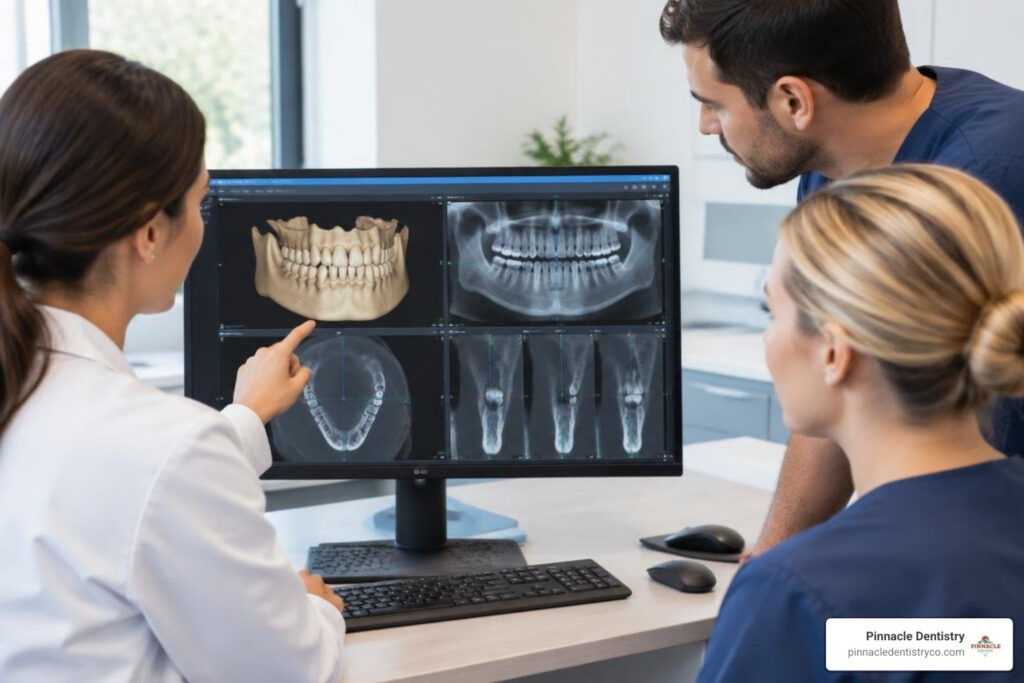
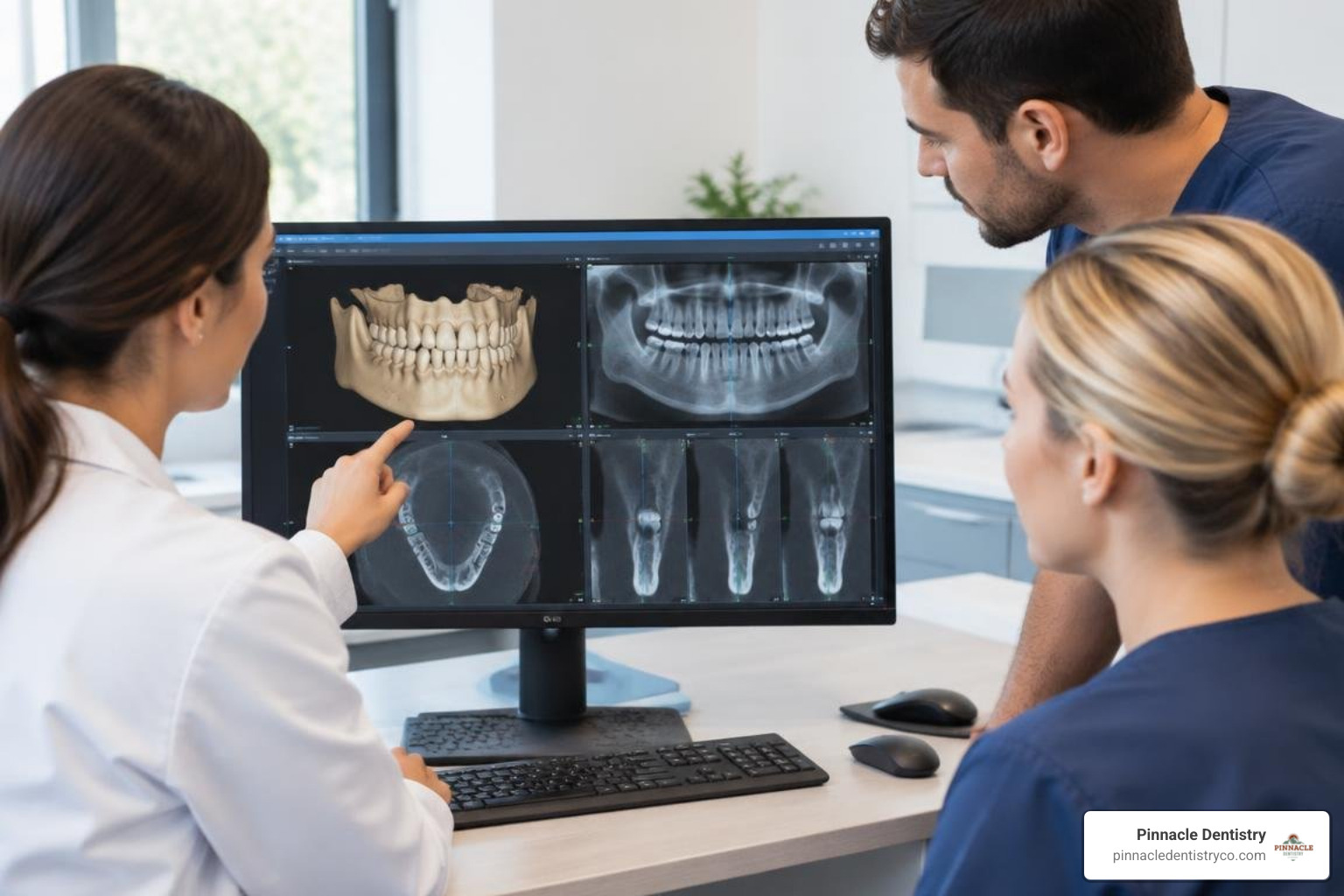
General dentistry starts with listening to your concerns and examining your oral health. A dentist reviews your teeth, gums, bite, and existing dental work. X-rays may be recommended when images can reveal areas not visible during an examination. This information supports a plan that addresses current needs and future prevention.
Many families begin with general dental care to establish a consistent routine. Regular visits allow the dental team to monitor changes and explain options before problems become more involved. The CDC notes that oral health basics include cavities and gum disease as leading causes of tooth loss, and that most adults have had a cavity. That is why preventive care remains an important part of lifelong dental planning.
Preventive Dentistry for Teeth and Gums
Preventive care aims to support healthy teeth and gums before treatment is needed. During an appointment, the team may provide a professional cleaning, review home care habits, and complete an oral examination. Gum screening checks the tissues that support your teeth for signs that need attention. Digital X-rays can help the dentist evaluate areas between teeth or beneath existing restorations.
Patients often ask why cleanings matter when they brush daily. Home brushing and flossing are important, but professional cleanings remove hardened buildup that cannot be brushed away. The team can also point out areas that need more attention during your daily routine. Clear, individualized guidance makes it easier to care for your smile between visits.
Preventive visits are also a good time to discuss sensitivity, bleeding gums, or changes in your bite. Symptoms do not always mean a serious problem, but they should be evaluated by your dentist. If swelling, fever, or trauma occurs, call the office right away. If the office is closed, go to the ER.
Restorative Treatment for Damaged Teeth
When decay, wear, or a crack affects a tooth, restorative treatment can rebuild function. A filling repairs a smaller damaged area, while a crown covers more of a weakened tooth. The dentist explains why a treatment is recommended and what the appointment may involve. Patients can ask questions about comfort, materials, and the expected care process.
According to MedlinePlus cavity information, a dentist removes decay and replaces it with a material such as composite resin, which matches the tooth and is strong enough for back teeth. Composite fillings can restore a tooth while preserving as much healthy structure as possible. A filling care guide may help patients understand common questions before treatment. Your dentist can explain whether a filling, crown, root canal treatment, or extraction is appropriate for your situation.
Restorative care is most useful when it follows a careful evaluation. A crown may protect a tooth with extensive damage, while a bridge or implant restoration can replace a missing tooth. Root canal treatment addresses infection inside a tooth when the dentist determines it is needed. The right option depends on the tooth, surrounding tissues, and your overall treatment goals.
A general dentist also helps patients understand how separate treatments fit together. For example, a restoration may need follow-up care to monitor comfort and bite alignment. The team can discuss timing, oral hygiene, and what changes should prompt a call. What does a general dentist do in these situations? The dentist helps patients make informed choices and coordinates care around their needs.
Before a restorative appointment, patients can ask what the procedure is designed to address. They can also ask how the tooth will be prepared and what follow-up may be needed. Understanding the purpose of treatment often makes decisions feel less overwhelming. The dental team should provide clear answers in language that is easy to follow.
Daily habits also support the work completed in the dental office. Brushing carefully, cleaning between teeth, and attending recommended visits help protect restorations over time. Your dentist can suggest practical adjustments when plaque collects in difficult areas. Small changes in routine can make preventive care easier to maintain.
Families sometimes postpone a visit because a concern seems minor or temporary. It is better to contact the office when discomfort, sensitivity, or a visible change persists. The dentist can evaluate the concern and explain whether treatment is recommended. Early communication helps patients avoid guessing about symptoms at home.
A general dental office also provides continuity when your needs change over time. The team can review previous restorations and discuss how they are functioning today. This ongoing record helps guide thoughtful decisions at future appointments. It also gives patients a familiar place to ask questions and share concerns.
Patients can bring written questions to appointments so important concerns are discussed clearly before they leave the office. This helps the conversation stay focused and useful during the visit.
Education, Credentials, and Ongoing Training
General dentists complete extensive education before caring for patients in a dental office. Their training includes oral anatomy, disease prevention, restorative procedures, and patient communication. After dental school, dentists meet state licensing requirements before practicing independently. Continuing education helps them stay current with techniques, materials, and safety standards.
You may see DDS or DMD after a dentist’s name. DDS means Doctor of Dental Surgery, while DMD means Doctor of Dental Medicine. The degrees represent equivalent clinical education and professional licensing requirements. The university’s naming tradition determines which degree appears after the provider’s name.
Dr. Thomas Jennings holds a Mastership in the Academy of General Dentistry (MAGD). That credential reflects a commitment to continued learning across many areas of dental care. Patients can ask about a provider’s experience and the services offered at the practice. Clear conversations help families choose care that fits their needs and comfort level.
At Pinnacle Dentistry, patients receive care from a team focused on practical recommendations and respectful communication. The practice has been serving patients since 1989 in Colorado Springs, CO. Appointments are available Monday through Friday from 8 to 5. If a concern arises between visits, the office can help determine the appropriate next step.
Comprehensive Care, Cosmetic Options, and Urgent Visits
General dentistry can include care that protects function, comfort, and appearance. Some visits focus on a specific concern, while others help plan longer-term treatment. Cosmetic options may include whitening, bonding, veneers, and natural-looking crowns. Each option should be discussed after an examination and a conversation about your goals.
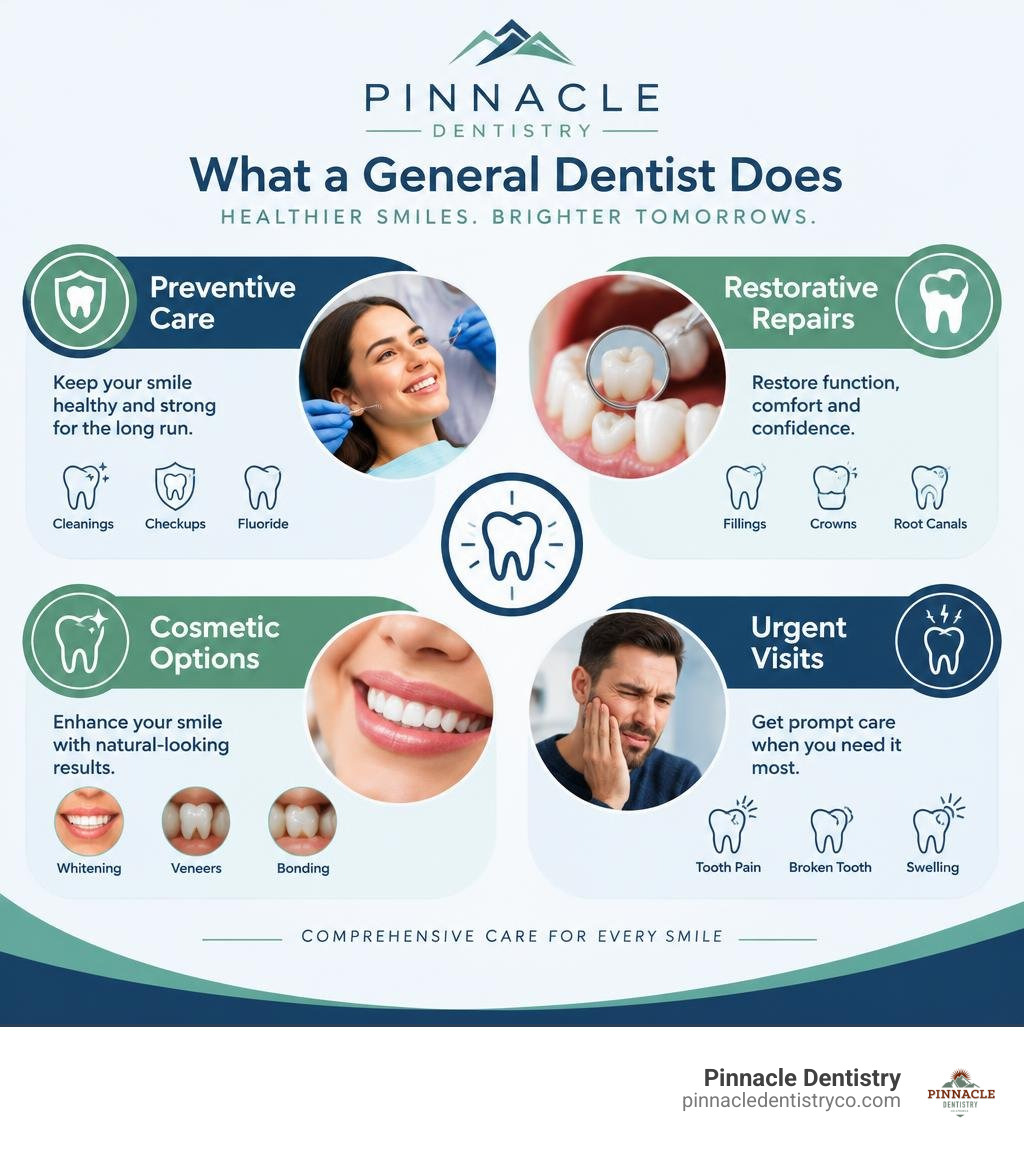
Cosmetic treatment can address discoloration, small chips, uneven edges, or worn tooth surfaces. Professional whitening can brighten teeth affected by food, drinks, and natural aging. Bonding uses tooth-colored material to reshape a small area without changing the entire tooth. Veneers and crowns may be considered when a dentist recommends a more comprehensive approach.
Dental emergencies deserve prompt attention because pain or damage can worsen without evaluation. A dental emergency guide can help patients recognize concerns that need immediate contact with the office. A knocked-out or broken tooth needs the dentist right away. If the office is closed, go to the ER for urgent swelling, fever, or trauma.
Call the office promptly for severe tooth pain, a broken restoration, or swelling around a tooth. The dental team can discuss the situation and arrange the appropriate next step. Do not rely on home treatment instructions when symptoms are serious or changing. An in-person evaluation gives the dentist the information needed to recommend care. If the office is closed and swelling spreads or you have a fever, go to the ER.
Patients who feel nervous can discuss comfort concerns before treatment begins. Pinnacle Dentistry offers sedation dentistry options for anxious patients. The team can explain what to expect during the visit and answer questions clearly. Sharing concerns early helps the appointment feel more manageable.

Family Dentistry and Care Coordination
A consistent dental office can make routine care simpler for households in Colorado Springs, CO. Family records help the dental team understand past treatment, current concerns, and changing needs. Visits can focus on prevention for children, maintenance for adults, or restoration planning for older patients. A family dental visit can be a useful starting point for new patients.
Children benefit from calm, age-appropriate appointments that build familiarity with dental care. The team can monitor development, discuss daily habits, and recommend preventive services when appropriate. Parents can learn more about children’s dental care before scheduling a visit. Adults and older patients can also discuss changes in comfort, function, or existing restorations.
A general dentist manages many common concerns within the practice. Some complex situations need coordination with another dental provider or a dentist with additional training. The referral decision depends on the specific tooth, treatment needs, and clinical findings. Your general dentist remains a resource for keeping records and follow-up plans organized.
A dental exam may reveal changes in the mouth that deserve further attention. Your dentist may suggest talking with your physician about those changes. That recommendation is not a diagnosis of a medical condition. It is a practical step toward making sure concerns receive appropriate evaluation.
Frequently Asked Questions About General Dentistry
How often should I see a general dentist?
Your dentist can recommend a visit schedule based on your oral health history and current needs. Regular appointments allow the team to monitor changes and provide preventive care. If you notice pain, swelling, bleeding gums, or another concern, contact the office sooner. A personalized schedule is more useful than following a general rule without professional guidance.
What is the difference between a DDS and a DMD?
DDS means Doctor of Dental Surgery, and DMD means Doctor of Dental Medicine. The degrees represent equivalent dental education and licensing standards. The difference comes from the university’s preferred degree title. Patients can choose a dentist based on communication, experience, and available services.
Can a general dentist do root canals and extractions?
General dentists can evaluate many tooth problems and provide routine root canal treatment or extractions when appropriate. Some situations may require care from a dentist with additional training. Your dentist will explain the findings and discuss the recommended next step. The decision depends on the condition of the tooth and surrounding tissues.
Is a family dentist the same as a general dentist?
Family dentistry is general dentistry with an emphasis on caring for patients across life stages. It can make appointments easier for households that prefer one dental office. Children, adults, and older patients may each need different types of attention. A family-focused practice adjusts care and communication to those changing needs.
What happens if I have a dental emergency when the office is closed?
A knocked-out or broken tooth needs the dentist right away. Call the office for guidance when you can, and go to the ER if the office is closed. Urgent swelling, fever, or trauma also requires prompt attention. Avoid trying to diagnose or treat a serious dental problem at home.
Can a general dentist help improve the look of my smile?
A general dentist can discuss cosmetic options that may improve color, shape, or balance. Whitening, bonding, veneers, and crowns may be considered after an examination. Your dentist can explain what each option may address and whether it fits your goals. Cosmetic decisions should also consider comfortable function and healthy gums.
Why does my dentist take X-rays when nothing hurts?
X-rays can reveal changes that are not visible during a regular visual examination. They may help the dentist evaluate areas between teeth, below the gumline, or around roots. Finding changes early can support a more informed treatment discussion. Your dentist will recommend imaging when it is useful for your care.
What can I do if I feel anxious about dental visits?
Tell the dental team about your concerns before the appointment begins. They can explain each part of the visit and discuss sedation dentistry options when appropriate. Asking questions can help you feel more prepared before treatment starts. A supportive conversation gives the team a better understanding of your comfort needs.
When would a general dentist refer me to another provider?
A referral may be recommended when a tooth or jaw concern requires additional training or equipment. Your dentist will explain why another dental provider may be helpful. The referral supports a coordinated approach to your care. Your regular dental office can continue to help organize records and follow-up visits.
How do I prepare for my first visit to a general dentist?
Bring any requested records, a photo ID, and a list of questions about your oral health. Be ready to share changes in comfort, sensitivity, or previous dental treatment. Arriving a little early can give you time to complete office forms. The first visit is also an opportunity to discuss your goals and preferences.
Conclusion: Ongoing Dental Care for Colorado Springs Families
A trusted general dentist helps families plan preventive visits, address changes early, and make informed treatment decisions. Routine care supports comfortable chewing, healthy gums, and confidence in your smile. When symptoms appear, contact your dentist rather than trying to diagnose the problem at home. Urgent swelling, fever, or trauma requires immediate contact with the office, or the ER when the office is closed.

Pinnacle Dentistry provides general and family dental care for Colorado Springs, CO, patients. The team listens to concerns, explains options, and helps patients prepare for their next visit. To discuss your dental needs, contact our office and schedule a convenient appointment.
Pinnacle Dentistry
Briargate Business Center
2430 Research Pkwy Suite 200
Colorado Springs, CO 80920