
What You Need to Know About Fixing a Chipped Tooth
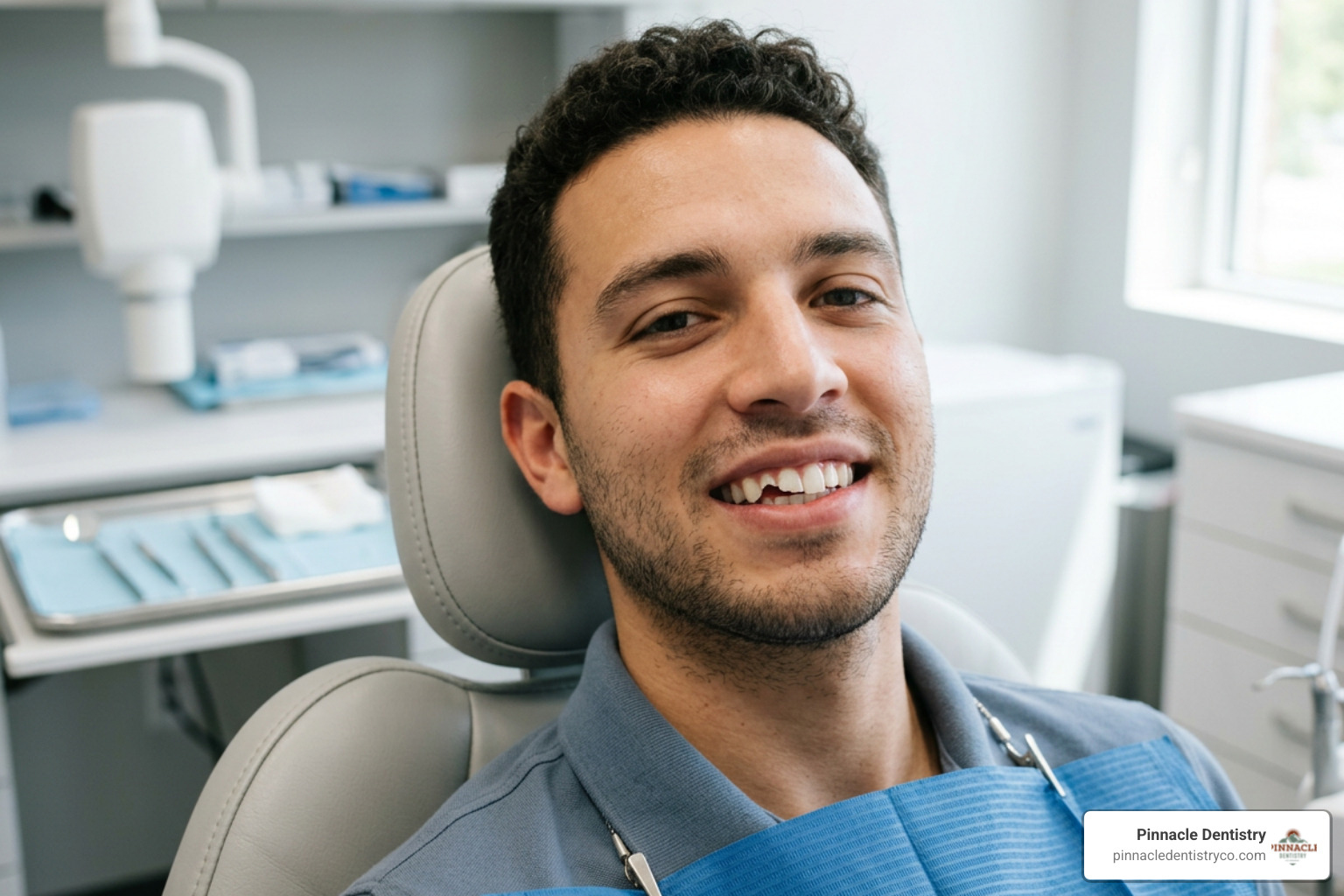
Fixing a chipped tooth is something millions of people deal with every year. Whether it happened biting into a hard piece of candy, taking a knock during sports, or just waking up one morning and noticing something feels off, a chipped tooth can be unsettling. The good news: it is one of the most treatable dental problems there is.
Here is a quick overview of your main options:
| Repair Method | Best For | Typical Durability |
|---|---|---|
| Smoothing/polishing | Tiny surface chips | Permanent (no restoration needed) |
| Dental bonding | Small to moderate chips | 3 to 10 years |
| Porcelain veneers | Front teeth, cosmetic chips | 10 to 15 years |
| Dental crown | Large chips, structural damage | 10 to 20 years |
| Root canal + crown | Chip with pulp exposure | 10 to 20+ years |
| Dental implant | Tooth that cannot be saved | 20+ years |
A chipped tooth is usually not a dental emergency, but it does need professional attention. Leaving it untreated can lead to decay, infection, and more costly repairs down the road. The right fix depends on how much tooth structure was lost, where the tooth is located, and whether the inner layers of the tooth were affected.
I am Dr. Thomas Jennings, founder of Pinnacle Dentistry and a Master in the Academy of General Dentistry with over 35 years of experience in Colorado Springs, CO, including extensive training in fixing chipped tooth damage of all types and severities. I will walk you through everything you need to know, from what to do in the first few minutes after a chip to which treatment is right for your situation.
What Causes a Chipped Tooth and How to Prevent It
While tooth enamel is the hardest substance in the human body, it is not completely indestructible. Every day, our teeth undergo significant structural stress. Understanding the primary catalysts behind dental fractures can help you safeguard your smile and avoid unexpected visits to our office.
The most common culprit behind a chipped tooth is physical trauma. This includes accidental falls, sports injuries, or unexpected impact to the face. However, silent factors often weaken the teeth long before they actually chip. Chronic bruxism, also known as teeth grinding, places immense, repetitive pressure on the biting surfaces of your teeth. Over time, this micro-trauma creates tiny fractures, or craze lines, that eventually cause pieces of the enamel to break away.
Active tooth decay also compromises the structural integrity of your enamel. When oral bacteria produce acids that erode the tooth, the remaining structure becomes hollow and fragile. Similarly, large, older dental fillings can weaken the surrounding natural tooth, making it far more susceptible to chipping under normal chewing pressure.
Preventing these injuries requires a proactive approach to dental hygiene and protective wear. If you struggle with nighttime teeth grinding, wearing a custom nightguard is one of the most effective ways of preventing dental injuries and preserving your enamel.
For athletes participating in contact sports in Colorado Springs, CO, a professionally fabricated athletic mouthguard absorbs impact and shields the teeth from sudden trauma. Additionally, avoiding habits like chewing on ice, hard candies, or using your teeth as tools to open packaging will drastically reduce your risk of a sudden fracture.
Immediate First Aid: What to Do Right After Chipping a Tooth
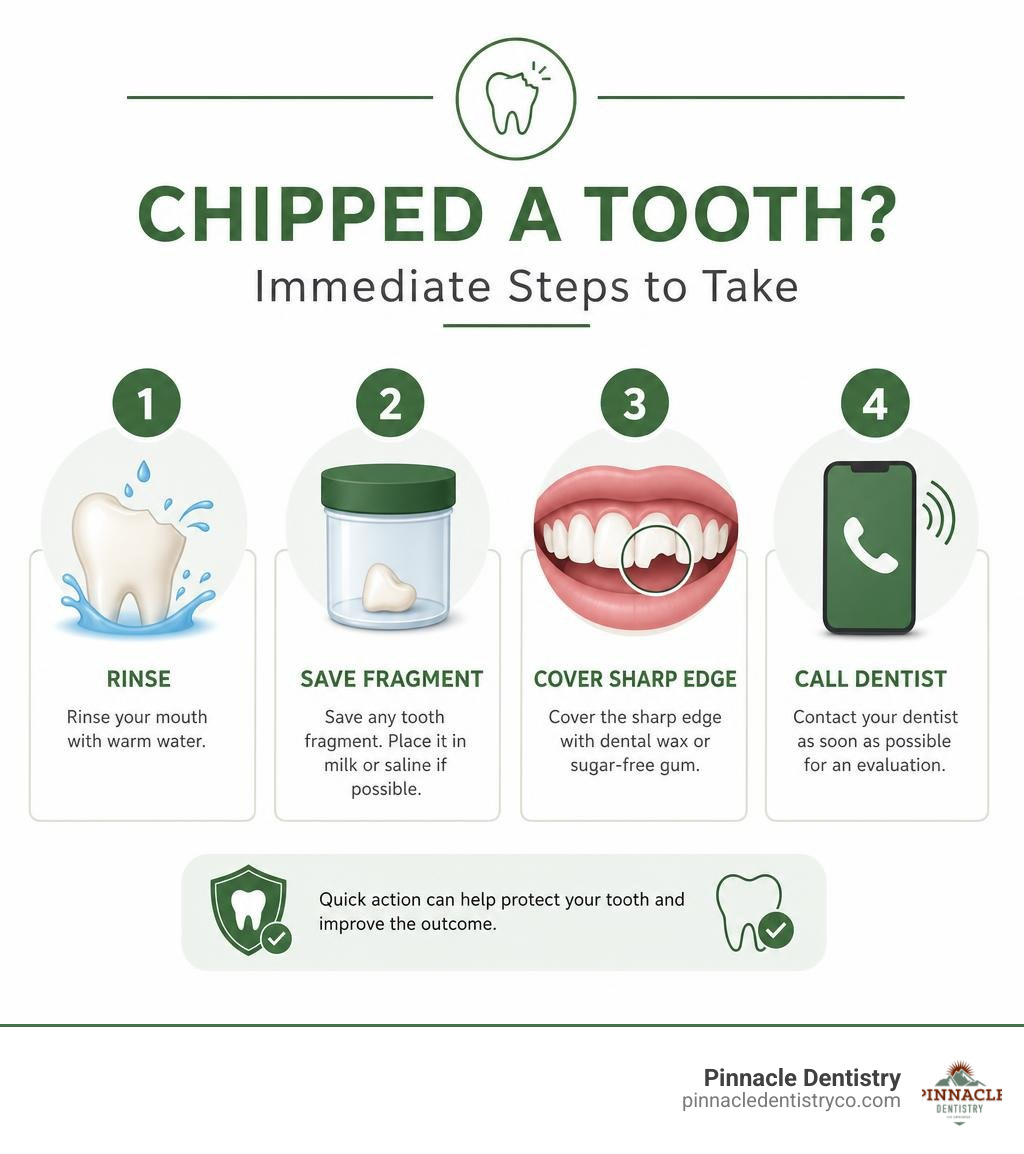
Discovering a chipped tooth can be shocking, but taking the correct steps in the first hour can prevent further complications and make the restoration process much smoother. If you find yourself dealing with a sudden chip, take a deep breath and follow these basic first aid steps.
First, gently rinse your mouth with warm salt water to clean the area and clear away any loose debris. If you are able to locate the broken tooth fragment, save it. Place the piece in a small container of clean milk or saliva. In some cases, a skilled dentist can actually reattach the original fragment to your tooth.
If the chipped tooth has a sharp or jagged edge that is irritating your tongue or cheek, you can cover it temporarily. Dental wax or even a piece of sugarless chewing gum pressed over the rough spot will protect your soft oral tissues from painful cuts.
For pain management and swelling, apply a cold compress to the outside of your cheek or lip in fifteen minute intervals. Over the counter pain relievers, such as ibuprofen, can help manage discomfort until you can be evaluated by a professional. That these steps are only temporary measures. To understand the best timeline for seeking care, read our guide on what to do about a cracked or chipped tooth to ensure you take the safest path forward.
Never attempt to file down a sharp edge yourself or use household adhesives to glue a tooth fragment back together. These actions can cause irreversible damage to the tooth pulp and lead to severe infections. Following proper first aid for dental injuries keeps the tooth stable until you can get into a dental chair.
Professional Options for Fixing Chipped Tooth Damage
When you visit Pinnacle Dentistry, our primary goal is to restore both the function and the natural beauty of your smile. Modern dentistry offers several highly effective treatments for fixing chipped tooth damage, ranging from conservative, single-visit solutions to comprehensive restorations.
The choice of treatment depends heavily on the size of the chip, the location of the tooth, and whether the inner pulp is exposed. Here is a detailed look at the professional methods we use to repair chipped teeth.
Dental Bonding for Fixing Chipped Tooth Edges
For minor to moderate chips, especially on the visible front teeth, composite dental bonding is often the ideal solution. This conservative treatment utilizes a tooth-colored composite resin, which is a durable mixture of plastic and glass.
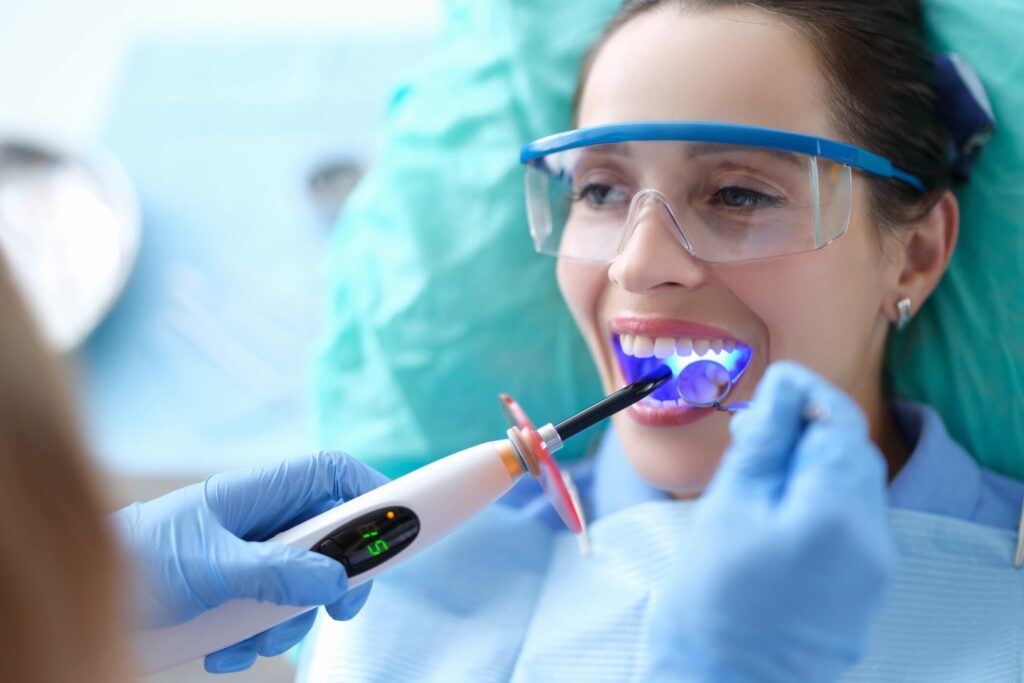
During the procedure, the dentist gently etches the surface of the remaining enamel to create a secure bonding surface. The composite resin is then carefully applied, sculpted to match the natural contours of your tooth, and hardened using a specialized curing light. Once cured, the material is trimmed and polished to blend seamlessly with your surrounding teeth.
Dental bonding is highly favored because it is a quick, single-visit repair that typically requires no local anesthesia. It is an excellent choice for fixing a small chip in your front tooth with minimal alteration to your natural tooth structure.
Dental Veneers and Crowns for Fixing Chipped Tooth Structures
When a chip is too extensive for simple bonding, or if it compromises the structural integrity of a tooth, more robust restorations are required.
Porcelain veneers are thin, custom-made shells designed to cover the front surface of your teeth. They are highly resistant to staining and mimic the light-reflecting properties of natural enamel beautifully. Veneers are excellent for front teeth that have suffered moderate chipping, as they restore a flawless appearance while providing a strong, long-lasting biting surface.
For back teeth that endure heavy chewing forces, or for front teeth with severe structural loss, a dental crown is the gold standard. A crown, or cap, completely covers the visible portion of the tooth down to the gumline. This protects the remaining tooth structure from fracturing further while fully restoring your ability to chew comfortably.
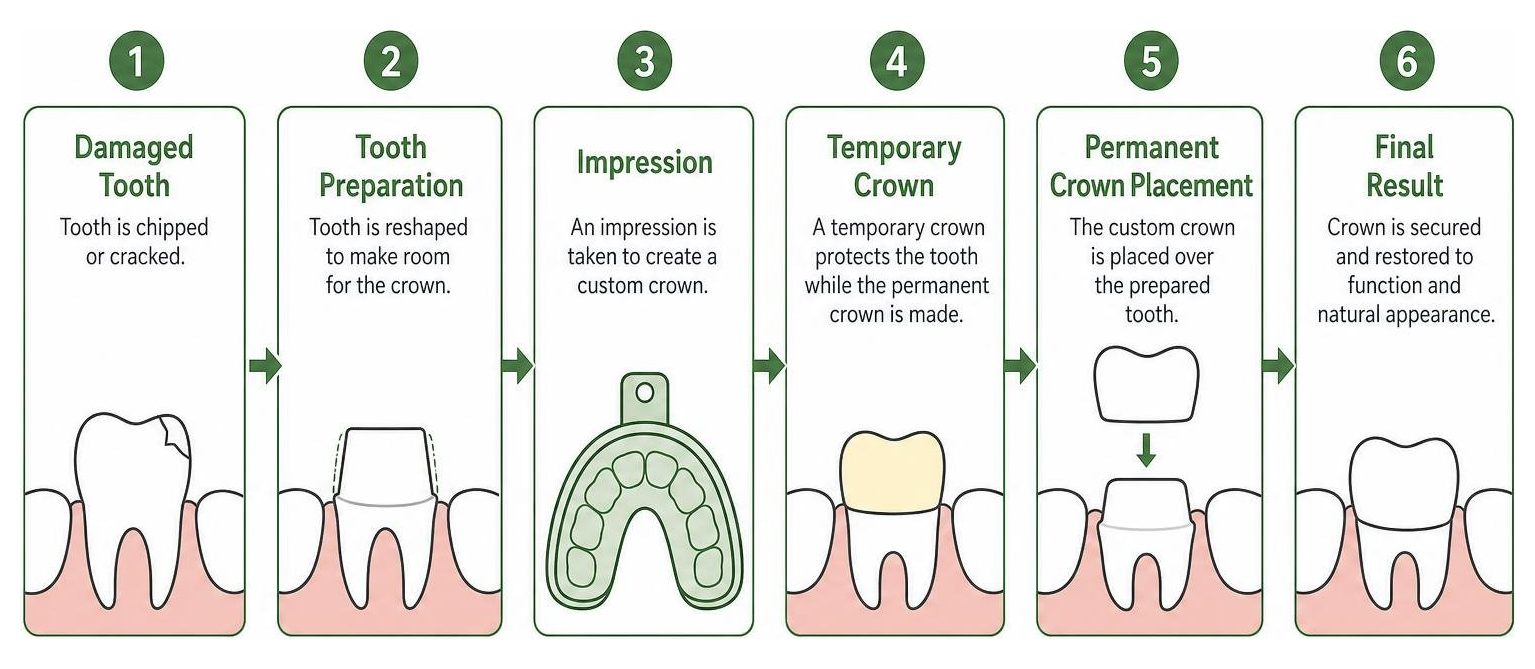
Choosing between these advanced options requires careful planning. If you are looking to restore your smile, learning about choosing a cosmetic dentist can help you select a provider who possesses the artistic eye and clinical expertise needed for a natural look.
If the chip is so deep that it exposes the delicate nerve tissue inside the tooth, root canal therapy may be necessary to remove the damaged pulp and prevent infection before placing a protective crown. In rare cases where a fracture extends deep below the gumline, the tooth may not be salvageable, making a dental implant the best long-term option to replace the missing tooth.
Understanding the Costs and Insurance Coverage for Tooth Repair
When planning your dental treatment, understanding the financial aspect is an important part of the process. The total investment required to repair a chipped tooth can vary widely based on several key factors, including the severity of the damage, the specific procedure chosen, and the location of the tooth.
Generally, conservative treatments like dental bonding are the most cost-effective professional repair options. More involved restorations, such as porcelain veneers, custom dental crowns, or root canal therapy, reflect the advanced materials, laboratory fabrication, and clinical expertise required to complete them.
Dental insurance coverage for fixing chipped tooth structures typically depends on whether the procedure is classified as restorative or cosmetic. Restorative care, which is treatment medically necessary to restore the function, health, and structural integrity of a damaged tooth, is usually covered at least partially by most dental insurance plans. This often includes dental fillings, crowns, and root canals.
Conversely, treatments performed purely to improve the aesthetic appearance of a tooth, such as porcelain veneers or bonding on a non-functional surface, may be categorized as cosmetic and excluded from standard coverage. Our administrative team at Pinnacle Dentistry is highly experienced in navigating insurance benefits to help you maximize your coverage. For a deeper look at navigating these financial details, check out our comprehensive guide to chipped tooth repair and costs.
When is a Chipped Tooth Considered a Dental Emergency?
Not every chipped tooth requires an immediate, middle of the night trip to the dentist, but certain symptoms indicate that you need urgent professional care. Recognizing these warning signs can protect you from severe pain and prevent a localized issue from turning into a systemic infection.
A chipped tooth is considered a true dental emergency if you are experiencing severe, throbbing pain, continuous bleeding that does not stop with pressure, or visible swelling in your gums, cheek, or jaw. These symptoms often indicate that the fracture has reached the dental pulp, exposing the highly sensitive nerves and blood vessels to bacteria.

An exposed nerve is highly vulnerable to rapid infection. If you notice a pink, red, or dark spot in the center of the fractured area, or if you experience intense, lingering pain when the tooth is exposed to hot or cold temperatures, the pulp is likely compromised.
In these situations, delaying treatment can lead to a painful dental abscess, bone loss around the root, and the need for more invasive treatments like root canal therapy or extraction. If you are unsure whether your situation requires immediate intervention, review our advice on when to seek immediate dental attention to make an informed decision.
Frequently Asked Questions About Fixing a Chipped Tooth
Can a chipped tooth heal on its own?
No, a chipped tooth cannot heal naturally. Unlike bones, tooth enamel does not contain living cells or blood vessels, meaning it lacks the biological ability to regenerate or repair itself. Once enamel is lost, professional dental intervention is required to restore the tooth’s structure and protect it from decay.
What is the cheapest way to fix a chipped tooth?
Dental bonding is typically the most affordable and conservative professional method to repair a minor chip. This quick procedure uses a tooth-colored composite resin to fill in the missing structure, and it can usually be completed in a single, comfortable visit without the need for dental numbing.
Does fixing a chipped tooth hurt?
Most procedures to fix a chipped tooth are completely comfortable and virtually pain-free. For minor treatments like polishing or dental bonding, anesthesia is rarely even necessary. For deeper chips requiring crowns or root canals, we utilize local anesthesia to ensure you remain entirely relaxed and comfortable throughout the process.
How long does dental bonding last on a chipped tooth?
Dental bonding typically lasts between 3 to 10 years, depending on the location of the repair and your personal habits. To maximize the lifespan of your bonding, practice excellent daily oral hygiene, attend regular cleanings, and avoid biting directly into hard foods or chewing on objects like pens and ice.
What happens if you leave a chipped tooth untreated?
Leaving a chipped tooth untreated exposes the inner, softer layers of the tooth to harmful oral bacteria. Over time, this can lead to progressive tooth decay, heightened temperature sensitivity, structural fractures, and painful nerve infections that may eventually require root canal therapy or extraction.
Can you use a DIY home kit to fix a chipped tooth?
While temporary over the counter tooth repair kits exist, they are not safe or effective long-term solutions. These kits are only meant to temporarily cover sharp edges for a day or two. Attempting to permanently fix a tooth at home can trap bacteria inside, leading to severe decay and dangerous infections.
Is a chipped tooth always a dental emergency?
No, a minor chip that does not cause pain, bleeding, or sensitivity is generally not a dental emergency. While you should still schedule an appointment within a few days to have it evaluated and smoothed, it does not require an immediate emergency visit unless you experience severe pain, swelling, or an exposed nerve.
What is the difference between a chipped tooth and a cracked tooth?
A chipped tooth involves a piece of the outer enamel breaking away, leaving the root structure intact. A cracked tooth involves a fracture line that runs vertically or horizontally through the tooth structure, which can extend deep into the root and often requires more extensive restorative treatment to save.
Can a dentist reattach a broken tooth fragment?
Yes, in many cases, if you preserve the broken tooth fragment in a clean container of milk or saliva and see a dentist quickly, the original piece can be successfully reattached. Your dentist can use advanced dental bonding adhesives to fuse the fragment back onto the tooth, restoring its natural appearance.
Does dental insurance cover the cost of fixing a chipped tooth?
Most dental insurance plans will cover a significant portion of the cost if the repair is deemed medically necessary to restore function, such as a crown or filling. However, if the treatment is performed purely for cosmetic enhancement, such as a veneer, it may be excluded from coverage.
Conclusion
Dealing with a chipped tooth can feel overwhelming, but modern dental advancements make restoring your smile easier, faster, and more comfortable than ever before. Whether you need a simple polish, durable dental bonding, or a beautiful porcelain crown, seeking prompt professional care is the best way to protect your long-term oral health.
At Pinnacle Dentistry in Colorado Springs, CO, our certified MAGD dentists are dedicated to providing personalized, exceptionally high-quality care to patients throughout El Paso County, CO, and Briargate, CO. We combine advanced clinical skills with a warm, patient-first approach to help you feel completely at ease. If you are ready to restore your smile to its absolute best, please reach out to us to schedule an appointment or complete your restorative dental booking today.