
What Does a Dental Bridge Actually Cost? Here’s What to Know First
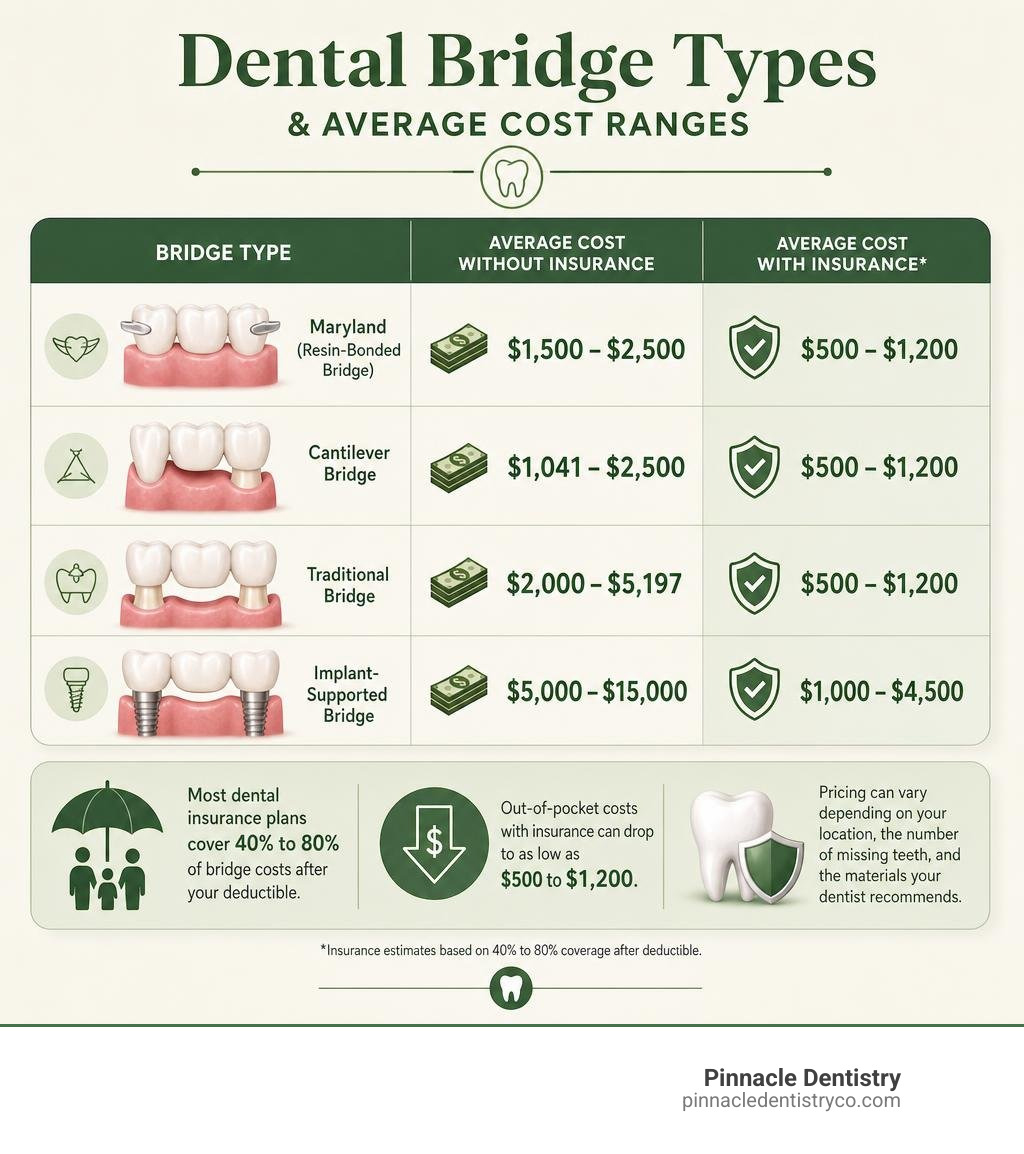
The average cost of a bridge for teeth varies quite a bit depending on the type of bridge, the materials used, and whether you have dental insurance. Here is a quick snapshot to answer the most common question right away:
| Bridge Type | Typical Cost Range (Without Insurance) |
|---|---|
| Maryland (Resin-Bonded) | $1,500 – $2,500 |
| Cantilever Bridge | $1,041 – $2,500 |
| Traditional Bridge | $2,000 – $5,197 |
| Implant-Supported Bridge | $5,000 – $15,000 |
- Most dental insurance plans cover 40% to 80% of bridge costs after your deductible
- Out-of-pocket costs with insurance can drop to as low as $500 to $1,200
- Pricing can vary depending on several factors, including your location, the number of missing teeth, and the materials your dentist recommends
More than 120 million Americans are missing at least one tooth. A dental bridge is one of the most common ways to fill that gap, restore your bite, and keep surrounding teeth from shifting out of place. But before you commit to treatment, it helps to understand what you are actually paying for and why costs differ so much from one patient to the next.
I’m Dr. Thomas Jennings, DDS, MAGD, founder of Pinnacle Dentistry in Colorado Springs, CO, and I’ve spent over 35 years helping patients navigate decisions around restorative care, including understanding the average cost of a bridge for teeth so they can plan with confidence. In the sections below, I’ll walk you through everything you need to know to make an informed choice for your smile and your budget.
Must-know average cost of bridge for teeth terms:
Introduction
Missing a tooth is not just a “smile problem.” It can affect how you chew, how clearly you speak, how your bite fits together, and how confident you feel in photos, meetings, and everyday conversations.
A dental bridge is designed to do exactly what the name suggests: bridge the space left by one or more missing teeth. It is a fixed restoration, meaning it stays in your mouth rather than coming in and out like a removable appliance.
The challenge for many patients is not understanding whether they want the gap filled. Most do. The harder part is understanding the investment: what is included, why one bridge may cost more than another, and how insurance or financing may affect the final number.
At our Colorado Springs, CO office, we believe the right treatment plan should make sense clinically and financially. A bridge is not a one-size-fits-all purchase, and thankfully, neither is the conversation around paying for it.
What is a Dental Bridge and How Does It Work?
A dental bridge is a custom-made restoration that replaces one or more missing teeth. The replacement tooth is called a pontic, and it is held in place by neighboring support teeth, dental crowns, or dental implants.
In a traditional bridge, the teeth on either side of the gap are prepared for crowns. These crowns act like anchors, holding the replacement tooth between them. Once the bridge is cemented in place, it functions as a single connected restoration.
Think of it like a small architectural bridge, except instead of cars crossing a river, it helps tacos cross your mouth. A noble job.
A bridge can help:
- Restore your ability to chew more comfortably
- Improve the appearance of your smile
- Keep nearby teeth from drifting into the empty space
- Support clearer speech
- Maintain a more balanced bite
- Reduce uneven stress on remaining teeth
If you are exploring tooth replacement options, our restorative dentistry services are designed to help restore function, comfort, and appearance in a personalized way.
A bridge may also be referred to as a fixed bridge because it is cemented or otherwise secured in the mouth and is not removed for daily cleaning.
Types of Dental Bridges
There are four main types of dental bridges. The best option depends on where the missing tooth is located, the health of nearby teeth, your bite, your aesthetic goals, and your long-term oral health needs.
Traditional Dental Bridge
A traditional bridge is the most common type. It uses crowns on the natural teeth on both sides of the gap, with a replacement tooth connected between them.
This option is often recommended when:
- You have one missing tooth or a small span of missing teeth
- The neighboring teeth are healthy enough to support crowns
- You want a fixed, non-removable solution
- The bite forces in the area are moderate to strong
The tradeoff is that the neighboring teeth must be reshaped for crowns, even if they are otherwise healthy. In many cases, this is reasonable. In others, a more conservative option may be worth discussing.
Cantilever Bridge
A cantilever bridge is supported by only one neighboring tooth rather than two. This type is less common and is usually reserved for areas where bite pressure is lighter.
Because it relies on one anchor tooth, careful case selection matters. A cantilever bridge may not be ideal for molars or areas that handle heavy chewing forces.
Maryland Bridge
A Maryland bridge, also called a resin-bonded bridge, uses a framework or “wings” bonded to the back of neighboring teeth. It often requires less alteration of adjacent teeth than a traditional bridge.
This can make it appealing for front teeth, where aesthetics matter and chewing pressure is typically lighter. However, Maryland bridges may not be as strong as traditional or implant-supported bridges, and the bonding can loosen over time.
Implant-Supported Bridge
An implant-supported bridge is held by dental implants rather than natural teeth. This option is often used when several teeth are missing in a row or when the neighboring teeth are not good candidates for crowns.
Implant-supported bridges can be strong, stable, and long-lasting. They also avoid shaving down nearby healthy teeth. However, they require implant placement, healing time, and adequate bone support.
If your treatment plan includes crowns as part of a bridge, it may help to understand what a dental crown is and how it protects or supports a tooth.
Understanding the Average Cost of Bridge for Teeth
The average cost of bridge for teeth depends on more than the bridge itself. You are paying for diagnosis, planning, materials, tooth preparation, lab fabrication, fitting, adjustments, and the experience required to make the restoration feel natural.
That is why two patients can both need “a bridge” but receive very different estimates.
A dental bridge estimate may include:
- Comprehensive exam and diagnosis
- Dental X-rays or 3D imaging when needed
- Tooth preparation
- Temporary bridge
- Custom dental laboratory fabrication
- Final placement
- Bite adjustment
- Follow-up care
Sometimes additional treatment is needed before a bridge can be placed. For example, a supporting tooth may need a filling, crown buildup, root canal therapy, periodontal care, or extraction of a failing tooth. These steps affect total cost but are important for the long-term success of the restoration.
Here is a simple planning table to understand why bridge costs vary:
| Cost Category | Why It Matters |
|---|---|
| Bridge type | Traditional, Maryland, cantilever, and implant-supported bridges require different materials and procedures |
| Number of teeth replaced | More missing teeth usually means a larger restoration and more complex design |
| Materials | Porcelain, zirconia, porcelain-fused-to-metal, and other materials vary in strength and appearance |
| Supporting teeth | Weak, decayed, or heavily filled teeth may need additional treatment first |
| Dental laboratory work | Custom shade, shape, bite fit, and material selection influence fabrication |
| Insurance benefits | Deductibles, waiting periods, annual maximums, and plan rules can change out-of-pocket cost |
The best way to calculate your actual expense is to have an exam and a personalized treatment plan. An online range can be helpful, but your mouth is not an online shopping cart. It has history, bite forces, bone levels, gum health, and sometimes a surprising fondness for popcorn kernels.
Factors Influencing the Average Cost of Bridge for Teeth
Several factors influence the final cost of a dental bridge in Colorado Springs, CO and the surrounding El Paso County, CO area.
1. Number of Missing Teeth
A bridge replacing one tooth is usually simpler than a bridge replacing multiple teeth. More missing teeth can mean more pontics, more materials, and more planning to ensure the restoration can handle chewing forces.
2. Type of Bridge
A Maryland bridge is often more conservative and may involve less tooth preparation. A traditional bridge usually requires crowns on supporting teeth. An implant-supported bridge involves implant placement and a longer treatment timeline.
Each option has a different purpose. The lowest upfront cost is not always the best long-term value, especially if the bridge is in a high-pressure chewing area.
3. Materials Used
Bridge materials may include porcelain, zirconia, porcelain fused to metal, gold alloy, or other dental ceramics and metals. Front teeth often require highly aesthetic materials that mimic natural enamel. Back teeth need materials that can handle stronger biting forces.
Zirconia and high-quality ceramics can be beautiful and durable, but material selection should be based on your bite, tooth position, grinding habits, and goals.
4. Health of Supporting Teeth
A bridge is only as strong as its foundation. If the supporting teeth have decay, cracks, gum disease, or old failing restorations, those issues need to be addressed first.
This is where careful diagnosis matters. Placing a bridge on weak support teeth is like building a deck on wobbly posts. It may look fine at first, but it is not the kind of surprise anyone wants later.
5. Location in the Mouth
Front teeth and back teeth have different needs. Front teeth are highly visible and may require more detailed cosmetic work. Back teeth must withstand heavier chewing pressure.
6. Bite and Grinding Habits
If you clench or grind your teeth, your bridge may need stronger materials or a protective nightguard. Grinding can shorten the lifespan of bridges, crowns, and natural teeth.
7. Additional Procedures
Extractions, gum treatment, bone grafting, root canals, or implant surgery can change the overall treatment cost and timeline. These are not “extras” in the luxury sense. They are often necessary steps to make the final result healthier and more predictable.
If you are unsure whether a bridge is the right next step, our guide on when to consider a dental bridge can help you understand common signs and situations.
Average Cost of Bridge for Teeth With vs. Without Insurance
Dental insurance can make a significant difference, but coverage varies widely by plan.
In many plans, dental bridges are considered a major restorative procedure. That means insurance may cover a percentage of the fee after you meet your deductible, but it may also be subject to:
- Annual maximums
- Waiting periods
- Missing tooth clauses
- Frequency limitations
- Network rules
- Pre-authorization requirements
A missing tooth clause is especially important. Some plans may not cover replacement of a tooth that was already missing before your coverage began. This is one of those fine-print details that can make people suddenly passionate about reading benefits documents.
If you have insurance, we recommend asking for a pre-treatment estimate before moving forward. This gives you a clearer picture of what your plan is likely to pay and what your out-of-pocket portion may be.
For general insurance context, national plan information from Humana’s dental bridge cost guide and Delta Dental’s treatment cost overview explains how bridge type, plan design, deductibles, and annual maximums can influence patient costs.
At Pinnacle Dentistry, we help patients understand their dental benefits so there are fewer surprises. If you do not currently have coverage, our article on what to do without dental benefits explains practical ways to plan for care.
Comparing Dental Bridges vs. Dental Implants
Dental bridges and dental implants both replace missing teeth, but they do it differently.
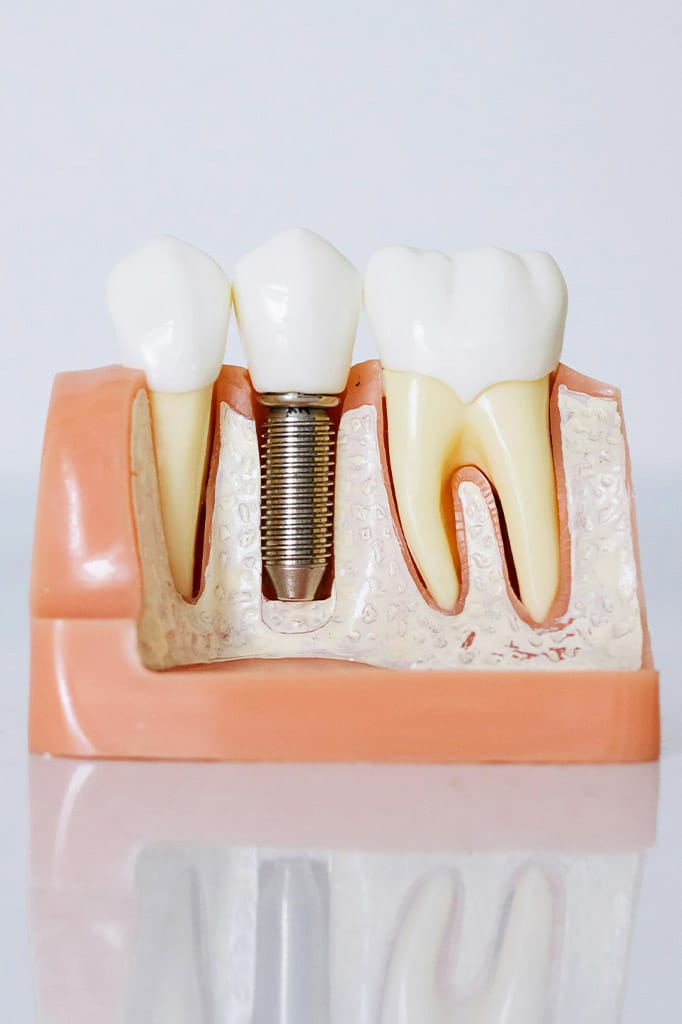
A dental bridge fills the gap by attaching a replacement tooth to nearby teeth or implants. A dental implant replaces the tooth root with a small post placed in the jawbone, then supports a crown, bridge, or denture.
Neither option is automatically “better” for every patient. The right choice depends on your oral health, bone support, timeline, budget, and personal preferences.
Dental bridges may be a good fit when:
- You want a fixed tooth replacement without implant surgery
- Adjacent teeth already need crowns
- You need a faster treatment timeline
- Bone support is limited and you do not want grafting
- You are replacing one to three teeth in a row
Dental implants may be a good fit when:
- You want to avoid altering healthy neighboring teeth
- You have enough jawbone to support implants
- You want a long-term solution that helps preserve bone
- You are comfortable with a surgical procedure
- You are replacing one tooth or multiple teeth strategically
One major difference is jawbone preservation. Natural tooth roots stimulate the jawbone. When a tooth is missing, the bone in that area can shrink over time. Dental implants provide root-like stimulation; traditional bridges do not.
That does not mean bridges are bad. It means they solve the visible and functional gap but do not replace the root. For many patients, a bridge is still an excellent solution.
If you are comparing restorative options, our guide to choosing the right long-term fix walks through crowns, bridges, and implants in more detail. You can also learn what is involved in dental implant surgery if implants are part of your treatment discussion.
Longevity and Maintenance
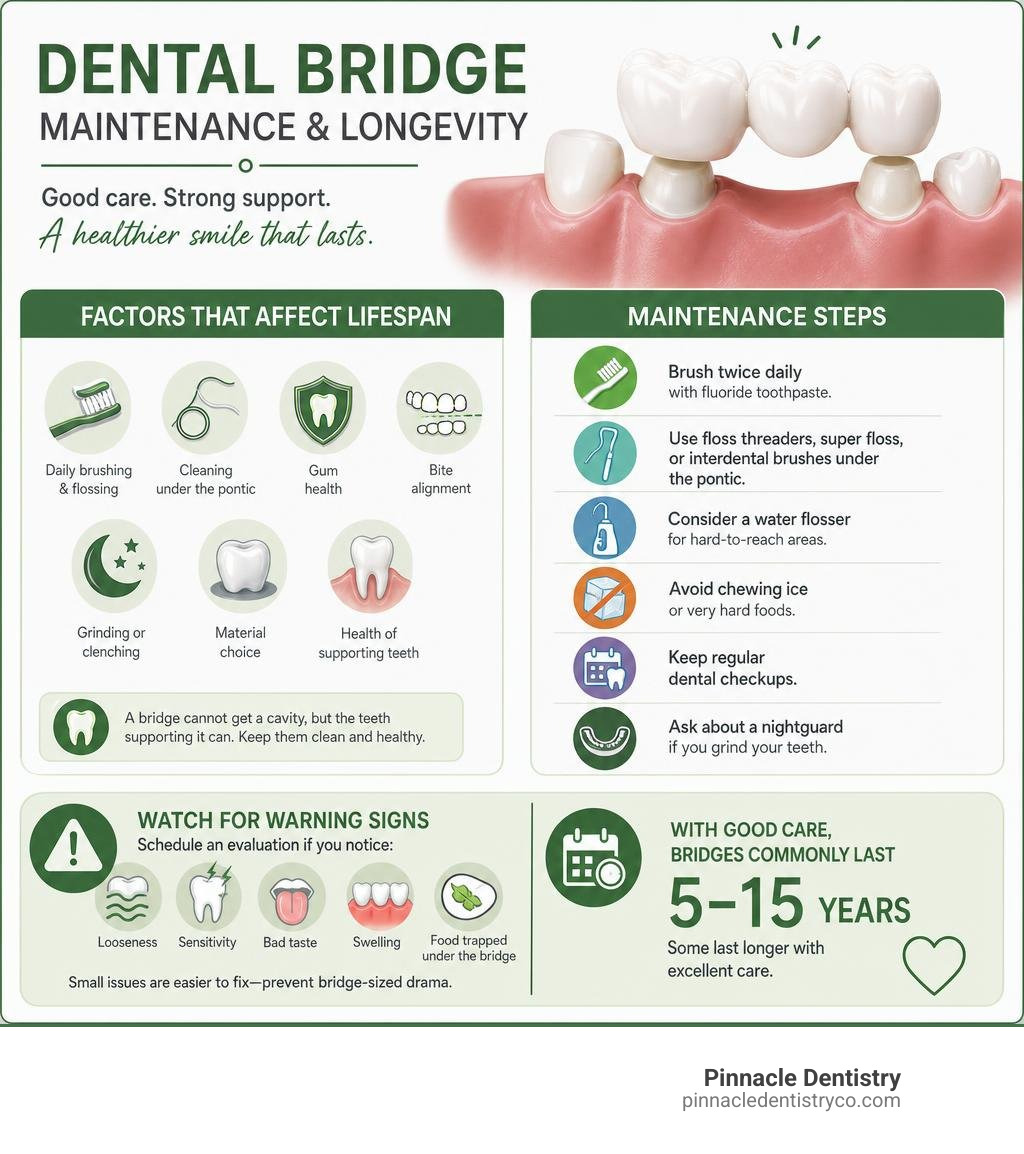
Dental bridges commonly last 5 to 15 years, and some last longer with excellent care. Implant-supported restorations may last longer, though the crown or bridge attached to implants can still require maintenance or replacement over time.
Several factors affect bridge lifespan:
- Daily brushing and flossing
- Cleaning under the pontic
- Regular professional cleanings
- Gum health
- Bite alignment
- Grinding or clenching
- Material choice
- Health of supporting teeth
A bridge cannot get a cavity, but the teeth supporting it can. That is why cleaning around and under the bridge is essential.
To maintain a bridge, we usually recommend:
- Brush twice daily with fluoride toothpaste
- Use floss threaders, super floss, or interdental brushes under the pontic
- Consider a water flosser for hard-to-reach areas
- Avoid chewing ice or very hard foods
- Keep regular dental checkups
- Ask about a nightguard if you grind your teeth
If you notice looseness, sensitivity, bad taste, swelling, or food getting trapped under the bridge, schedule an evaluation. Small issues are much easier to fix before they become bridge-sized drama.
For patients weighing long-term replacement options, our article on everything you need to know about dental implants explains how implants function and why they are often considered for long-term tooth replacement.
Affordable Alternatives to Traditional Bridges
A traditional bridge is not the only way to replace missing teeth. Depending on your goals and oral health, alternatives may include partial dentures, dental implants, implant-supported bridges, or other restorative solutions.
Removable Partial Dentures
Partial dentures are removable appliances that replace one or more missing teeth. They often have a lower upfront cost than fixed bridges or implants and can be a practical solution when multiple teeth are missing.
Benefits may include:
- Lower initial investment
- Replacement of multiple missing teeth
- Non-surgical treatment
- Easier repair or adjustment in some cases
Tradeoffs may include:
- Less stability than a fixed bridge
- Daily removal and cleaning
- Possible adjustment period for speaking and chewing
- Clasps or appliance components that may be visible
If you are considering this option, our guide on what to expect with partial dentures can help you understand the process. We also explain budgeting considerations in our article on partial denture costs and insurance.
Dental Implants
Implants often have a higher upfront investment than traditional bridges, but they may offer long-term value because they do not rely on neighboring teeth and can help preserve jawbone.
No Treatment
Technically, doing nothing is an option. Clinically, it is usually not the one we recommend.
Leaving a missing tooth untreated can lead to:
- Shifting teeth
- Bite changes
- Food trapping
- Increased wear on remaining teeth
- Jawbone loss in the missing tooth area
- Difficulty chewing
- Cosmetic concerns
The sooner you evaluate your options, the more choices you typically have.
Frequently Asked Questions about Dental Bridges
How much does a 3-unit dental bridge cost without insurance?
A 3-unit dental bridge usually replaces one missing tooth using two neighboring teeth as anchors. Without insurance, the cost can range from a few thousand dollars to higher amounts depending on the materials, tooth location, lab work, and whether supporting teeth need additional treatment. The best estimate comes from an exam, X-rays, and a customized treatment plan.
Does dental insurance cover the cost of a dental bridge?
Many dental insurance plans cover bridges as a major restorative service, often after a deductible and subject to annual maximums. Coverage may vary based on whether the bridge is considered medically necessary, whether you have met waiting periods, and whether your plan has a missing tooth clause. A pre-treatment estimate can help clarify your expected out-of-pocket cost.
How long does a dental bridge typically last?
Most dental bridges last 5 to 15 years, though some last longer with excellent home care and regular dental visits. Longevity depends on the bridge type, materials, bite forces, oral hygiene, gum health, and the strength of the supporting teeth. If you grind or clench, a nightguard may help protect your bridge.
Is getting a dental bridge painful?
Getting a dental bridge is usually very manageable. Local anesthesia is used when teeth are prepared, so you should not feel pain during the procedure. Some patients experience temporary soreness, gum tenderness, or sensitivity after treatment, especially while wearing a temporary bridge. Discomfort typically improves within a few days.
What is the cheapest type of dental bridge available?
A Maryland bridge is often one of the more affordable and conservative options because it may require less tooth preparation and fewer materials than a traditional bridge. However, it is not right for every situation. It is commonly considered for front teeth or lower-bite-force areas rather than heavy chewing zones.
How does the cost of a dental bridge compare to an implant?
A traditional dental bridge usually has a lower upfront cost than a dental implant, and the treatment timeline is often shorter. Dental implants may cost more initially because they involve surgery, healing time, and implant components, but they can offer long-term value by preserving bone and avoiding alteration of adjacent teeth.
Can you replace a front tooth with a Maryland bridge?
Yes, a Maryland bridge can sometimes replace a front tooth, especially when the neighboring teeth are healthy and the bite is favorable. Because it bonds to the back of adjacent teeth, it can be more conservative than a traditional bridge. However, the framework and bonding strength must be carefully evaluated.
What happens if you don’t replace a missing tooth?
If a missing tooth is not replaced, nearby teeth may shift into the empty space. This can change your bite, create food traps, increase wear on other teeth, and make future treatment more complicated. Bone loss can also occur in the area where the tooth root is missing.
Are there financing options available for dental bridges?
Many dental offices offer payment plans, phased treatment planning, dental savings options, or third-party financing to help make bridge treatment more manageable. If you have dental benefits, timing treatment around your annual maximum may also help. We recommend discussing financial options before treatment begins so you can plan confidently.
How do you clean and maintain a dental bridge?
Brush your bridge and surrounding teeth twice daily, and clean underneath the replacement tooth using floss threaders, super floss, interdental brushes, or a water flosser. Keep regular professional cleanings and exams. Avoid chewing ice, hard candies, or sticky foods that could damage or loosen the bridge.
Conclusion
The average cost of bridge for teeth is helpful as a starting point, but it is not the whole story. The right bridge for you depends on your oral health, the number of missing teeth, the condition of neighboring teeth, your bite, your insurance benefits, and your long-term goals.
A dental bridge can be a practical, attractive, and reliable way to restore your smile. For some patients, a traditional bridge is the right answer. For others, a Maryland bridge, partial denture, or implant-supported option may make more sense.
At Pinnacle Dentistry in Colorado Springs, CO, we provide personalized restorative care from certified MAGD dentists, a distinction earned by fewer than 2% of dentists. If you are ready to compare your options and protect your smile for the long run, contact us to schedule a consultation for dental implants or bridge treatment today.