


If you grind teeth at night, a dental visit can help identify tooth wear, jaw soreness, and other concerns. Teeth grinding, often called bruxism, means pressing or rubbing the teeth together without intending to. It can happen during sleep and may leave the jaw feeling tired in the morning.
I am Dr. Thomas Jennings, DDS, MAGD, owner of Pinnacle Dentistry, and I have over 35 years of experience as a family dentist. This article explains why people grind teeth at night and how dental care can protect their smiles. It also outlines when symptoms deserve an appointment and when urgent concerns need prompt care.
Why People Grind Teeth at Night
Bruxism is believed to have multiple causes, including stress, anxiety, caffeine, alcohol, and smoking, though it is not fully understood. NIDCR guidance explains that it is more common in children, although people of every age can experience it. A dentist can look for tooth wear and tenderness in the jaw muscles, then discuss appropriate care.
MedlinePlus information describes bruxism as grinding the teeth and notes that daily stress may trigger it for many people. The same source explains that mouth guards or splints are often used for grinding, clenching, and TMJ disorders. TMJ refers to the jaw joints that help the mouth open and close.
Grinding may be noticed during routine care, even when patients have not heard it happen. Small changes in tooth edges, fillings, or jaw comfort can give the dentist useful clues. Bringing up these changes early allows for a clearer conversation about prevention and protection.
Stress, caffeine, alcohol, and disrupted sleep may contribute to clenching for some people. A calmer evening routine and less caffeine and alcohol later in the day are reasonable general steps. Persistent symptoms should be discussed with a dentist rather than managed with home treatment instructions.
How Grinding Can Affect Teeth and Jaw Comfort
Repeated grinding can flatten or chip teeth and may make existing dental work more vulnerable. As enamel wears down, teeth can become more sensitive to temperature and pressure. A dentist can help determine whether these changes are related to grinding or another dental concern.

Tooth sensitivity can have several causes, so it deserves a careful examination rather than guesswork. Our article on sensitivity after dental work explains why sensitivity can occur after dental treatment or enamel changes. Tell your dentist when discomfort began and what seems to make it worse.
Grinding can also strain the jaw joints and surrounding muscles. These joints, called TMJ, guide speaking, chewing, and opening the mouth. Ongoing jaw soreness, clicking, catching, or limited opening should be evaluated during a dental visit.
Jaw symptoms can overlap with other dental concerns, so a personal assessment matters. Our guide to TMJ warning signs describes common reasons patients seek dental care for jaw discomfort. Sudden facial swelling, fever, or dental trauma requires calling the office right away, or visiting the ER when the office is closed.
Dentist-Guided Care for Nighttime Grinding
A dentist can review your symptoms, examine your teeth, and discuss options based on your needs. The goal is to protect the teeth and understand what may be contributing to clenching. Care plans vary because each patient’s mouth, symptoms, and dental history are different.
Protecting Teeth From Grinding
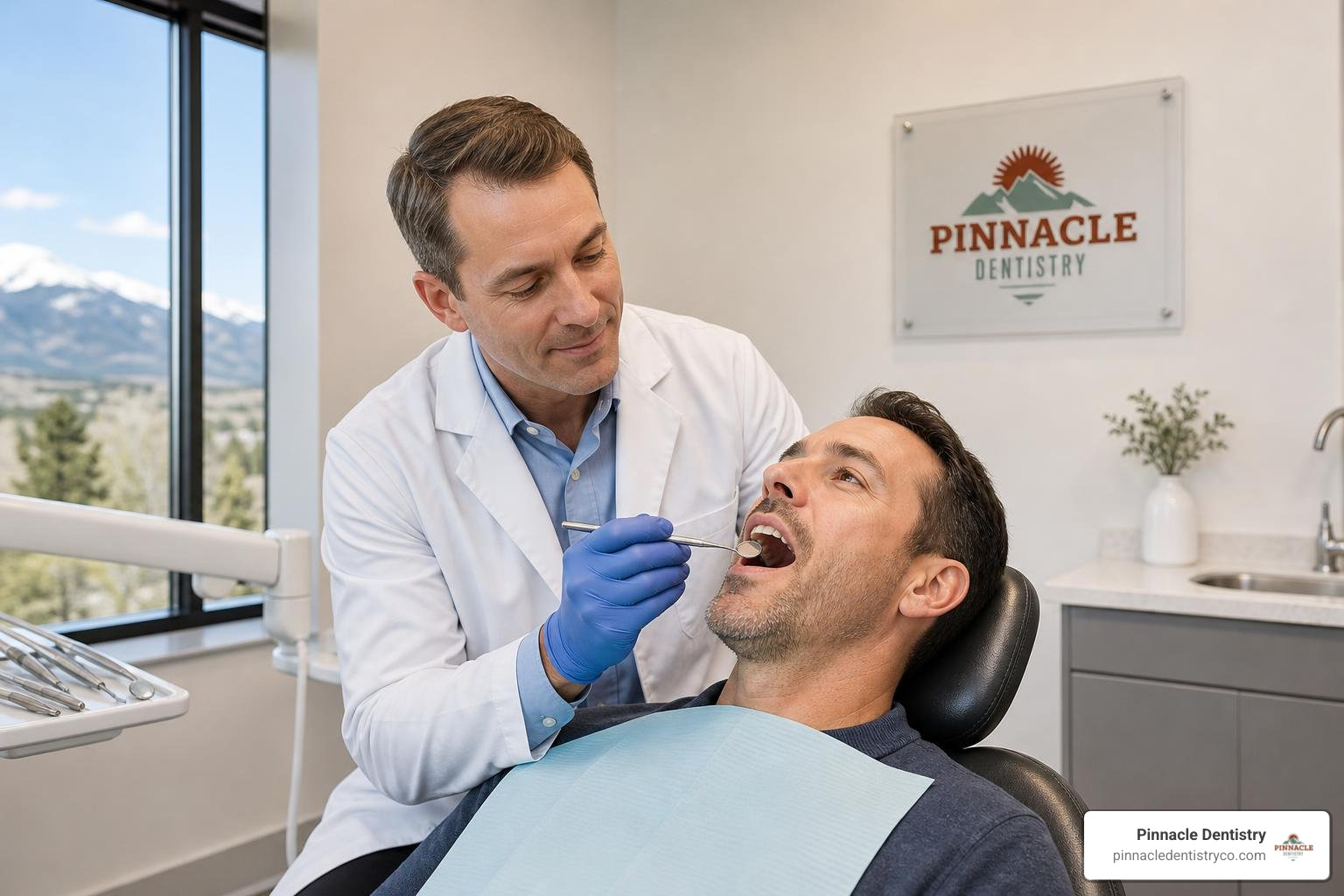
If a night guard is appropriate, your dentist may recommend one after reviewing your symptoms and tooth wear. At our TMJ therapy services visits, the dentist can discuss jaw comfort and ways to protect teeth. Before using a store-bought guard, ask your dentist whether it is appropriate, since fit can affect comfort and how the teeth meet.
When a dentist recommends a night guard, its purpose is to reduce grinding forces on the teeth, not to eliminate clenching. Mention any tightness, rubbing, looseness, or changes in how the teeth meet at a follow-up visit. The dentist can decide whether the guard needs adjustment or further review.
Daily Habits and Sleep Comfort
Some people notice more clenching during stressful periods or after evening caffeine and alcohol. A calm routine before bed may support better sleep habits. These suggestions are general and should not replace dental care for symptoms.
Avoid treating persistent pain with a home routine. Instead, note when symptoms occur and share those details at your appointment. This helps the dentist understand the pattern without relying on a one-size-fits-all approach.
Sleep and Breathing Considerations
Grinding can leave uneven wear, and a dentist can explain any findings that may be relevant. Routine general dentistry care supports ongoing checks for changes that patients may not notice.
Breathing problems during sleep can sometimes be related to nighttime clenching. If your dentist has concerns, they may suggest talking with your physician. This coordinated conversation helps patients decide what next steps are appropriate.
Children’s Teeth Grinding and Growing Smiles
Children may grind their teeth while they are growing, and the pattern may change over time. NIDCR notes that bruxism is more common in children, while also affecting people of all ages. A dentist can monitor the teeth and jaw as part of regular care.
Parents should mention nighttime sounds, tooth wear, jaw complaints, or changes in eating habits. These details help the dental team decide whether the child needs closer observation. Avoid assuming that every grinding pattern has the same cause.
What a Dentist May Check
A dentist may look for flattened edges, chips, tenderness, and changes in how the teeth meet. They can also ask about sleep, stress, and daytime clenching habits in age-appropriate language. This conversation helps families understand what should be watched between visits.
Children with loud snoring, frequent mouth breathing, restless sleep, or daytime concerns should be discussed with their dentist. The dentist may recommend that the family also speak with the child’s physician. That approach keeps dental and overall health concerns appropriately connected.
Supporting Regular Dental Visits
Regular checkups give families a place to raise concerns before tooth wear becomes more noticeable. Our children’s dental care page explains how family-focused visits support growing smiles. The dental team can explain findings in plain language and outline appropriate follow-up.
When to See a Dentist About Teeth Grinding
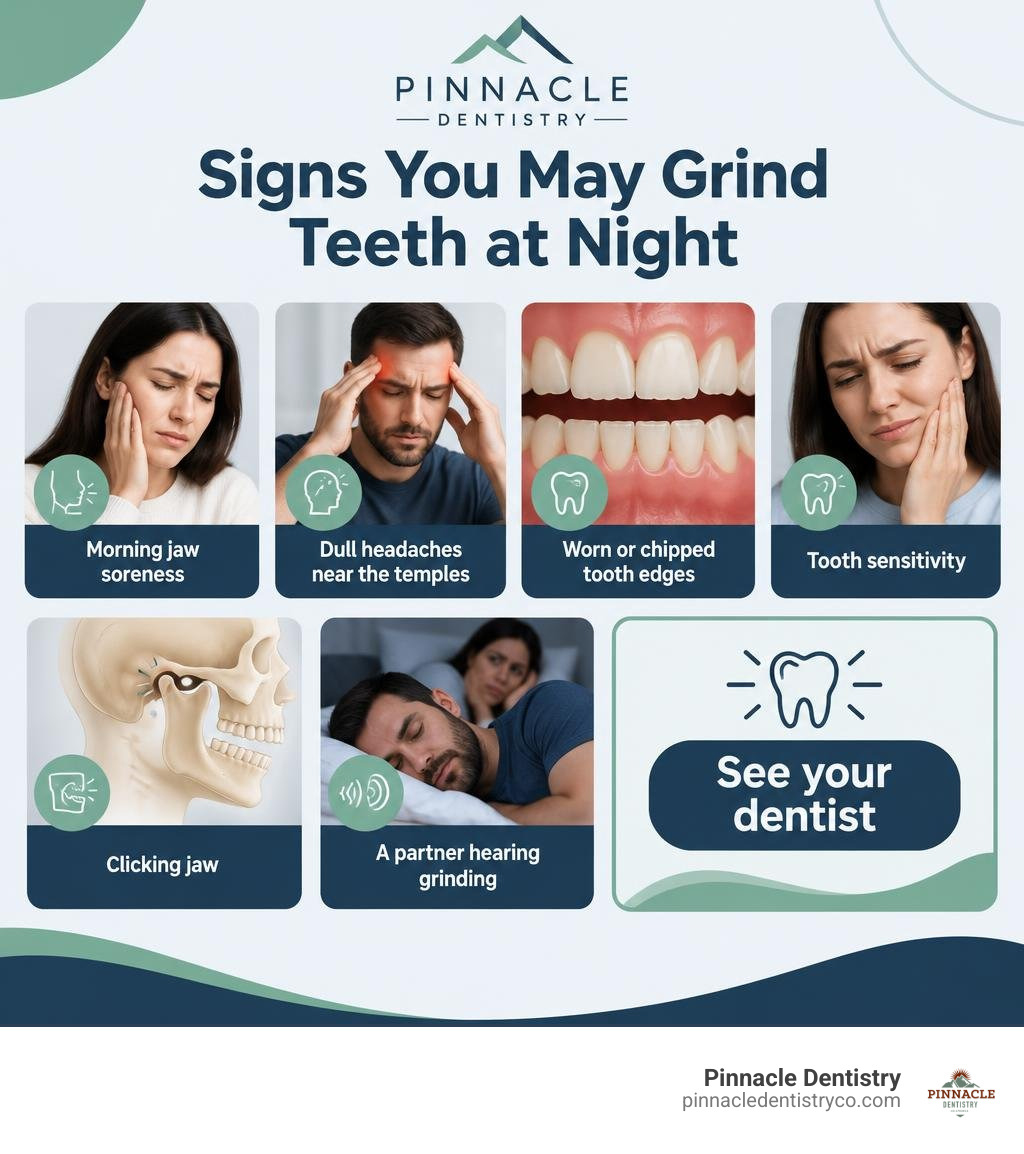
Schedule a dental visit when grinding seems frequent or leaves you with tooth sensitivity, jaw soreness, or morning headaches. An appointment is also appropriate when a partner hears persistent grinding or the teeth look chipped. Early evaluation helps the dentist document changes and discuss practical ways to protect the teeth.
During the visit, the dentist checks the teeth for flat spots, cracks, worn edges, and stressed dental work. They may gently check the jaw muscles and joints for tenderness or movement concerns. They also review how the upper and lower teeth meet when you close your mouth.
The dentist may compare areas of wear with older dental records when those records are available. This can help show whether a concern appears stable or is becoming more noticeable. Patients can then ask focused questions about comfort, protection, and recommended follow-up.
A careful examination also considers fillings, crowns, bridges, and other dental work. Grinding forces can affect restorations differently than natural teeth. Your dentist can explain which areas need monitoring and why they matter for your overall dental health.
Bring notes about when symptoms occur, whether stress seems connected, and whether sleep feels disrupted. Include changes in chewing comfort, cold sensitivity, or how the teeth come together. These details can make the conversation more useful and focused.
Your dentist may ask whether the jaw feels tired on waking or whether daytime clenching occurs. They may also ask about snoring, mouth breathing, or interrupted sleep. Clear answers help guide an appropriate dental conversation without guessing at the cause.
At Pinnacle Dentistry, patients receive general and family dental care in Colorado Springs, CO. The practice is led by Dr. Thomas Jennings, DDS, MAGD, and has been serving patients since 1989. Our office hours are Monday through Friday, 8 to 5.
Urgent swelling, fever, or dental trauma requires calling the office right away. If the office is closed, go to the ER for urgent care. For less urgent concerns, jaw discomfort guidance can help patients prepare questions for a dental visit.
A dental appointment also gives patients a chance to discuss concerns before they become distracting. Some patients delay visits because symptoms come and go. Even intermittent discomfort is worth mentioning when it affects sleep, eating, or daily comfort.
Bring a list of questions if you are unsure how to describe what you feel. Include details about recent dental work, broken restorations, or changes in your usual bite. This helps the dentist focus the examination on concerns that matter most to you.
If a tooth feels rough or looks shorter, avoid waiting for pain to become severe. Worn areas can expose more sensitive surfaces or affect how teeth contact each other. A prompt dental visit can clarify whether the change needs care or simple monitoring.
Jaw clicking without pain can still be worth mentioning at your next appointment. Clicking with pain, locking, or limited movement should be discussed sooner. The dental team can explain which symptoms need closer attention and which can be watched.
Patients sometimes assume grinding only matters when a partner hears loud sounds overnight. However, tooth wear and jaw tenderness may be present without obvious noise. Routine exams offer a practical opportunity to discuss these findings before they interfere with comfort.
Frequently Asked Questions About Teeth Grinding
How do I know if I grind my teeth at night?
You may notice morning jaw soreness, headaches, sensitive teeth, or changes in how your teeth meet. A sleeping partner may hear grinding sounds, but a dentist can check for signs you cannot see. Worn tooth edges or damaged dental work can also raise questions during routine care. Share any changes with your dentist, even when symptoms seem mild.
Can stress make me clench my teeth during sleep?
Stress can contribute to clenching for some people, especially when sleep is disrupted or routines change. Daily pressures may affect sleep quality and make jaw tension more noticeable. Tell your dentist about stressful periods and sleep concerns so they can consider the complete picture. They can discuss dental findings without assuming stress is the only cause.
Does teeth grinding damage my teeth?
Grinding can wear down tooth surfaces and may chip teeth or damage existing fillings and crowns. Changes often develop gradually, making them difficult for patients to notice alone. A dentist can evaluate changes and discuss ways to help protect vulnerable teeth. Regular visits also make it easier to monitor whether wear is continuing.
Can grinding cause headaches or jaw pain?
Grinding can strain the jaw muscles and joints, which may contribute to soreness or headaches. Symptoms may be worse in the morning or after periods of tension. Because these symptoms have different possible causes, schedule a dental visit for a personal evaluation. Your dentist can assess the mouth and explain what the findings may mean.
Should I buy a store-bought mouthguard?
Discuss a store-bought mouthguard with your dentist before using one for regular grinding. Some guards may feel bulky or change how the teeth meet. The dentist can explain whether it fits safely and whether another option better protects your teeth. Bring the guard to your appointment if you have already purchased one.
Do children outgrow grinding their teeth?
Some children stop grinding as their teeth and jaws develop, while others need monitoring. Grinding does not mean every child has the same dental concern. Mention grinding at regular dental visits so the dentist can watch for tooth wear or tenderness. Families should also share sleep changes or discomfort that concerns them.
Is grinding related to breathing problems during sleep?
Breathing problems during sleep can sometimes be related to nighttime clenching. Snoring, mouth breathing, restless sleep, or daytime tiredness are worth mentioning during the conversation. Talk with your dentist and physician if these concerns are present. They can help you decide which next steps fit your situation.
What does a dentist check for if I grind my teeth?
A dentist checks for worn edges, small cracks, sensitive areas, jaw muscle tenderness, and changes in the bite. They also examine fillings, crowns, and other dental work for possible stress. Questions about symptoms, sleep patterns, and daily habits provide helpful context. The dentist then explains the findings in plain language and discusses appropriate care.
Can a night guard stop me from grinding?
No. A guard cannot guarantee that grinding will end. When your dentist recommends one, it is intended to help protect your teeth from grinding forces. Let the dentist know about discomfort, looseness, or changes in how your teeth meet.
When should I see a dentist about grinding?
See a dentist when grinding is frequent, uncomfortable, or linked with tooth changes, headaches, or jaw symptoms. Schedule a visit when you notice chipping, sensitivity, changes in chewing, or persistent jaw fatigue. For swelling, fever, or dental trauma, call the office right away. If the office is closed, go to the ER.
A Dental Visit Can Help Protect Your Smile
Teeth grinding can affect comfort, tooth surfaces, and existing dental work over time. A dental visit gives you a clear place to discuss symptoms and ask questions. Your dentist can explain findings plainly and recommend care based on your mouth.
If you notice ongoing jaw soreness, tooth sensitivity, worn edges, or grinding sounds, schedule an appointment with Pinnacle Dentistry. Our team provides family-focused care in Colorado Springs, CO, and has been serving patients since 1989. Please contact our office to request an appointment and discuss your concerns.
Pinnacle Dentistry
Briargate Business Center
2430 Research Pkwy Suite 200
Colorado Springs, CO 80920