
What the Dental Crowns Procedure Actually Involves (And What to Expect)
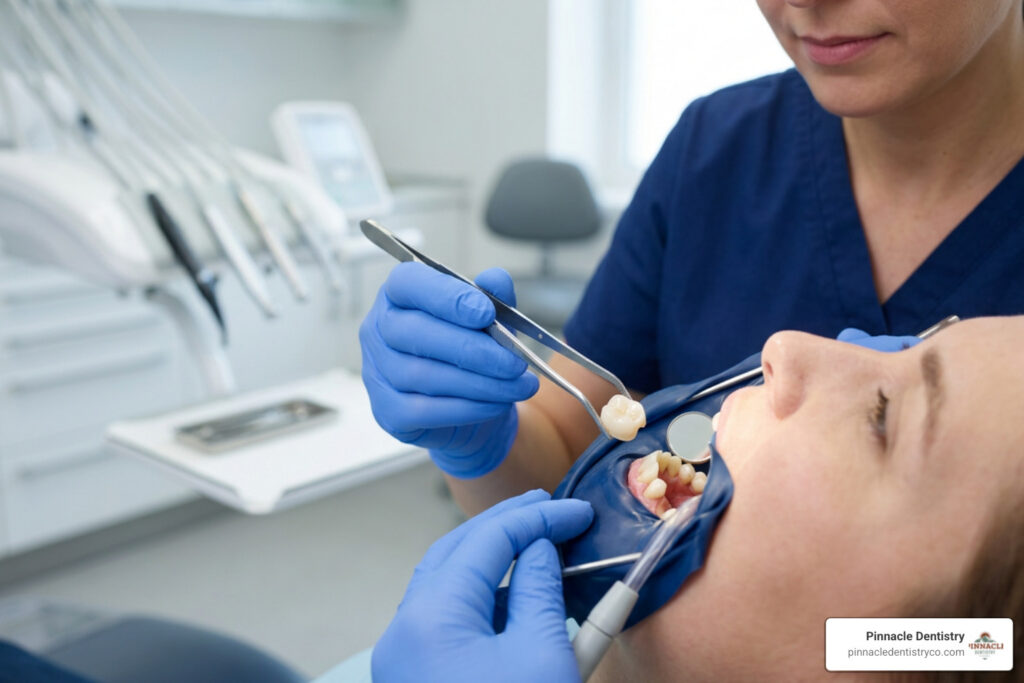
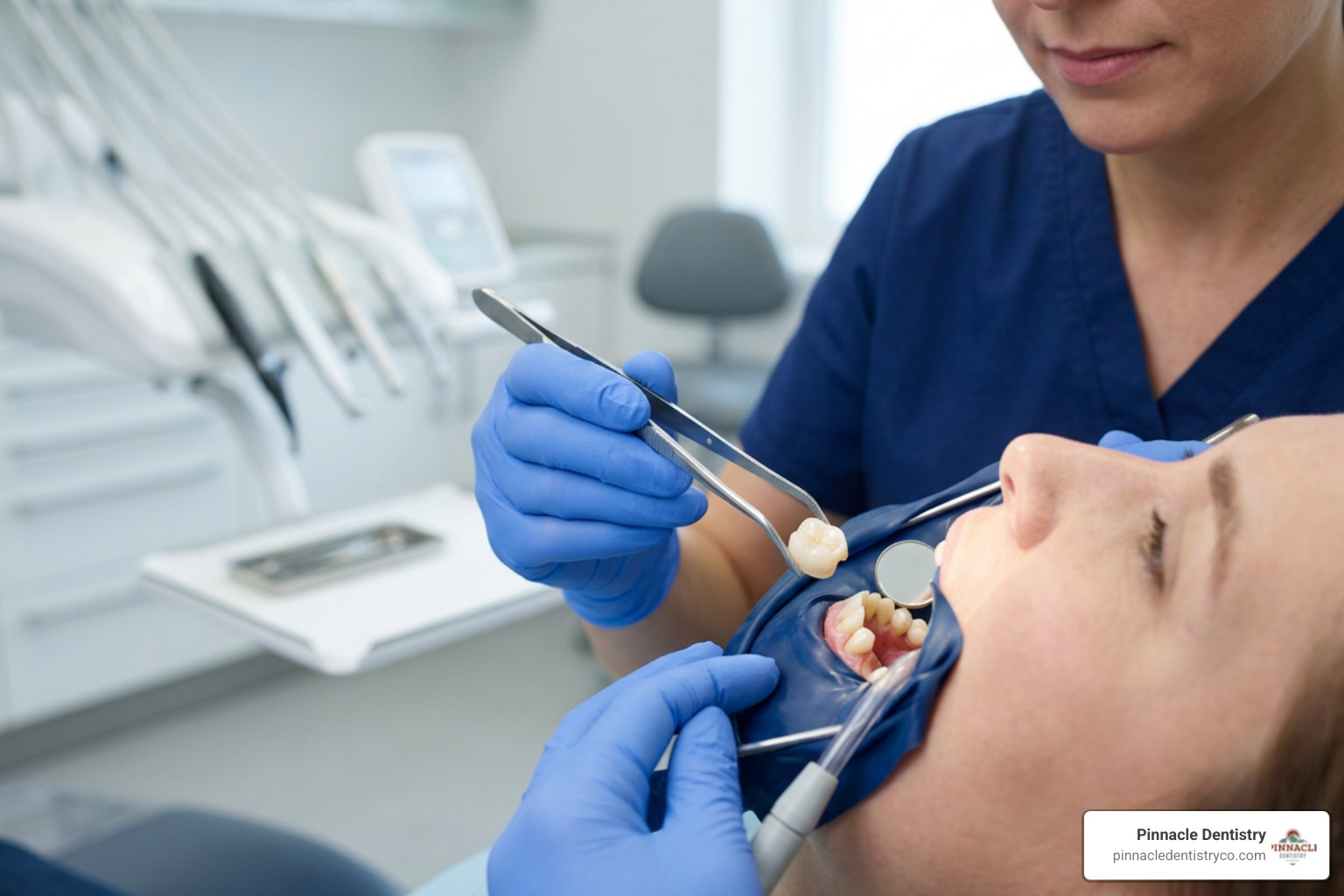
The dental crowns procedure is one of the most common restorative treatments in dentistry, and understanding it can make the whole experience far less stressful. Here is a quick overview so you know exactly what is involved:
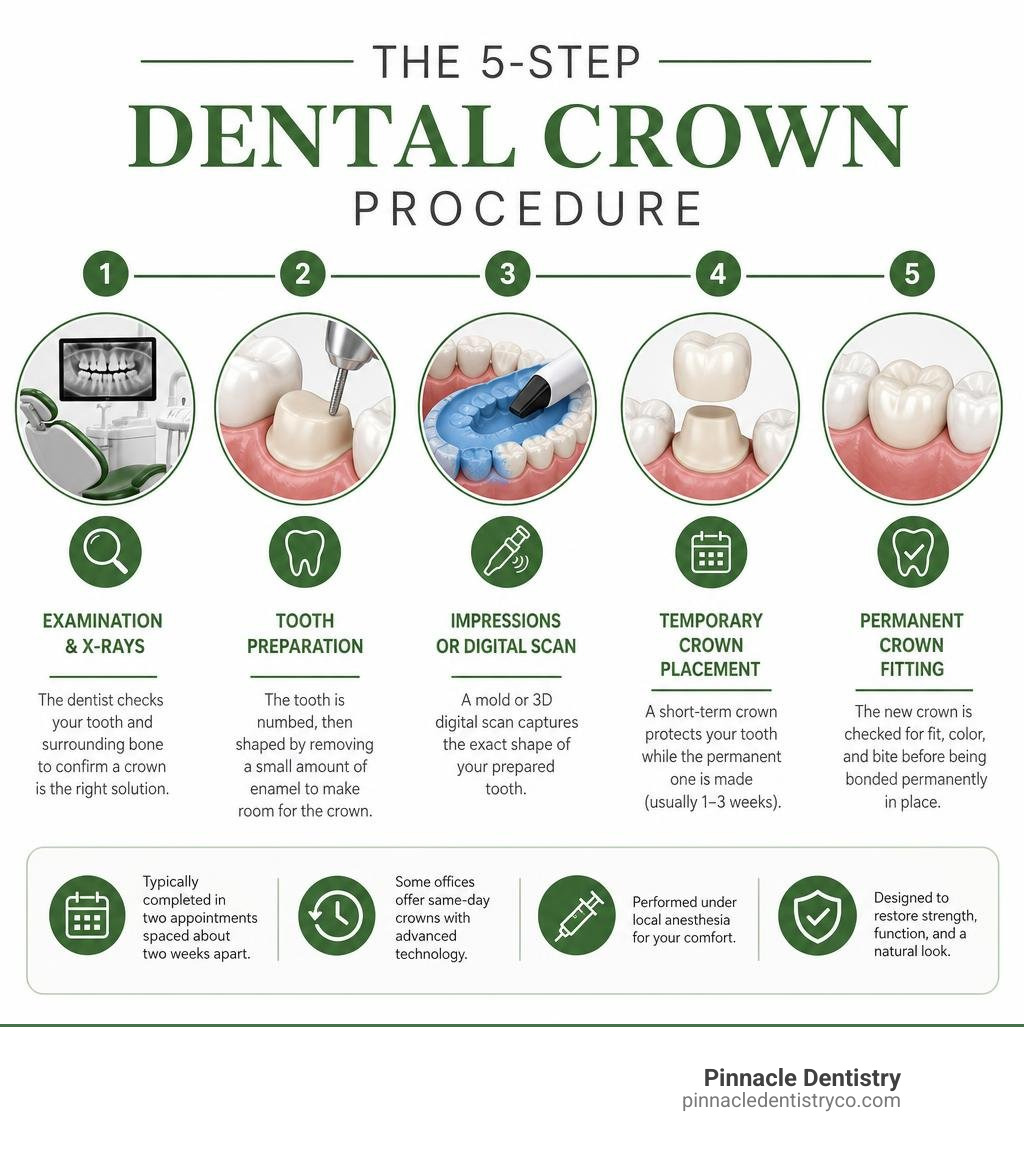
The dental crown procedure at a glance:
- Examination and X-rays – Your dentist checks the tooth and surrounding bone to confirm a crown is the right solution.
- Tooth preparation – The tooth is numbed with local anesthesia, then shaped by removing a small amount of enamel to make room for the crown.
- Impressions or digital scan – A mold or 3D digital scan captures the exact shape of your prepared tooth.
- Temporary crown placement – A short-term crown protects your tooth while the permanent one is made (usually 1-3 weeks).
- Permanent crown fitting – The new crown is checked for fit, color, and bite before being bonded permanently in place.
Most people need two appointments spaced about two weeks apart. Some offices, including Pinnacle Dentistry, offer same-day crowns using CAD/CAM technology, completing the entire process in one visit.
The procedure is performed under local anesthesia, so you should feel no pain during treatment. Some mild soreness or sensitivity in the days after is normal and manageable with over-the-counter pain relievers. Most patients return to normal activities the same day.
Pricing can vary depending on several factors, including the material used and your insurance coverage.
I am Dr. Thomas Jennings, founder of Pinnacle Dentistry and a Master of the Academy of General Dentistry (MAGD), with over 35 years of experience performing the dental crowns procedure for families right here in Colorado Springs, CO. In that time, I have seen how a well-placed crown can save a tooth that might otherwise be lost, and I want to walk you through every step so you feel fully prepared.
What is a Dental Crown and Why Do You Need One?
At its core, a dental crown is a custom-made, tooth-shaped “cap” that is placed over a compromised tooth. Think of it as a custom-fitted helmet designed to shield a vulnerable tooth from the daily forces of chewing, grinding, and biting. When a tooth is severely damaged, a simple filling is no longer enough because there is not enough healthy natural structure left to support it.
We often recommend a crown to address deep tooth decay, protect a cracked tooth, or restore structural integrity following root canal therapy. Additionally, crowns serve as the visible, functional tooth replacement that sits on top of dental implants. By encasing the visible portion of the tooth down to the gumline, a crown restores both function and form.
Understanding the various restorative treatments available can help you make an informed decision. You can read more about how these restorations protect your oral health in our guide on can dental crowns improve dental health. For a broader medical overview of how crowns function in restorative dentistry, you can also consult medical encyclopedias.
Restoring Damaged Teeth with a Dental Cap
When a tooth suffers from extensive decay, a fracture, or has a large existing filling that is failing, its structural integrity is compromised. Cracking a tooth, perhaps on an unexpected popcorn kernel, can leave the sensitive inner pulp vulnerable to bacteria.
A high-quality dental crown completely covers the remaining tooth structure. This protective seal prevents further cracking and blocks harmful bacteria from reaching the inner nerve chamber. Without this critical protection, a cracked or heavily decayed tooth will eventually split or break further, often leading to severe pain, abscesses, or the need for complete tooth extraction.
Cosmetic and Structural Benefits
While structural protection is our primary concern, we also recognize the incredible cosmetic benefits of a well-crafted crown. Modern restorative dentistry allows us to design crowns that blend seamlessly with your natural teeth. If you have a severely discolored, misshapen, or poorly aligned tooth, a crown can completely transform its appearance as part of a comprehensive smile makeover.
We carefully match the shade, translucency, and contours of your surrounding teeth so that your restoration looks completely natural. To see real-world examples of how high-quality restorations can rejuvenate a smile, take a look at our insights on smile makeovers and seeing is believing with high-quality crowns.
Comparing Different Types of Dental Crowns
Choosing the right material for your dental crowns procedure depends on several factors, including the location of the tooth, your aesthetic preferences, and whether you have a habit of clenching or grinding your teeth (bruxism). Modern dental materials have advanced significantly, offering options that balance durability with natural beauty.
To help you understand your choices, clinical guides provide an excellent overview of modern dental materials. Below is a detailed breakdown of the most common crown materials used in contemporary dentistry:
| Crown Material | Primary Benefits | Best Suited For | Esthetics | Longevity |
|---|---|---|---|---|
| All-Ceramic / Porcelain | Highly biocompatible, metal-free, matches natural tooth translucency | Front teeth (anterior) | Excellent | 10-15+ Years |
| Zirconia | Virtually indestructible, highly resistant to cracking, gentle on opposing teeth | Molars (posterior) | Very Good | 15-20+ Years |
| Porcelain-Fused-to-Metal (PFM) | Strong metal core with a natural-looking porcelain exterior | Posterior or anterior teeth | Good | 10-15 Years |
| Gold / Metal Alloys | Exceptional durability, requires minimal enamel removal, zero risk of chipping | Back molars | Low | 20-30+ Years |
| Composite Resin | Cost-effective, quick to fabricate | Temporary or transitional | Fair | 3-5 Years |
Metal and Gold Crowns
Gold and metal alloy crowns represent the gold standard of durability in restorative dentistry. Because metals are incredibly strong, they can withstand heavy, repetitive biting and chewing forces without chipping or wearing down.
Another clinical advantage of metal crowns is that they require minimal enamel removal during the preparation phase. This allows us to preserve more of your natural tooth structure. While their metallic color makes them less ideal for highly visible front teeth, they are an outstanding, long-lasting choice for out-of-sight back molars, especially for patients who grind their teeth heavily at night.
Porcelain and Ceramic Crowns
For teeth that show when you smile, talk, or laugh, all-porcelain or ceramic crowns are the premier option. These materials mimic the light-reflecting properties of natural enamel, making them virtually indistinguishable from your surrounding teeth.
They are entirely metal-free, which is highly beneficial for patients with metal allergies or sensitivities. Modern lithium disilicate and high-translucency zirconia crowns provide a beautiful, highly biocompatible restoration that keeps your gums healthy and your smile bright.
Pediatric Crown Options
In pediatric dentistry, protecting damaged primary (baby) teeth is crucial to preserving space for future permanent teeth. Because children’s primary teeth eventually fall out on their own, we use specialized, pre-fabricated materials for pediatric restorations.
A stainless steel crown is the most common choice for children. These crowns are highly durable, cost-effective, and can be placed in a single visit, protecting the tooth until it naturally sheds to make way for the permanent tooth.
The Step-by-Step Dental Crowns Procedure Explained
If you are preparing for a dental crowns procedure in Colorado Springs, CO, knowing what happens in the clinical chair can significantly ease any anxiety. The process is highly structured, precise, and designed to maximize your comfort at every stage.
How to Prepare for Your Dental Crowns Procedure
Before we begin shaping your tooth, we conduct a comprehensive examination. This includes taking digital X-rays to evaluate the health of the tooth’s root and the surrounding bone in El Paso County, CO. We will also thoroughly review your medical history and discuss your comfort preferences.
If you experience dental anxiety, we offer personalized sedation options to ensure you feel completely relaxed and secure during your appointment. You can learn more about our approach to patient comfort on our dedicated restorative dentistry service page.
Step-by-Step Clinical Walkthrough
For a traditional, lab-fabricated crown, the procedure is completed over two separate visits:
- Numbing and Isolation: We apply a local anesthetic to completely numb the target tooth and the surrounding gum tissue. We then isolate the area to keep it clean and dry.
- Tooth Reshaping: We carefully remove a precise amount of enamel (usually 1.5 to 2 mm) from the top and sides of the tooth. This creates space for the new crown to sit flush with your natural bite. If the tooth is heavily decayed or broken, we perform a “core build-up” using a durable filling material to rebuild the tooth’s structure so it can securely support the crown.
- Taking Impressions: Once the tooth is shaped, we capture its exact dimensions. We use advanced digital intraoral scanners to create a highly accurate 3D model of your mouth, eliminating the need for messy, uncomfortable physical putty.
- Temporary Crown Placement: While a professional dental laboratory fabricates your custom permanent crown, we place a temporary crown made of acrylic or composite resin over your prepared tooth. This is secured with temporary cement to protect the tooth and maintain your bite.
What to Expect After Your Dental Crowns Procedure
Your second appointment takes place about two weeks later, once your custom crown arrives from the laboratory. During this visit, we remove the temporary crown and thoroughly clean the prepared tooth.
We then perform a “try-in” of your permanent crown. We carefully verify the marginal fit, how it contacts the adjacent teeth, and its overall aesthetics. We will also use specialized marking paper to check your bite alignment. Once we are completely satisfied with the fit and appearance, we use a high-strength dental adhesive or cement to permanently bond the crown in place.
You may experience mild temperature sensitivity or slight gum soreness for a few days following placement, which is completely normal and resolves quickly.
Same-Day CEREC Crowns vs. Traditional Multi-Visit Crowns
For busy professionals and families living in Briargate, CO and the surrounding Colorado Springs, CO area, taking time off for multiple dental appointments can be a challenge. Fortunately, modern dental technology offers a highly convenient alternative: same-day CEREC crowns.
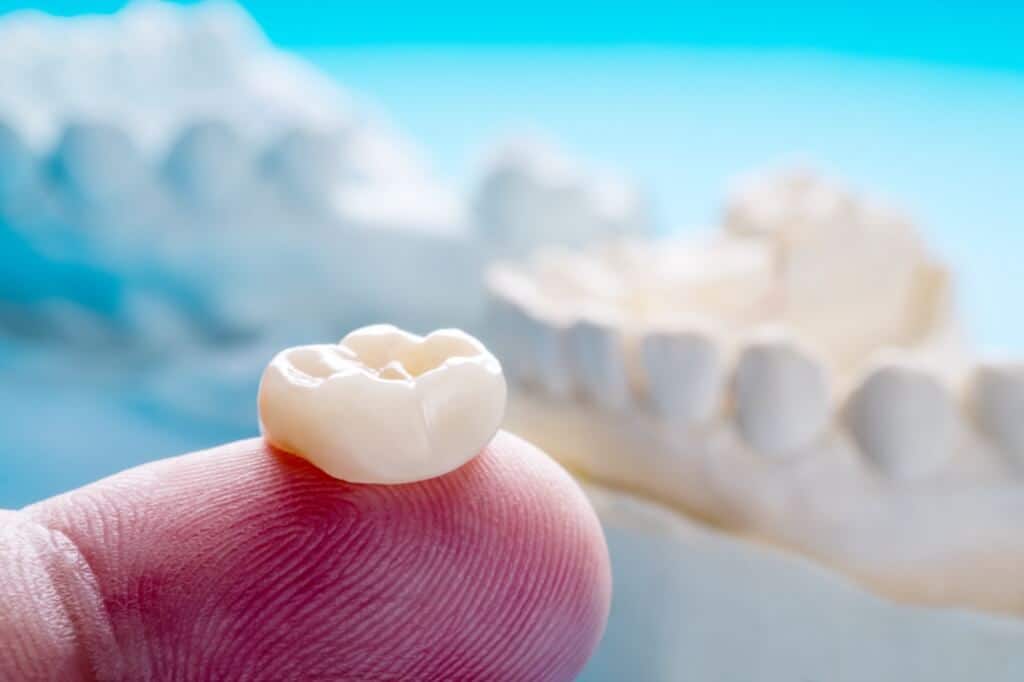
Using state-of-the-art CAD/CAM (Computer-Aided Design and Computer-Aided Manufacturing) technology, we can design, fabricate, and place your permanent ceramic crown in a single visit lasting about two hours.
Instead of wearing a temporary crown for weeks, we capture a digital impression of your prepared tooth, design the restoration on a computer, and mill the crown right in our office from a solid block of high-strength ceramic or zirconia.
Both methods yield highly durable, beautiful results, though traditional lab-made crowns are sometimes preferred for complex cosmetic cases involving multiple front teeth. To help you weigh your options and choose the right approach for your lifestyle, read our guide on dental crowns bridges and implants choosing the right long-term fix. This advanced technology allows us to provide efficient, high-quality care without compromising on the precision or durability of your restoration.
Longevity, Care, and Cost of Dental Crowns
A high-quality dental crown is a major investment in your oral health, and with proper care, it can protect your smile for decades. On average, dental crowns last between 5 and 15 years, but they can easily last upwards of 30 years with excellent oral hygiene and regular professional cleanings.
To dive deeper into what determines the lifespan of your restoration, read our detailed article on how long do dental crowns last and how can you protect them. We also address common patient questions regarding the long-term durability of crowns in do dental crowns last forever.
Essential Aftercare and Maintenance Tips
While a dental crown cannot decay, the natural tooth structure underneath it is still vulnerable to plaque and bacteria, particularly along the margin where the crown meets the gumline. To maximize the life of your crown, follow these daily practices:
- Brush Diligently: Brush at least twice a day with a soft-bristled toothbrush and fluoride toothpaste, paying close attention to the gumline.
- Floss Daily: Floss once a day to remove plaque from between your teeth. When flossing around a temporary crown, slide the floss out sideways rather than pulling it upward to avoid dislodging the temporary adhesive.
- Protect Against Clenching: If you clench or grind your teeth at night, wear a custom night guard to shield your porcelain restorations from excessive biting forces.
- Avoid Hard Foods: Refrain from chewing on ice, hard candies, or using your teeth as tools to open packages, as this can chip the porcelain.
Cost and Dental Insurance Coverage
The cost of a dental crowns procedure can vary depending on several factors, including the complexity of the preparation, the material selected, and whether additional procedures (like a root canal or gum contouring) are required.
Most dental insurance plans cover a significant portion of the cost when the crown is deemed clinically necessary to restore a damaged tooth. Our administrative team is happy to help you navigate your benefits and submit pre-authorizations to maximize your coverage.
For a comprehensive breakdown of restoration options, costs, and insurance planning, consult our guide on understanding dental crowns bridges pros costs care. We are committed to helping you find the most effective and affordable path to restoring your oral health.
Frequently Asked Questions About Dental Crowns
Is the dental crown procedure painful?
No, the procedure is not painful. We administer a local anesthetic to completely numb the tooth and surrounding tissues before shaping the enamel. You will only feel mild pressure and vibrations during the preparation. Some mild soreness or gum tenderness may occur after the anesthetic wears off, which is easily managed with over-the-counter pain relievers.
How many appointments are required for a dental crown?
A traditional dental crown requires two appointments spaced about two weeks apart. The first visit is for tooth preparation and impressions, and the second is for final bonding. If you choose a same-day CEREC crown, the entire process is completed in a single, two-hour appointment.
What should I do if my temporary crown falls off?
If your temporary crown comes loose, call our office promptly. Do not leave the prepared tooth exposed, as it can shift or become highly sensitive. If you cannot see us immediately, you can place a small dab of over-the-counter temporary dental cement or denture adhesive inside the temporary crown and gently slide it back over your tooth.
Can a tooth decay under a dental crown?
Yes, the natural tooth structure underneath the crown can still develop recurrent decay, particularly at the margins where the crown meets the gumline. This is why maintaining excellent daily brushing, flossing, and attending regular six-month dental cleanings is vital.
What is the difference between a dental crown and a veneer?
A dental crown covers the entire visible portion of the tooth down to the gumline, providing 360-degree structural support and protection. A veneer is a thin porcelain shell bonded only to the front surface of the tooth, primarily used for cosmetic enhancements on healthy teeth.
Do I always need a root canal before getting a crown?
No, a root canal is not always required. We only recommend a root canal if the tooth’s inner pulp is infected, inflamed, or dead. Many crowns are placed simply to protect cracked teeth or replace large fillings where the nerve remains completely healthy.
What foods should I avoid with a temporary crown?
While wearing a temporary crown, avoid extremely sticky, chewy, or hard foods (such as caramels, chewing gum, tough meats, and hard candies) that can pull the temporary crown off or fracture the temporary acrylic material.
How do I know if my dental crown fits properly?
A properly fitting crown should feel completely natural when you bite down. Your bite should feel even on both sides of your mouth, and you should be able to slide floss smoothly between the crown and adjacent teeth without it catching or tearing. If your bite feels “high” or uncomfortable, contact us for a quick adjustment.
Are there any risks or complications with dental crowns?
Complications are rare but can include mild post-operative temperature sensitivity, a loose crown due to cement wash-out, or minor chipping of the porcelain. In very rare cases, an allergic reaction to specific metal alloys can occur, which we prevent by discussing your medical history beforehand.
How much does a dental crown cost with insurance?
Because dental crowns are typically categorized as major restorative procedures, most dental insurance plans cover up to 50% of the cost, provided there is a clear clinical necessity. Our team will verify your specific plan benefits and provide a detailed out-of-pocket estimate before your treatment begins.
Conclusion
A dental crowns procedure is one of the most reliable and effective ways to restore your smile’s strength, function, and natural beauty. Whether you need to protect a cracked tooth, restore a tooth after a root canal, or replace an old, failing filling, modern materials and advanced technology make the process smoother and more comfortable than ever before.
At Pinnacle Dentistry, our certified MAGD dentists, a rare distinction held by fewer than 2% of general dentists nationwide, are dedicated to providing the highest standard of personalized care to families throughout Colorado Springs, CO, Briargate, CO, and El Paso County, CO.
If you are experiencing tooth pain, sensitivity, or suspect you might need a dental restoration, do not wait until a minor issue becomes a major problem. Take the first step toward a healthy, worry-free smile and schedule an appointment today with our expert team!